
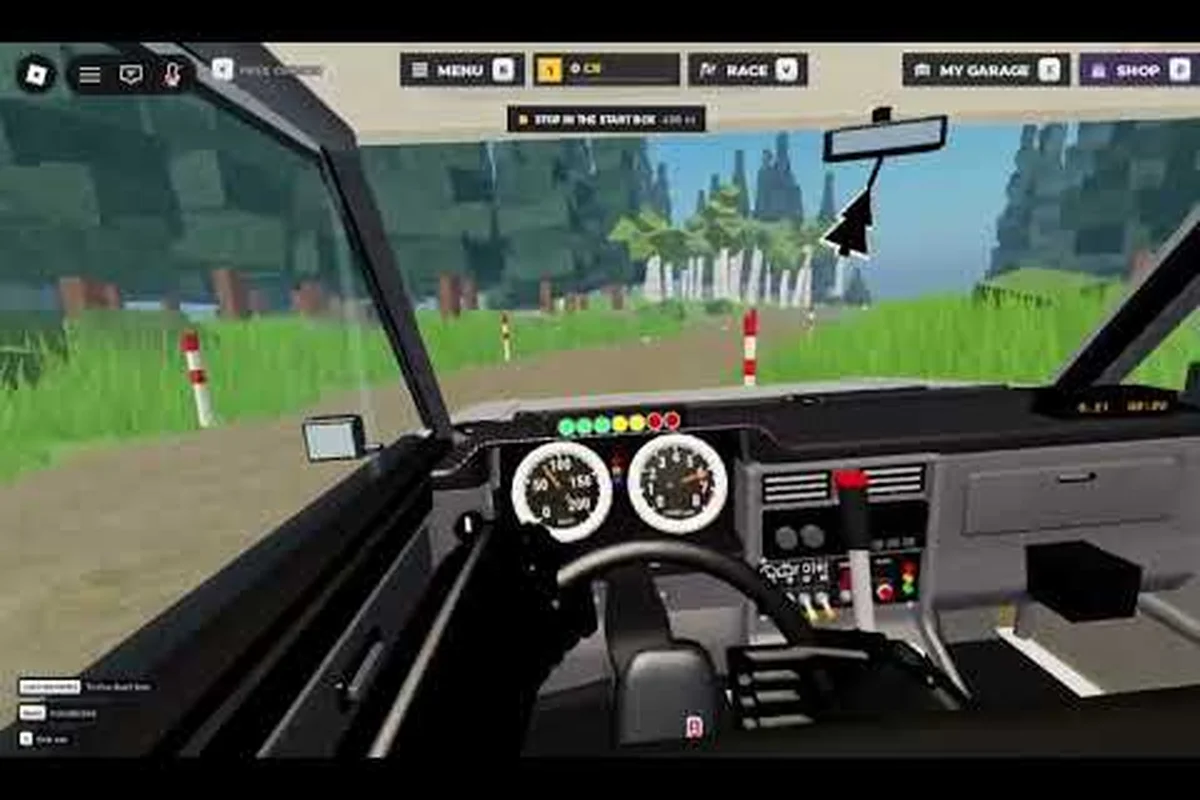
Managing your Backseat Rally credits balance works best when you separate income from spending: check the daily credit earning rate first, then apply any active credits multiplier before buying garage upgrades. For example, if a garage purchase costs 500 credits and your current multiplier is 2×, delaying it until the boost is active can stretch the same balance further. This also helps you prioritize whether to bank credits for a head-to-head match or spend them on a permanent garage improvement.
How the Backseat Rally Credit Balance Works
A healthy Backseat Rally credits balance depends on three things: completing stages, improving the quality of each run, and avoiding purchases that do not help you progress. The best strategy is not simply to spend as little as possible. It is to direct every earned credit toward a clear upgrade, preserve enough money for the next car, and use temporary boosts when they produce a measurable return.
The basic earning loop is straightforward. Players receive Credits for stage completion, and a Gold Medal Bonus can multiply a stage reward. Head-to-head races add another small credit gain when a player wins. Codes may also provide a direct infusion of Currency Resources, including a reported RELEASE code reward of 250 CR. The exact values can vary by version or mode, so treat community figures as a planning baseline rather than a permanent guarantee.
| Credit source | Reported benefit | Best use | Verification level |
|---|---|---|---|
| Stage completion | Base stage payout | Routine income | Community-confirmed |
| Gold Medal finish | Multiplies the stage reward | Improve current-car results | Community-confirmed |
| Head-to-head victory | Small additional payout | Offset upgrade spending | Community-confirmed |
| Working promo code | 250 CR for the reported RELEASE code | Immediate balance increase | Game media report |
| Weekly or temporary boost | Varies by event | Use before a planned farming session | Event-dependent |
A practical Backseat Rally saving system starts by recording your balance before and after each session. That simple check reveals whether your Credit Earning Rate is improving, whether bonuses are being activated, and whether repeated retries have actually produced enough value to justify the time spent.
Credit Earning Rates and Bonus Multipliers
Credit earning rates become much easier to compare when you separate the base reward from the multiplier that follows it. A stage may pay a standard amount, but earning a Gold Medal can increase that stage’s return rather than adding a flat bonus. This distinction matters because a player who rarely medals may be working much harder for fewer Credits than a player who consistently improves their finish quality.
The following example uses the mechanics reported by player guides rather than invented stage-specific numbers. It shows how the same route can produce different results without changing the car or buying another vehicle. For instance, a normal completion can pay 100 CR, while a Gold Medal raises that stage’s 100 CR base reward to 150 CR with a 1.5× multiplier; an Improved Gold Medal can reach 200 CR at 2×. A failed attempt pays 0 CR, so reducing high-cost mistakes and converting more finishes into medals directly affects the Credits balance, credit earning rates, and any credits boost attached to repeatable runs.
| Run result | Base stage reward | Bonus structure | Net result |
|---|---|---|---|
| Normal completion | 100 CR | No medal multiplier | 100 CR |
| Gold Medal completion | 100 CR | Example 1.5× stage reward | 150 CR |
| Improved Gold Medal | 100 CR | Example 2× stage reward | 200 CR |
| Failed attempt | 0 CR | No completion payout | 0 CR |
The examples are not guaranteed payout tables. They demonstrate why improving your medal consistency can raise your Backseat Rally credit earning rates without requiring a more expensive car. The most useful Credits Multiplier is the one you can trigger repeatedly through accurate co-driver calls, better line control, and fewer high-cost mistakes.
Measuring a Real Session Gain
A clear measurement method prevents vague claims such as “I earned a lot” from turning into poor financial decisions. Record four values at the beginning and end of a session: starting balance, ending balance, Credits spent, and number of completed runs. Then subtract spending from the ending balance before comparing the two totals.
For example, if you begin with 2,000 CR, finish with 2,450 CR, and spend 150 CR, the session produced 300 CR of gross income. That is the number to compare with your previous session, not the 450 CR visible on the balance screen. Tracking this for several sessions will reveal whether your Backseat Rally credits balance is actually growing or merely being replenished after garage spending.
| Session | Starting balance | Ending balance | Credits spent | Gross income |
|---|---|---|---|---|
| Session 1 | 2,000 CR | 2,450 CR | 150 CR | 300 CR |
| Session 2 | 2,450 CR | 2,850 CR | 100 CR | 500 CR |
| Session 3 | 2,850 CR | 2,900 CR | 200 CR | 250 CR |
A decline in gross income does not always mean a problem. A harder stage, more crashes, or fewer completed attempts can reduce the result. However, it does tell you when to refine your route before purchasing another upgrade. The VendoPlus CR farming walkthrough provides a useful external reference for stage payouts, medal bonuses, and the release code reward.
Why Medal Consistency Matters
Gold Medal performance affects the economy more than a single bonus suggests because consistency compounds. If a player can increase the number of successful medal runs from two to four during a session, the player may earn more than someone who makes a risky attempt, crashes repeatedly, and reaches fewer stage completions. Better consistency also reduces frustration and makes planning garage purchases more predictable.
Treat the Medal-to-Credit Multiplier as a performance target rather than a reason to ignore the rest of the route. If repeated retries produce diminishing returns, move to a stage where you can complete more runs and earn medals. A reliable, moderate source of Credits is often more valuable than a difficult stage that consumes time without delivering a completion payout.
Smart Credit Spending in the Garage
Saving Credits is only useful when the money supports a purchase that improves results. Players often lose the advantage of a Garage Credit Buffer by replacing one car immediately after earning enough for a different one. A stronger approach is to set a target, set a reserve, and compare the expected benefit before committing.
The central rule is simple: earn first, then buy. If an upgrade costs 1,000 CR, do not spend the final 1,000 CR without checking the current reserve. Keep enough money for the next planned purchase or a meaningful number of retries. This protects your Backseat Rally save credits from dropping to zero every time a new vehicle appears in the garage.
| Purchase decision | Credit impact | Potential value | Recommended action |
|---|---|---|---|
| Permanent car upgrade | High, one-time | Improves many future runs | Buy when the reserve is protected |
| Another starter car | Moderate to high | Limited if skill is already high | Delay until a clear advantage is known |
| Temporary boost | Low to moderate | Improves one active session | Use during a planned farming block |
| Cosmetic item | Variable | Little effect on Credit Earning Rate | Skip while building a reserve |
| Entry ticket or retry cost | Recurring | Can become a long-term drain | Set a strict per-session limit |
Setting a Three-Part Credit Plan
A three-part budget makes the system practical. First, assign a percentage of every balance to future car funds. Second, reserve a smaller amount for upgrades that improve your current car. Third, set aside a small pool for retries or temporary boosts. The exact percentages depend on your goals, but a specific plan is better than trying to make every purchase from a single undifferentiated pile.
Players can use the same method when choosing a garage path. If you already know your car handles poorly on mud or snow, an upgrade that fixes that weakness can raise your Run-to-Run Consistency more than switching to an unfamiliar vehicle. Save credits until the intended purchase can be made without forcing you to abandon the next goal immediately.
When to Buy Another Car
A new car is worth considering when it offers a specific advantage, such as better control on a difficult terrain or a faster completion time. It is less attractive when it simply looks different. Compare handling, the terrain you expect to farm, and the cost of learning a new vehicle before committing. The overall Backseat Rally credits multiplier comes from several small advantages, and a more expensive car is only valuable if those advantages translate into faster or more reliable runs.
Community reports also support delaying expensive garage purchases until codes have been redeemed and basic upgrades are complete. That avoids spending the same balance twice when a free reward could have covered part of the cost. For the complete payout breakdown, see the guide to credit rewards and how to earn CR.
Head-to-Head Credits and Session Multipliers
Head-to-head races provide a small but useful addition to a farming session. The reported win bonus is modest, so it should be treated as a supplement rather than the main reason to enter competitive races. Its value increases when you can win consistently without abandoning more valuable stage farming.
| Match result | Reported direct benefit | Strategic value | Recommended use |
|---|---|---|---|
| Win | Small CR bonus | Adds to session income | Add several matches after farming |
| Loss | No reported win bonus | No direct credit gain | End the match if farming is the priority |
| Draw | Outcome-dependent | Limited additional value | Use only if no better source is active |
The best time for Head-to-Head Credits depends on the state of your account. If you need enough money for a specific car, enter matches only after reaching a reliable winning rhythm. If you are only preserving your balance, skip competitive play and focus on stage completion and medal bonuses.
A Balanced Farming Session
A productive session can combine several repeatable phases rather than relying on one activity. The first phase establishes income through stage clears. The second improves that income by securing medals. The third adds head-to-head wins. The final phase claims codes and reviews spending, ensuring that temporary boosts are used before they expire.
| Phase | Estimated duration | Primary objective | Credits goal |
|---|---|---|---|
| Stage clears | 10–15 minutes | Build base income | Complete the route twice |
| Medal attempts | 10–20 minutes | Improve multiplier performance | Add medal rewards |
| Head-to-head matches | 5–10 minutes | Collect small win bonuses | Secure several wins |
| Claim and review | 2 minutes | Capture free rewards | Redeem active code, check balance |
This schedule is flexible rather than mandatory. A bad stage result may justify extending the farming phase, while a good run can shorten it. Use the Session Credit Target to decide when to stop, and avoid turning a short bonus session into an uncontrolled spending session in the garage.
Using Boosts Without Overspending
A credits boost is valuable when it helps you complete a planned series of runs. It is wasteful if it expires while you are still shopping or if it merely encourages more purchases than your original target. Activate boosts immediately before a farming block, complete the planned runs, and then decide whether another block has a clear expected return.
Codes can provide the strongest immediate increase because they usually do not require another race. According to Game Rant’s Backseat Rally codes report, the reported RELEASE code provides 250 CR and is redeemed through the Settings menu, GAME tab, and code-entry box. Because codes can change, verify the current code list before spending your remaining balance.
A Repeatable Credit Saving Plan
A repeatable plan is more reliable than reacting to every garage offer. Begin by identifying your next meaningful purchase, then estimate how many successful runs or matches you expect to need. Use recent results to calculate the gap between your current balance and the target.
| Step | Action | Decision rule | Result |
|---|---|---|---|
| 1 | Choose a target purchase | Must improve progression or efficiency | Clear spending goal |
| 2 | Measure recent income | Use at least three comparable sessions | Reliable earning estimate |
| 3 | Protect the reserve | Do not spend the amount needed for the target | Stable balance |
| 4 | Use temporary boosts | Only during planned farming | Better short-term return |
| 5 | Redeem available codes | Claim before purchasing | Free balance increase |
| 6 | Review after each session | Compare gross income with spending | Measurable progress |
The key number is the Target Completion Gap: target cost minus the protected balance. If the gap is 600 CR and your recent average is 300 CR per session, you need roughly two productive sessions. If your last five sessions average only 120 CR, you should improve stage consistency or medal performance before shopping.
Daily, Weekly, and Milestone Reviews
A daily review can be brief: confirm the balance, note gross income, and record any purchase. A weekly review should compare total income, spending, and medal consistency. At each milestone, such as unlocking a stage or receiving a code reward, update your target and reserve rather than automatically spending the new amount.
This process also helps you identify the Credit Leak. Common leaks include repeated attempts on a difficult route, buying several cars with overlapping strengths, and using temporary boosts without a clear farming plan. Fix one leak at a time, then compare the next set of sessions with the earlier data.
When to Pause and Rebuild the Balance
If your balance repeatedly returns to zero, pause garage purchases. Run the stages that produce the most reliable medals, enter only winnable head-to-head matches, and redeem every active code. The objective is to rebuild a working reserve before the next major purchase.
A pause is not a setback if it creates a better financial system. Players who use a clear earning rate and spending target are more likely to reach an expensive car without running out of funds halfway through the upgrade path. For additional details about promotions, the guide to redeeming the RELEASE code and other credits rewards explains the current redemption process.
Weekly Credit Boost Checklist
Before ending a farming session, use this checklist to protect your balance and confirm that every available advantage was used. Compare the session’s net Credits balance change with the expected payout from completed stages and Gold Medal results, then account for spending, temporary Credits Boosts, and the Credits multiplier. For example, if the balance rises by 5,000 Credits but the planned farm expected 7,000, review missed stages, inactive multipliers, and unclaimed rewards before repeating the route. This makes the backseat rally credits balance a reliable measure of earning efficiency rather than simply an end-of-session total.
- Record the starting and ending Credits balance.
- Calculate gross income by adding spending back to the net balance change.
- Note how many stages produced Gold Medal results.
- Redeem any available RELEASE code.
- Avoid a car purchase unless it supports the current progression target.
- Keep the next upgrade or car fund intact.
- Use temporary Credits Boosts only during planned farming.
- Record the next target and estimated sessions required.
For example, record two consecutive weekly sessions: 42,000 Credits at the start, 51,500 after the Credits multiplier, and 2,000 spent on upgrades, producing a net gain of 7,500 Credits. If your estimated Sessions required rises from four to five, check whether missed stages or inactive boosts caused the change. This weekly log makes the backseat rally credit earning rates measurable while keeping the backseat rally credits balance aligned with the car fund reserved for your next upgrade.
| Weekly metric | Strong sign | Warning sign | Response |
|---|---|---|---|
| Net balance growth | Positive for most sessions | Often zero or negative | Reduce discretionary purchases |
| Medal consistency | Improving or stable | Frequently falling | Review route and call timing |
| Code redemption | Every valid code claimed | Rewards left unused | Redeem before shopping |
| Upgrade timing | Occurs after target completion | Leaves insufficient reserve | Delay the next purchase |
The central takeaway is to treat Credits as a progression budget rather than disposable currency. Complete stages, raise the quality of those completions, use competitive bonuses selectively, and redeem free rewards before spending. With a protected reserve and a measured earning rate, your Backseat Rally save credits strategy becomes predictable enough to support better cars without repeatedly draining the account.
Frequently Asked Questions
What is the best way to save credits in Backseat Rally?
Set a purchase target, keep a separate mental reserve, and track gross income rather than only the final balance. Redeem available codes before visiting the garage, then focus on stage completion and Gold Medal bonuses. Avoid buying a replacement car when your current car can still improve with a smaller, more focused upgrade.
Do head-to-head races provide extra credits?
Head-to-head victories can provide a small credit bonus, according to player reports, but the amount is modest compared with stage rewards. Enter these matches when you can win reliably and use them to supplement a farming session. If a loss would end a productive stage run, prioritize the stage instead.
What does the RELEASE code provide in Backseat Rally?
The RELEASE code has been reported to award 250 CR, making it a meaningful free addition to a new account. Enter it through the Settings menu, GAME tab, and code-entry field. Confirm that it is still active before assuming the reward will appear, since promotional codes can expire or be replaced.
Which multiplier should players focus on?
The most reliable multiplier is the Gold Medal Bonus because stronger stage results can be repeated through practice. Track the number of medal runs during each session, and improve consistency before chasing a rare setup. Temporary boosts help only when you have a planned block of credit farming to use them on.
How should I measure my credit earning rate?
Record your starting balance, ending balance, spending, and completed runs for at least three comparable sessions. Add spending back to the net balance change to calculate gross income, then divide by completed runs. If the result is falling, improve route consistency, medal frequency, or retry efficiency before making another garage purchase.