
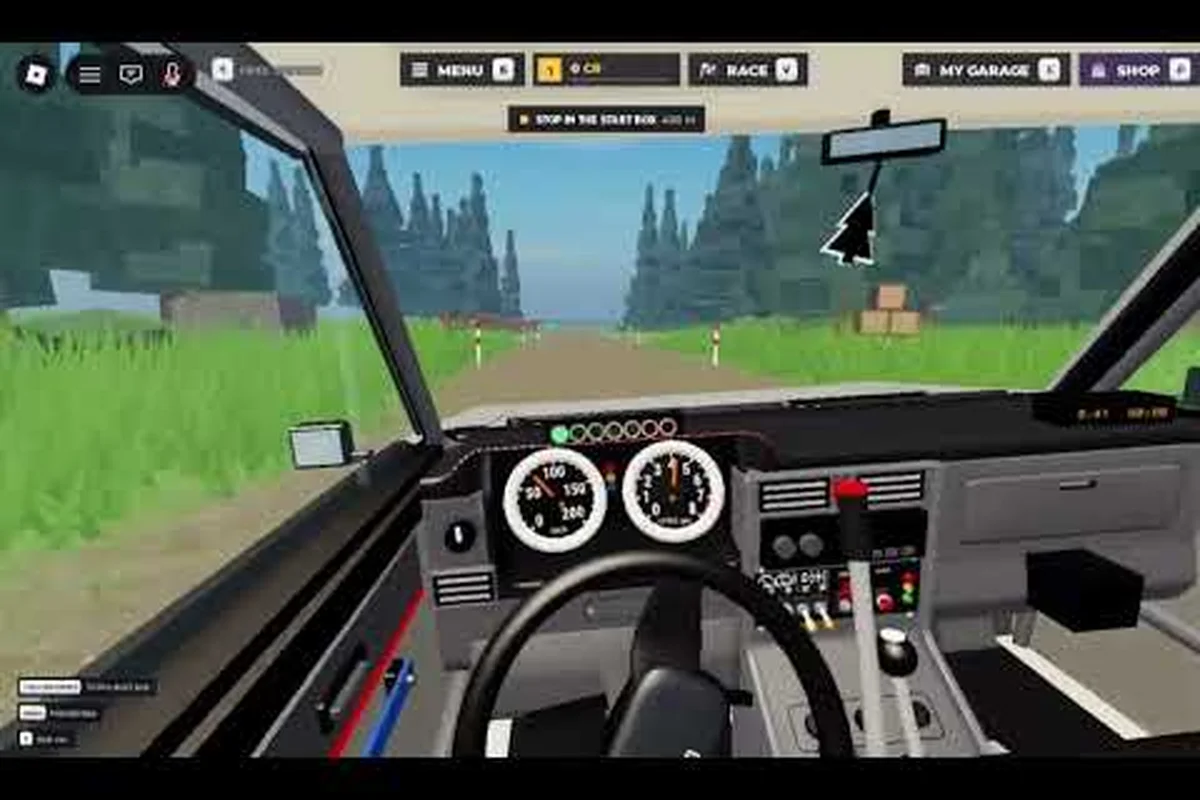
This Backseat Rally beginner guide shows how to win more clean runs by learning the cars, calls, and stage rhythm. Start by identifying each car’s handling traits, then translate the co-driver’s pace notes into early braking, gear changes, and smoother corner entries. For example, a “left 4” over crest should prepare you to slow before the unseen apex rather than brake mid-corner, while tight hairpins call for one controlled hand-over-hand turn. Master those basics first, then turn smoother calls, cleaner routes, and fewer penalties into faster laps and better finishes.
Backseat Rally Beginner Guide: Core Systems and First Race
Backseat Rally revolves around a simple division of labor: one player drives while the other gives directions. That structure means your first goal is not raw speed but clear communication, predictable braking, and a car that suits the stage. A fast driver cannot compensate for a rushed call, and a good co-driver cannot rescue a car that was selected without considering the terrain.
This Backseat Rally beginner guide focuses on the systems that create reliable results. You will learn what each car handles well, how to interpret calls, where to begin on a winding course, and why finishing cleanly matters more than starting at maximum speed.
Learn the Two-Role Race Loop
A rally stage starts with the driver reading the road while the co-driver watches the route ahead. The co-driver announces the direction, possible hazards, and when the driver should begin braking. The driver responds by holding an appropriate speed, turning early, and avoiding abrupt corrections.
Backseat Rally how to play is easiest to understand as a repeating cycle. Read the call, prepare for the corner, commit to the steering input, then straighten the car for the next section. Rushing any part of that cycle creates a delayed response, and delay compounds on a stage with several linked turns.
| Race phase | Driver’s main task | Co-driver’s main task | Beginner goal |
|---|---|---|---|
| Stage start | Hold a stable launch speed | Read the opening instructions | Avoid immediate mistakes |
| Fast section | Keep the car centered | Warn about bends and hazards | Preserve momentum |
| Braking zone | Brake before the turn | Give early distance warnings | Enter without overshooting |
| Recovery | Rebuild speed smoothly | Reorient the driver | Avoid a second incident |
| Finish | Carry speed to the line | Confirm the result | Complete the stage cleanly |
The useful habit is to separate the stages above. Do not think about the final result while negotiating the first corner, and do not try to recover every fraction of lost speed immediately. Stage rhythm comes from treating each call as a complete action: prepare, commit, and settle.
Build a Safe Practice Routine
Your first session should focus on control rather than medals. A short stage repeated several times teaches more than one rushed attempt across a long event. After each run, note one handling issue, one communication issue, and one place where you entered a corner too quickly.
These Backseat Rally tips and tricks are designed for immediate improvement by turning each short practice run into a deliberate feedback loop. For example, restart the same corner after a clean pass, then compare your steering input, pace notes, and brake timing with the previous attempt. If the car runs wide or clips scenery, identify the first incorrect input rather than blaming the final outcome; early correction preserves speed and prevents a small error from becoming a larger off-road recovery.
-
Set a calm baseline speed: Complete the first three corners without touching the scenery or leaving the intended line.
-
Brake earlier than necessary: An early release can recover speed; a late release often creates a larger problem.
-
Repeat one call exactly: If your co-driver says “left,” say “left,” rather than adding extra directions that may distract the driver.
-
Save the fastest input for a straight: Steering sharply while accelerating is usually less useful than a clean exit.
-
Review one stage at a time: A full replay may be unavailable, but remembering the trouble corner still produces useful feedback.
If you want a broader look at progression beyond the opening stage, the complete Backseat Rally guide covers the wider game flow. For now, however, the most valuable information comes from understanding how your inputs and calls combine.
Backseat Rally Game Guide: Choosing the Right Car
The first Credits purchase can shape your early experience, but an expensive car is not automatically the best choice. The right starter vehicle gives you enough control to finish stages and enough acceleration to maintain a rhythm. More importantly, it should match the surfaces you expect to encounter.
This section of the Backseat Rally game guide uses the car distinctions highlighted in community walkthroughs: balanced cars suit general learning, while more specialized cars can feel strong on snow or mud but demand steadier inputs. Exact prices and available models can change with game updates, so treat the categories as practical guidance rather than a permanent auction list.
Compare Early Car Choices
| Car approach | Best use | Strength | Main limitation | Learning advice |
|---|---|---|---|---|
| Balanced starter | First stages and mixed terrain | Predictable handling | Limited performance ceiling | Learn throttle and braking first |
| Snow specialist | Icy or slippery stages | Stability on loose surfaces | Can feel underpowered elsewhere | Keep steering inputs smooth |
| Mud specialist | Soft or wet stages | Grip in messy conditions | More sensitive to sudden changes | Avoid abrupt throttle corrections |
| Speed-focused car | Short, open stages | Strong acceleration | Less forgiving in traffic or tight bends | Save it for clean runs |
| High-control car | Technical stages | Precise response | Requires confidence to drive quickly | Use after mastering steady inputs |
Community walkthroughs from VendoPlus also identify early car selection, stage progression, Credits, and head-to-head play as separate learning goals. That distinction matters because a car that feels exciting in the garage may be less useful while you are still learning the call system. A forgiving car lets the driver concentrate on the road and the co-driver concentrate on the instructions.
Adapt Inputs to Snow, Mud, and Tarmac
Surface changes the priorities. On snow, smooth steering and progressive throttle usually help preserve stability. In mud, the car needs to maintain momentum without sudden wheelspin. On a dry stage, braking confidence and a clean line become more important because grip may return more predictably.
| Surface | Biggest early risk | Better driving response | Better co-driver emphasis |
|---|---|---|---|
| Snow | Sudden slide | Gentle throttle and measured steering | Warn early about direction changes |
| Mud | Loss of momentum | Keep the car moving smoothly | Track exits and long bends |
| Dry pavement | Late braking | Earlier, stronger deceleration | Provide precise distance warnings |
| Mixed terrain | Conflicting grip | Adjust speed as the surface changes | Call the next surface transition |
Do not buy solely by appearance. A flashy car can be enjoyable, but progression is smoother when your first vehicle makes the road easier to read. The verified Backseat Rally beginner walkthrough from ItzVexo demonstrates the opening races, co-driver callouts, distance warnings, and how starting Credits can be spent on a first car.
Upgrade Only When the Limitation Is Clear
Wait to upgrade if your main issue is that you cannot yet brake consistently. A stronger car will not fix an unstable rhythm, and you may simply carry more speed into the same mistake. First learn to enter a bend, rotate the car, and accelerate out without touching the guardrail or verge.
Upgrade when the car is no longer meeting a specific need. For example, choose a snow specialist if you repeatedly slide on frozen stages, or select a control-focused vehicle when your runs are fast but messy. This creates a sensible progression loop:
-
Identify the recurring problem: sliding, slow exits, poor acceleration, or unreliable cornering.
-
Change one variable: avoid buying a new car and changing your entire driving style at once.
-
Test on a familiar stage: compare the same section before and after the purchase.
-
Keep the setup that improves consistency: a modest improvement is more valuable than a spectacular but unpredictable car.
Backseat Rally How to Play: Reading Co-Driver Calls
The co-driver is not merely providing directions. The co-driver is managing the driver’s limited view of the future and converting a complex road into a sequence of manageable actions. New players often listen for words such as “left” and “right” while missing the timing inside those instructions.
That is why this Backseat Rally how to play section focuses on the whole call. A useful call contains three elements: the direction, the distance or severity, and the immediate action. A driver who understands all three can choose a sensible speed and braking point before the bend arrives.
Decode the Information in Each Call
| Call component | What it tells the driver | Typical response | Common error |
|---|---|---|---|
| Direction | Which way the road turns | Position the car early | Waiting until the car is already turning |
| Distance | How much room remains | Begin the braking sequence | Braking too late to correct |
| Severity | How hard or sharp the feature is | Lower speed further in advance | Treating every bend alike |
| Surface note | How grip may change | Smooth the inputs | Forcing acceleration on loose ground |
| Straight warning | A short opening section follows | Hold or build speed | Steering while still busy in a corner |
ItzVexo’s tutorial shows how distance warnings and left/right calls work during the first races. That reference is especially helpful because it gives beginners a model for the expected rhythm instead of leaving them to infer the system from missed corners.
Give the Driver Time to Act
A co-driver should describe the road early enough that the driver can complete three tasks: release the accelerator, begin braking, and place the car on the correct side. Calling the direction only after the driver reaches the turn removes the driver’s opportunity to prepare.
A practical call might contain a direction, a distance cue, and a severity cue. Its exact wording matters less than the consistency of the information. The pair should decide on a simple vocabulary and avoid multiple instructions that compete for attention.
Short-distance calls: These are useful for immediate turns or hazards and should follow a clear direction. For example, saying “left, tight!” gives the driver a turn direction and severity cue, while “right, now—brake!” warns of a hazard that requires immediate action. Use short-distance calls only when the road is already close enough that delayed braking, incorrect steering, or an abrupt lane correction would be difficult to correct.
Long-distance calls: These describe a distant feature and give the driver time to adjust speed. A long-distance call should identify the direction, estimate the distance, and indicate any severity cue before the driver commits to the corner, allowing them to release the accelerator, begin braking, and position the car early. For example, “left in about 100 meters, tight!” gives the driver a preparation window; without that warning, the same call may arrive only when the car is already at turn entry, reducing reaction time and making a late lane correction more likely.
Straight calls: These warn the driver to release steering and let the car accelerate, so the pair can use a consistent format such as “straight, 50 meters.” Unlike a short-distance call, a straight call gives the co-driver time to assess the next corner and decide whether the driver should maintain speed, coast, or begin braking before the car reaches the turn entry.
Surface calls: These flag conditions such as snow, mud, ice, or standing water before the driver applies abrupt inputs. Because low grip increases stopping distance and makes abrupt steering more likely to unsettle the car, a surface warning should give the co-driver time to recommend gentler braking, earlier line adjustments, or reduced speed. For example, “right bend, 80 meters, surface is slick—ease off” warns of both the corner and its grip condition without crowding the driver with several separate instructions.
For cooperative play, the Backseat Rally teamwork guide provides additional context on communication roles and call structure. The key beginner takeaway is to make each pace note actionable rather than merely descriptive: instead of saying only “left,” say “left, 100 meters, tight, ease off.” This gives the driver distinct timing cues—distance, corner severity, and required input—so they can release the accelerator, begin braking, and choose a safer line before turn entry. Pair the call with a confirmation system, such as repeating the distance and severity, so a missed or unclear pace note can be corrected before the corner becomes unavoidable.
Build a Shared Call Order
Both players should use the same order every time. Consistency reduces the amount of interpretation required during a fast stage. A practical sequence is direction first, distance second, severity third, followed by any surface warning. The driver can then process the message in a stable pattern.
If the driver is approaching a feature too quickly, the co-driver should make the urgency unmistakable. Repeating a flat direction at the same pace may not communicate that braking must happen immediately. Clear phrases such as “hard left,” “very close,” or “long right” convey urgency, provided the team agrees on their meaning before the event.
Avoid explaining your reasoning during the most demanding section. Commentary such as “I think that is probably a sharp bend” creates uncertainty. A co-driver should state the road condition as clearly as the available information allows, while the driver stays focused on executing the instruction.
Backseat Rally Tips and Tricks: Braking, Lines, and Momentum
The fastest line is not always the shortest line. In rally-style stages, a good line preserves tire control, provides room for a mistake, and allows the car to accelerate toward the next feature. The best Backseat Rally tips and tricks all support a simple aim: carry usable speed from one corner to the next.
Braking deserves special attention because it affects steering, camera position, and the driver’s confidence. Understanding when to brake allows the driver to release the accelerator earlier and enter corners with a stable car. It also gives the co-driver time to prepare the next call.
Build a Braking Routine
A reliable sequence is look, release, brake, steer, straighten, and accelerate. “Look” means identifying the corner before the vehicle reaches it. “Release” prevents the car from gaining more speed while the corner is approaching. “Brake” creates deceleration, “steer” places the car around the bend, “straighten” prepares the exit, and “accelerate” begins the next push.
| Braking habit | What it fixes | Result | Practice target |
|---|---|---|---|
| Brake earlier | Late entries | More stable turn-in | Finish the approach under control |
| Release before braking | Sudden weight changes | Better balance | One smooth deceleration phase |
| Avoid mid-corner braking | Overloaded steering | Cleaner rotation | Carry an appropriate entry speed |
| Look through the bend | Sudden steering corrections | Better exit positioning | Eyes and car move toward the exit |
| Accelerate progressively | Wheelspin on loose surfaces | Better traction | Add power as grip allows |
The PC-focused Backseat Rally guide from nocrown highlights camera behavior, steering and braking sensitivity, and co-driver audio on desktop. Those details are useful for new players because control feel can change with settings. If the car reacts too sharply, adjust sensitivity before blaming the vehicle.
Choose a Racing Line You Can Repeat
Begin with a slightly wider approach than feels necessary. This gives you space to see the exit, reduces the need for abrupt steering, and creates a cleaner transition into the next corner. Once the line becomes comfortable, you can tighten it by using a later turn-in point or carrying more speed.
Look for three features on each bend: the apex, the exit, and the next road section. Entering correctly depends on the apex, but the exit determines how quickly you can accelerate. A tight apex that leaves the car facing the guardrail is usually less efficient than a slightly wider line that points toward open road.
Manage the Camera and Distance
The camera position changes how much road you can see. If the view sits too close to the car, the road may appear to arrive suddenly. If the view is positioned poorly, steering corrections can feel more dramatic than they are. Before blaming the car, check whether the camera is showing enough of the upcoming corner.
Distance awareness also comes from recognizing landmarks. A large sign, a bridge, or a distinct bend can be a practical reference point. Use these markers consistently in practice so you can begin braking at a repeatable place instead of a random point determined by panic.
Backseat Rally Guide 2026: Progressing Without Bad Habits
A strong early routine should improve your results without making you impatient. The objective of this Backseat Rally guide 2026 is to create a progression loop you can repeat even when new cars, stages, and multiplayer opponents become available. Basic consistency is the foundation; speed is the result.
The verified progression walkthrough from VendoPlus on YouTube outlines the flow from early stages to the garage, Credits, and the head-to-head lobby. That path is useful for setting goals, but beginners should still treat every stage as a practice opportunity rather than an excuse to rush progression.
Use a Four-Part Practice Cycle
| Practice step | Goal | Duration | What to record |
|---|---|---|---|
| Familiarization | Learn the call order and road layout | One relaxed run | Locations of difficult features |
| Control | Finish cleanly with fewer corrections | One or two runs | Braking and steering errors |
| Consistency | Repeat the same line and pace | Two runs | Time variation between laps |
| Challenge | Add speed or enter competitive events | One run | Where the extra speed remains clean |
Record notes immediately after each run, and separate driver errors from co-driver communication failures. “Turned too early” points to a braking-point or pace problem, while “missed the second-left call” means the pacenote did not provide enough timing information. For example, if the Control run ends with two late braking corrections at the same hairpin, repeat that section with the same pacenote format and note whether the errors drop. This turns frustration into a specific adjustment for the next run, without changing the challenge level before the Familiarization and Consistency stages are clean.
Separate Your Skill Development
Drivers and co-drivers improve different abilities even though the pair shares the result, so separate goals make feedback more useful. The driver should focus on smooth steering, earlier braking, and controlled acceleration, because short bursts of steering or late braking can unsettle the car and reduce the co-driver’s preparation time. The co-driver should work on route reading, call timing, and concise instructions, such as flagging a corner before the driver reaches it rather than describing the turn after it begins. A simple practice target is for the driver to produce clean, gradual inputs while the co-driver gives early, consistent calls.
| Role | Primary skill | Common early issue | Best practice target |
|---|---|---|---|
| Driver | Vehicle control | Braking too late or steering in short bursts | Smooth inputs and clean exits |
| Co-driver | Route anticipation | Late or vague calls | Early, consistent instructions |
| Solo AI user | Reading both roles | Letting the call arrive too late | Pause briefly to scan the road |
If you are uncertain which role your partner prefers, discuss it before an event. Some players enjoy the immediate feedback of driving, while others prefer the planning and timing involved in navigation. The Backseat Rally trust game guide can help new pairs understand the two-player experience before competing together.
Set Milestones Beyond Winning
Winning one race is encouraging, but it can hide unstable driving. Track three goals over several events: reduce missed turns, improve the consistency of your braking points, and complete more stages without contact. Once those become reliable, chase a better finish position.
| Milestone | Evidence that it is met | Next improvement target |
|---|---|---|
| Complete the route | All major calls are followed without confusion | Reduce hesitation |
| Finish cleanly | No recurring contact on familiar corners | Carry slightly more speed |
| Repeat a good run | Similar routes produce similar results | Optimize the racing line |
| Compete consistently | Results vary less between events | Challenge stronger opponents |
Credits should support this progression rather than distract from it. A small purchase can fill a clear gap, but changing cars after every loss rarely teaches you what went wrong. Keep a balanced car available for practice, and reserve specialized vehicles for stages where their strengths matter.
Race Day Checklist for New Players
Use this checklist before an event so you focus on the controllable details instead of remembering everything under pressure. The goal is a repeatable process, and the final run in this Backseat Rally beginner guide should therefore be about execution rather than last-minute experimentation.
-
Confirm the role: Decide who drives and who navigates before the stage begins.
-
Check the car: Select a vehicle suited to the surface and your current skill level.
-
Review the controls: Make sure steering, braking, sensitivity, camera, and audio are comfortable.
-
Agree on call wording: Use a short, consistent vocabulary for direction, distance, severity, and surfaces.
-
Set the first-corner target: Aim to arrive under control rather than trying to win in the opening seconds.
-
Protect momentum: Avoid unnecessary steering, braking, and acceleration changes.
-
Review one issue: After the event, identify the most important adjustment for the next run.
The Backseat Rally mistakes guide offers a deeper look at recurring errors, while this checklist keeps the important actions visible during practice. As your first races become familiar, reduce the number of reminders and keep only the checks tied to your most persistent weakness.
Frequently Asked Questions
What is the best car for a new Backseat Rally player?
A balanced starter car is usually the best first choice because predictable handling makes it easier to learn calls, braking, and corner exits. Compare specialized cars only when you have identified a recurring problem, such as sliding on snow. Save a faster or more aggressive vehicle for stages where you can already remain consistent.
Should the driver or co-driver change the racing line?
The driver should determine the exact line because only the driver can see the car’s position, grip, and immediate reaction. The co-driver should describe the road early enough to influence the approach, especially for hazards and direction changes. A clear call about distance and severity gives the driver room to choose the safest effective line.
How can beginners brake more consistently in Backseat Rally?
Beginners can improve by repeating a fixed sequence: identify the corner, release the accelerator, brake, steer, straighten the wheels, and accelerate progressively. Practice on familiar stages before increasing speed, because changing camera angle, sensitivity, and car at the same time makes it difficult to identify the cause of inconsistent braking.
Is it better to drive slowly or chase a fast time early on?
Drive at a pace that allows clean, repeatable corners. A slightly slow opening stage teaches you where the braking points and difficult features are, while excessive speed produces corrections that erase any advantage. Once you can finish several routes consistently, raise the speed in small steps and keep the same corner-by-corner routine.
What should I do after a bad Backseat Rally race?
Review the run for one controllable mistake instead of changing everything at once. Note whether the error came from a late call, unclear communication, excessive entry speed, or an unsuitable car, then test one correction on the next familiar stage. This focused approach is more useful than buying a new vehicle after every unsuccessful race.
Mastering Backseat Rally starts with a simple foundation: choose a forgiving car, deliver clear calls, brake before the corner, and build repeatable lines. Progress follows when each race improves one measurable part of the run, producing cleaner finishes and faster laps without sacrificing control.