
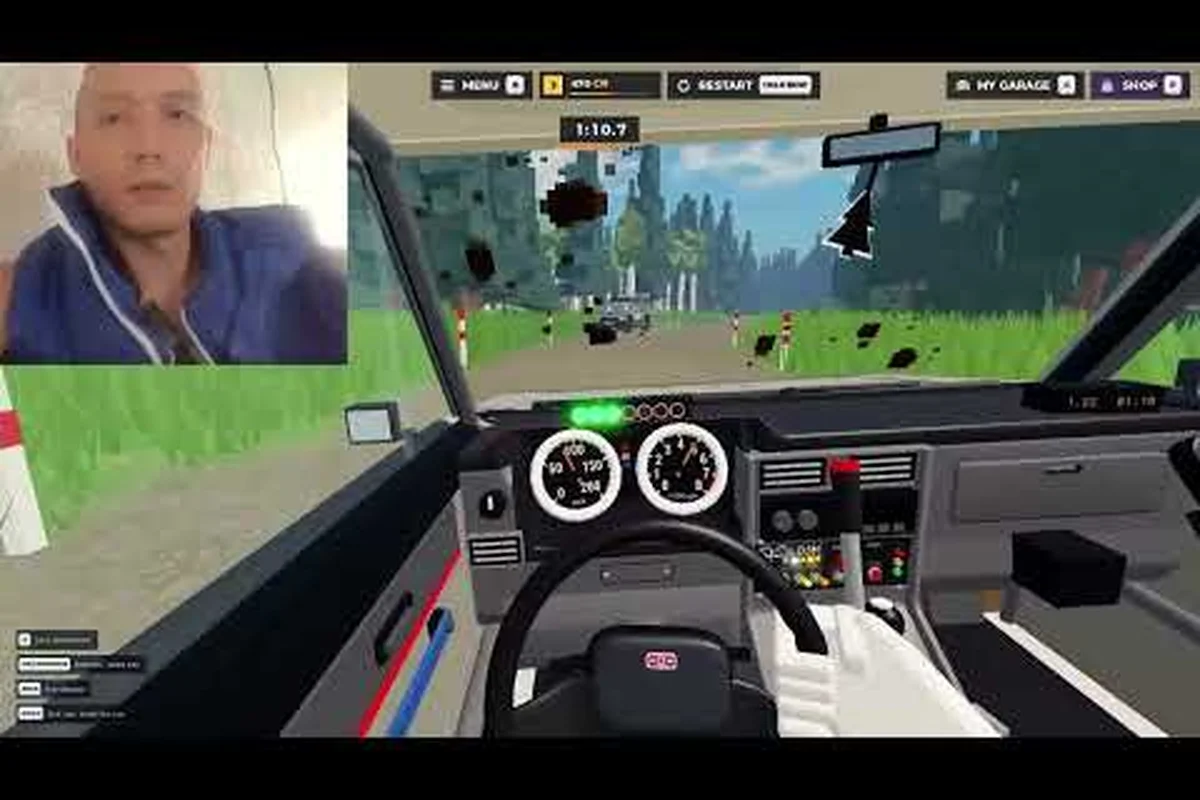
Solo practice matters because it lets you focus on driving, pacenotes, and car control without coordinating with another player. This Backseat Rally single player guide explains how to build a repeatable routine for faster laps, clearer calls, and more consistent finishes.
Understanding the Backseat Rally Single Player Loop
Backseat Rally uses a driver-and-pacer structure: one player steers while the other supplies route information. In solo play, the game’s AI co-driver supplies that information, so your main challenge is learning how to translate spoken calls into smooth inputs. The objective is not simply to hold the accelerator; it is to arrive at each hazard with enough room to correct the line.
A useful Backseat Rally single player routine has four parts: anticipate the pacer’s call, match the car’s speed to the upcoming hazard, preserve traction through the turn, and rebuild momentum on the exit. In practice, listen for the call while the car is still approaching the corner, because a late reaction in a mud or snow race can cause a wide line or send the car sliding. The AI co-driver does the route narration, but solo success depends on converting those instructions into controlled steering and throttle inputs before the corner reaches the car.
-
Read the call early: Identify the turn direction and rough severity before the corner reaches the car.
-
Set the speed early: Ease off before the turn, then apply throttle once the wheels are pointed.
-
Protect the exit: Straighten the car before accelerating hard out of a corner.
-
Save the car: Avoid unnecessary slides so mud, snow, and other surfaces do not erase your momentum.
The Backseat Rally Roblox guide on controls and callouts provides a useful desktop reference for camera behavior, steering, braking, and co-driver audio. This guide focuses on turning those mechanics into a repeatable solo progression rather than covering basic menus again.
What Solo Practice Teaches You
Solo stages are valuable because mistakes are easy to diagnose. After a run, you can identify whether the loss came from late braking, excessive steering, poor line choice, or a call you failed to interpret. That clarity matters more than simply repeating the same stage until the game awards a better result.
| Skill to practice | What causes failure | Solo correction |
|---|---|---|
| Pacenote reading | Late recognition of a turn | Say the call silently and prepare the input before the corner |
| Braking control | Locking up or braking too hard | Brake earlier, then release as the car turns in |
| Steering control | Large correction after a slide | Use smaller inputs and let the car rotate |
| Exit speed | Wheelspin after corners | Look farther ahead and apply power smoothly |
| Car care | Repeated wall and tree impacts | Preserve the body when a medal is already secure |
The central idea is diagnose one variable at a time. Changing the car, route, camera, and driving style together makes it impossible to tell which adjustment improved the lap. In Backseat Rally’s single-player practice, keep the car and camera fixed, then test one pacenote habit across several runs—for example, prepare the brake input earlier on a hairpin while preserving the same racing line. If lap time improves without more contact, the change likely reduced the braking error; if the car now rotates late, the earlier braking point is too aggressive. This controlled comparison makes each setup change explainable and prevents a new handling problem from being mistaken for progress.
Pacenotes and Solo Race Decision Making
The AI co-driver’s calls are your primary navigation system, so learning their timing is more valuable than memorizing every corner. The video guide by ItzVexo covering Backseat Rally controls, tips, and pacenotes highlights how new players should listen for direction and distance warnings during early stages. Treat those calls as time-based instructions rather than decoration.
Translate Calls Into a Racing Plan
When the co-driver announces a direction, convert it into a simple three-stage plan: prepare, turn, and exit. “Left” does not mean slam the wheel; it means begin moving left before the bend, judge the severity, and straighten once the apex is behind you. Distance warnings tell you when the next action is approaching, so your reactions should begin before the visual corner fills the screen.
| Pacenote type | Driver response | Common mistake |
|---|---|---|
| Direction call | Position the car before the turn | Steering only after the corner appears |
| Distance warning | Reduce speed and prepare the next action | Braking immediately before the steering input |
| Severe-turn warning | Brake more and use a wider entry | Entering at the same speed as a mild turn |
| Straight or clear call | Stabilize the wheel and regain power | Continuing to brake unnecessarily |
| Repeated call | Reassess position and remaining distance | Ignoring the call because it arrives twice |
The call-to-input gap is the key measure. If you always react after hearing a turn, you will consistently enter too fast. If you react absurdly early, you may scrub speed unnecessarily. Solo practice lets you test a slightly earlier interpretation and compare the result.
Make Safer Decisions on Mud and Snow
Low-grip stages punish abrupt throttle and fast corrections. A muddy or snowy corner should begin with a smaller steering input, a gentler brake release, and earlier power application. If the rear of the car slides, resist the urge to add more steering; that usually makes the slide longer. Let the vehicle settle before demanding another sharp change.
Community experience consistently favors preparation over panic, but the exact slide threshold depends on the car, camera, and surface. Treat a wall hit as a clear failure that requires a different braking plan, not merely bad luck. If a corner causes repeated contact, reduce entry speed by roughly 10 to 15 percent and rebuild confidence from there.
Choosing the Best Settings and Car for Solo Progress
The best settings are the ones that let you see the road and hear the pacenotes without distraction. Start with a comfortable camera distance, clear sound levels, and controls that require minimal correction. A better view is more valuable than an extreme field of view because pacenote timing and corner placement depend on noticing small changes ahead.
This Backseat Rally best settings checklist provides a practical baseline: compare your current setup against a clean baseline after each solo stage, since camera distance, audio balance, and steering sensitivity can change how early you react to pacenotes. For example, if you repeatedly clip a tight corner or misjudge braking distance, adjust one setting at a time and review the same stage; changing the entire configuration at once makes it harder to identify whether the improvement came from a better road view, clearer co-driver calls, or more predictable handling.
-
Keep the master volume high enough to understand distance warnings during acceleration.
-
Set the co-driver volume above engine and tire noise when the surface becomes loud.
-
Use a camera distance that shows the road without making distant hazards too small.
-
Choose moderate steering sensitivity if corrections regularly swing from one side to the other.
-
Lower music or mute it during time trials so important calls are easier to hear.
-
Test every change on the same stage before deciding whether it improved your result.
Match the Car to Your Driving Style
A wider setup may be easier for beginners because it can feel more stable, but a car with stronger acceleration can make a mistimed throttle more punishing. Rather than claiming one universal vehicle is best, compare the qualities that affect solo consistency. If you want a broader breakdown of available cars, the Backseat Rally car stats comparison can help you evaluate handling, early speed, and stage suitability.
| Car quality | Solo benefit | Best use |
|---|---|---|
| Predictable handling | Fewer abrupt corrections | New drivers learning pacenotes |
| Strong acceleration | Faster recovery on straights | Players who can control wheelspin |
| Stable body roll | More confidence on uneven roads | Mud, snow, and rough stages |
| Responsive steering | Faster route corrections | Narrow tracks and technical corners |
| Strong braking | More margin before corners | Learning a consistent braking point |
The Backseat Rally noob guide to early car selection and Credits shows how the progression loop moves from early car purchases toward broader garage access. For solo practice, buy a car that feels manageable before chasing a faster option, because a slower stable car often produces cleaner medals than a powerful car used badly.
Tune One Input at a Time
A practical tuning session follows a strict order. First, set the camera and volume. Next, run one stage and note whether you missed calls or saw them early. After that, adjust only steering or braking sensitivity. Finally, repeat the stage under the same conditions so the comparison remains meaningful.
| Adjustment | Test question | Keep it when |
|---|---|---|
| Camera distance | Can I identify hazards early? | Roads remain readable at speed |
| Steering sensitivity | Can I make smooth corrections? | The car does not feel twitchy |
| Braking sensitivity | Can I release the brake progressively? | The car slows without abrupt lockup |
| Co-driver volume | Do I catch every distance warning? | Calls remain clear over engine noise |
| Music volume | Does it mask navigation cues? | Pacenotes dominate the mix |
These solo-safe setup choices reduce the number of variables between attempts and make medal chasing more efficient. Lock in a camera distance that reveals braking points without shrinking the road, then set co-driver volume high enough to separate pacenotes from engine noise while keeping music below calls. If a corner causes repeated missed calls, change only steering sensitivity and retest the same stage; if the car stops too sharply, adjust braking sensitivity alone. This controlled process makes solo runs easier to compare and helps identify whether a problem comes from visibility, control feel, or audio cues.
A Repeatable Method for Winning Races
Winning consistently comes from a process that produces the same decisions under pressure. A successful lap is not created by one spectacular corner; it comes from avoiding large errors across the entire stage. This is especially important in Backseat Rally because a single impact can erase speed gained through several good sections.
Build a Five-Lap Training Session
Use five runs with a specific purpose rather than restarting after every minor mistake. For example, if you overbrake into a hairpin and clip the wall, keep driving to the finish to preserve the lap, then note the missed braking point and compare it with the run’s target before the next attempt. This turns a wall contact into useful feedback for steering smoothness, braking points, or exit speed, helping your hands adapt to the car’s handling while building repeatable habits for solo backseat rally runs.
| Run | Focus | Success test |
|---|---|---|
| 1 | Learn the route | Recall major turns and distance warnings |
| 2 | Improve braking points | Arrive at turns without emergency braking |
| 3 | Smooth steering | Reduce wall contact and sudden corrections |
| 4 | Maintain exit speed | Carry momentum into the next straight |
| 5 | Medal attempt | Combine all earlier improvements consistently |
The five-lap drill creates a progression from recognition to execution, with each lap testing a different stage of solo backseat rally control. If you crash during the medal attempt, review the specific failure—such as late braking into a hairpin, excessive steering input, or too much throttle on corner exit—rather than immediately repeating the same run with a different car. Keeping the same car for the next attempt also prevents grip, acceleration, and handling differences from masking the technique you need to improve, while a clean lap confirms that your braking points, steering smoothness, and exit speed are becoming repeatable.
Use the Call, Road, and Car Triangle
Three inputs determine every corner: the pacenote, the visible road, and the car’s behavior. Your brain should compare them continuously. The call tells you what is coming, the road shows the current line, and the car reveals whether your speed is appropriate. When those signals conflict, trust the immediate physical evidence and slow down enough to regain control.
For example, if the co-driver warns of a sharp left but your car begins sliding before the bend appears, reduce throttle and wait for the corner. Trying to force the planned line usually creates a longer slide. If the road is wider than expected, you can increase power slightly after the apex, but only when the steering is nearly centered.
Learn From Mistakes Without Chasing Random Changes
After a failed run, classify the error using a short list. Contact with a wall usually means the entry was too fast or the line was too narrow. A missed turn often means the pacenote was processed too late. Spinning after a turn suggests excess steering or power. Hitting a tree without understanding the warning can indicate that distance cues need more attention.
The next attempt should change only the relevant behavior. Brake earlier for an overly fast entry, straighten the wheel sooner for a missed corner, or use less steering for a spin. Changing the entire car and setup after every crash hides the lesson, which is why a one-change practice rule makes solo training much more efficient.
Advancing Through Credits, Medals, and New Stages
Solo play is valuable for progression because it separates skill growth from teammate coordination. Finishing with fewer mistakes earns better results, better medals, and more credits over repeated runs. Those credits can then support a stronger garage without requiring you to rely on online teammates.
The broader Backseat Rally getting started guide can help with the overall progression structure, while this guide stays focused on repeatable solo improvement. Use Credits for a car whose handling matches your current confidence rather than buying solely for appearance or maximum speed.
Choose Goals by Difficulty Level
New players should prioritize completion and clean driving. Intermediate players can focus on medals by reducing contact and improving exit speed. Advanced players can compare lap times, explore alternate routes, and test whether a faster car genuinely suits their steering habits.
| Player level | Primary goal | Secondary goal | Avoid |
|---|---|---|---|
| New | Finish consistently | Learn major calls | Constantly changing cars |
| Intermediate | Earn reliable medals | Reduce contact | Forcing impossible pace |
| Advanced | Chase faster times | Test alternate lines | Ignoring unstable setups |
| Returning | Rebuild rhythm | Recover previous pace | Starting with full aggression |
A progression ladder prevents frustration. Finishing the stage should come before chasing the fastest lap, and clean medals should come before extreme performance. The solo mode gives you the time to master each layer without a human navigator waiting for your next move.
Prepare for Head-to-Head Racing Later
The skills learned alone also transfer to competitive races. Good pacenote interpretation, braking discipline, and car control remain valuable when another person supplies the calls. If you later want to compare solo progress with online competition, the head-to-head race guide covers the competitive side of the format.
The main difference is expectation. A teammate may react to your mistakes, but solo runs make you responsible for every input and every recovery. That accountability is precisely why practice can reveal small weaknesses before they become expensive in a crowded lobby.
Final Practice Checklist Before a Medal Attempt
A medal attempt should be the result of preparation, not a sudden change in strategy. Check the controls, review the most difficult section, and make sure the pacenotes remain audible. If the previous run ended in a corner, return to that point in your mental plan and reduce the required risk by a small amount.
Before starting, confirm that you can hear distance warnings, see the road clearly, and apply smooth steering. During the run, treat every call as preparation to brake or prepare the wheel. After a mistake, identify the cause and make one deliberate correction on the next attempt.
This Backseat Rally single player guide ultimately turns solo racing into a measurable training system. Better settings reduce distractions, dependable pacenote habits prevent late reactions, and controlled braking preserves momentum. The result is not a reckless push for speed; it is a smoother, more repeatable way to win medals and prepare for competitive races.
Frequently Asked Questions
Can you play Backseat Rally alone?
Yes. The AI co-driver provides route calls, so solo play centers on driving, interpreting pacenotes, and managing your car. For example, a “left 4 tightens” call means you must complete the left turn while reducing entry speed for the next corner; a “50 over crest” warning tells you to stay stable on landing. Practice each stage until major turns, crests, and distance warnings become familiar before increasing pace.
What are the best settings for a solo time trial?
Start with clear co-driver audio, moderate music, a readable camera distance, and steering sensitivity that feels natural. Change one setting at a time and test it on the same stage, because several simultaneous adjustments make it difficult to identify what improved your driving.
How should a beginner handle mud and snow stages?
On mud and snow, enter the corner slower and release the brake earlier so the car does not carry excess momentum onto a slippery surface. Use small, early steering corrections rather than abrupt inputs; if the rear begins to slide, ease off the throttle and avoid extra steering until grip returns. For example, on a tight 4 in mud, prioritize a clean rotation over power-on acceleration, then rebuild speed only after the car points toward the exit.
What is the best way to improve solo race times?
Use repeatable runs with one focus each: learn the pacenotes, improve braking, smooth steering, increase exit speed, and then attempt a medal. After every run, review the replay for one specific cause—such as late braking, steering into a crest, or carrying too much speed through a hairpin—and correct only that error before raising the pace. This makes each session measurable instead of changing several inputs at once.
Does using a faster car automatically produce better results?
No. A fast car only helps when you can control its acceleration and handling. A predictable car may deliver better solo medals initially because it makes braking and steering easier to learn. Change cars after improving the technique that currently limits your lap time.