
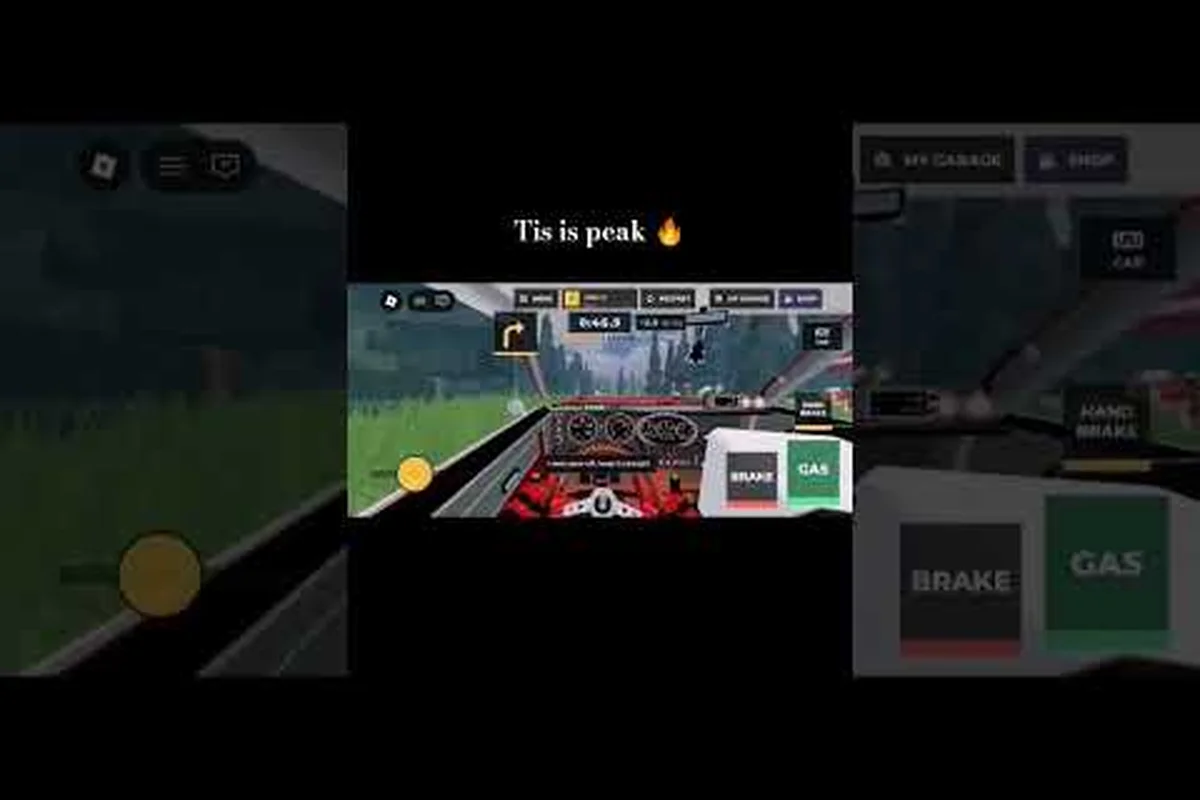
Backseat Rally competitive success starts with understanding the co-driver’s calls and reacting before the corner arrives. This Backseat Rally competitive guide shows how to set controls, build a fast race routine, and turn beginner mistakes into repeatable wins.
Backseat Rally Quick Start for Competitive Racing
The fastest route to better results is to learn the road, not simply press the accelerator harder. A strong Backseat Rally quick start begins with the tutorial, a comfortable control setup, and a clear division of attention between the road and the co-driver’s spoken directions. Once those basics are stable, you can focus on braking points, racing lines, and the small decisions that separate a completed stage from a competitive finish.
Start With the Two-Role System
Backseat Rally is built around a driver and a co-driver. The driver steers, brakes, and accelerates, while the co-driver reads the route and calls directions. This division matters because the best drivers do not try to anticipate every bend at the last instant; they listen for the call, position the car early, and make one smooth correction before the corner reaches them.
A practical beginning sequence is: first, pair up so each person owns one role—the driver handles steering, braking, and throttle, while the co-driver turns the upcoming route into clear calls such as distance, direction, and hazard warnings. Then run the opening stages in that format before adding speed, because every delay in the call-to-correction loop forces the driver to brake or steer late. For example, a co-driver who warns of a sharp right at “two” gives the driver time to release the accelerator, set up the car early, and make one controlled correction instead of making a sudden emergency input.
-
Complete the opening tutorial and pay attention to how the co-driver announces turns, hazards, and distance warnings.
-
Drive in a low-risk practice session until you recognize the warning pattern without waiting for the final instruction.
-
Select a car that feels predictable rather than chasing the fastest-looking option.
-
Test braking and steering on the first available stage before entering a competitive lobby.
-
Save a personal checkpoint routine, such as early braking for sharp turns and a small throttle reduction before the road opens.
The tutorial is especially useful for learning the role split. In the Backseat Rally tutorial, you can use the initial races to identify how the game communicates direction and distance. That foundation prevents the common mistake of treating every co-driver phrase as a last-second command.
First Race Checklist
| Preparation step | What to verify | Competitive benefit |
|---|---|---|
| Controls | Steering, braking, and reversing respond cleanly | Fewer accidental inputs |
| Audio | Co-driver calls are clear and audible | Earlier, more accurate corrections |
| Camera | The car remains visible through corners | Better spatial awareness |
| Pace | You finish without repeated wall contact | Cleaner racing lines |
| Calls | You can act before the turn | Faster corner entry and exit |
Competitive players reported by community guides emphasize practicing the early stages with the AI co-driver before moving to head-to-head races. That advice is especially valuable because the basic callouts remain the foundation of the experience, even after players become more familiar with the roads.
Backseat Rally Mobile Controls Guide for Faster Inputs
Mobile control settings determine how quickly you can react to a call, so the best setup is not always the most sensitive one. This Backseat Rally mobile controls guide focuses on clear steering, deliberate braking, and a layout that keeps the road visible. If a setting causes repeated overcorrections, lowering its sensitivity can produce faster lap times than increasing the speed of every input.
Recommended Mobile Layout
Keep steering and acceleration on the side that matches your stronger hand, then place the brake where your thumb can reach it without moving your grip. The exact button position can vary by device, but the basic rules stay consistent: use the largest comfortable hit areas, avoid placing controls over important road information, and test the arrangement before committing to a long race.
| Mobile control | Recommended starting point | When to adjust it |
|---|---|---|
| Steering | Medium sensitivity | Increase for sharp corrections; decrease if the car swings |
| Brake | Large, easy-to-reach button | Reposition if the thumb covers the road |
| Acceleration | Hold-to-drive with comfortable feedback | Adjust if accidental taps cause speed changes |
| Camera | Follow the car closely enough to see the road | Change if the road disappears during turns |
| Audio | Maximum comfortable volume | Lower only if callouts become unclear |
The most important mobile habit is to make corrections gradually. A large steering input can send the car outside the intended line, and a late brake leaves less time to straighten the car for the next section. If you feel the car pulling toward a barrier, release acceleration briefly and use a small steering correction rather than making one dramatic turn.
Mobile Race Routine
A reliable mobile routine has three stages: call, position, and correct. When the co-driver announces a turn, move the car toward the outside of the upcoming corner, release or reduce acceleration as needed, then settle into the inside line. On a narrow section, preserving momentum matters more than making a dramatic correction, because small errors can become larger when the car is already moving too quickly.
The Backseat Rally acceleration and control guide expands on reversing, drifting, and checkpoint timing, which are useful when a mistake leaves the car facing the wrong direction. The goal is not to avoid every contact, because that is unrealistic in a fast rally, but to recover smoothly and prevent one mistake from turning into a chain of lost seconds.
Backseat Rally Keyboard Controls and Desktop Setup
Desktop players get a different control experience, but the same strategic principles apply: keep inputs direct, make braking deliberate, and react to the co-driver before the corner arrives. A useful Backseat Rally keyboard controls reference should be treated as a starting point for testing rather than a fixed prescription, because sensitivity and camera behavior can vary by device and player preference.
Desktop Control Layout
Use separate keys for steering, acceleration, and braking, then place them where your hands can rest without blocking the view. If the game supports both keyboard and mouse, use the mouse for camera or menu actions and reserve the keyboard for driving. This arrangement makes it easier to build muscle memory because the same key always has the same meaning.
| Desktop action | Suggested control role | Adjustment cue |
|---|---|---|
| Steer left and right | Two keyboard keys or analog-style steering | Reduce sensitivity if the road view snaps sideways |
| Accelerate | One large, easy key | Move it if accidental presses are common |
| Brake | One large, easy key | Separate it from acceleration for cleaner timing |
| Reverse | Dedicated key or a safe control combination | Learn it before entering tight routes |
| Camera | Mouse or keyboard shortcut | Keep the car and road visible |
The How to Play Backseat Rally on PC guide by nocrown is a useful desktop reference for camera behavior, steering, braking sensitivity, and co-driver audio. The key takeaway is to tune the setup around consistency: a car that feels slightly less responsive can still be faster if it produces fewer abrupt corrections and easier recovery from mistakes.
Desktop Driver Technique
Keyboard players often benefit from smaller, earlier inputs. When a co-driver calls a right turn, move the car toward the turn early, then release steering as the car rotates. Holding the key too long can overshoot the corner, while tapping it repeatedly can create nervous movement that shakes the camera and makes judging distance harder.
Keep the throttle stable on straights, brake before the turn reaches the car, and avoid steering while the car is still heavily sliding. If the car is sliding, a small counter-steer and reduced throttle often work better than a sudden full correction. Practice these actions in a repeatable order so your hands do not have to make several decisions at once.
Backseat Rally Strategy Guide for Winning Race Lines
A competitive Backseat Rally strategy guide is less about memorizing one perfect line and more about managing speed, visibility, and mistakes. The strongest route often has a simple shape: carry speed through clear sections, sacrifice a little entry speed for safer corners, and preserve enough control to avoid a costly impact. Since the co-driver supplies route information, the driver can concentrate on the car’s position and the road immediately ahead.
Read the Callout, Then Look Ahead
Treat the co-driver’s warning as preparation rather than an instruction for the last instant. When a call mentions a sharp turn, begin moving toward the correct side of the road early; when it reports a distance warning, reduce speed before the obstacle reaches the car. This habit is especially useful on long stages, where a small delay compounds across several corners.
Use a consistent callout sequence: hear the pace note, translate it into road position and speed, then execute the corner before the tightest point. For example, a “left, tightens” call means preparing the car early for the inside line and reducing speed in advance, not steering at the last moment. This creates a repeatable rhythm from the co-driver’s call to the car’s setup, helping maintain momentum without sacrificing control.
-
Identify the turn direction and severity.
-
Check the visible road for the earliest safe positioning point.
-
Brake or lift off before the car reaches the tightest part.
-
Steer smoothly and settle the car for the exit.
-
Reapply acceleration only when the car is pointing in the new direction.
This approach is more reliable than reacting to the moment the car appears to leave the road. A player can see the corner earlier, so treating the callout as a trigger for preparation is the difference between driving the stage and chasing it.
Match the Strategy to the Surface
The available community walkthroughs describe different handling behavior on snow and mud, with vehicle choice influencing how easily a car maintains control. Exact performance can vary by car and version, so treat surface recommendations as a baseline and test them in practice. The important distinction is that a car suited to a snowy stage may feel less stable on mud, while a responsive car on mud can be harder to control when grip is limited.
| Road condition | Driving priority | Common mistake |
|---|---|---|
| Clear and paved | Carry speed, brake late | Overcorrecting on gentle bends |
| Mud | Smooth throttle, stable steering | Sudden acceleration spins the car |
| Snow | Early braking, gentle inputs | Treating the surface like dry pavement |
| Narrow route | Stay centered, reduce speed | Cutting too close to barriers |
The Head-to-Head racing guide covers the competitive format and the value of practicing head-to-head situations specifically. Competitive lobbies expose weak habits quickly, so use them to test whether your braking, positioning, and recovery routines remain consistent under pressure.
Competitive Race Strategy for Mistakes, Laps, and Progression
Even a well-prepared player will miss calls, hit barriers, or arrive at a corner too quickly. Competitive performance depends on limiting the time lost after the first error. A mistake should have a defined recovery procedure so panic does not cause a second error immediately afterward.
The One-Error Recovery Plan
When the car hits a barrier or leaves the racing line, first identify the car’s orientation. If it faces forward and only a little speed was lost, ease back onto the road. If it faces sideways, reduce acceleration, use a controlled reverse input when necessary, and wait for the wheels to point toward the route again. Trying to force a forward recovery from a badly angled position usually adds more delay.
| Error | Immediate response | Recovery goal |
|---|---|---|
| Light barrier contact | Release throttle, steer away, regain line | Preserve momentum |
| Wide entry | Brake earlier and take a wider line | Avoid a second impact |
| Car facing wrong way | Stop, reverse, realign | Rejoin the route |
| Slide at corner | Reduce throttle and make a small correction | Restore grip |
| Missed checkpoint | Follow the route back toward it | Recover time without a second mistake |
The co-driver may continue providing information after a mistake, so do not ignore the calls while the car is unstable. First recover control, then use the next warning to establish a new line. This is the difference between treating a mistake as a reset and using it as part of the race.
Credits and Car Choice
Car purchases can influence your competitive options, so progression and race strategy are closely connected. The Backseat Rally release Credits guide explains the available approach to earning and spending Credits. Rather than spending immediately, compare how a car feels in practice, especially on mud, snow, and narrow stages, because a faster-looking vehicle that feels unpredictable may produce slower clean runs.
A good competitive purchase decision considers three things: how the car responds to early steering, how quickly it stops, and whether you can recover it without losing time. A car that answers clearly and predictably is often more valuable in ranked play than one that is difficult to control but seems to have a higher top speed.
A Repeatable Race Routine
Use the same routine every time you enter a competitive stage, but define it as a short sequence of measurable actions rather than a general reminder to focus. For example, before the start signal, check your camera angle and choose a reference point for the first corner; this gives the co-driver a consistent basis for pace calls. Repeating that sequence across timed runs makes braking points, corner entry speed, and recovery time easier to compare, helping you identify whether an improvement came from positioning, throttle control, or fewer contact penalties.
-
Listen for the first call and settle your attention.
-
Brake before the corner rather than during the tightest point.
-
Keep the car centered when the route narrows.
-
Reduce throttle smoothly on loose surfaces.
-
Recover from errors in a fixed order.
-
Review the final run and note one technical issue to fix.
This routine makes your performance easier to measure. If you are repeatedly braking late, practice the callout. If you are hitting the same barrier, change your positioning. If you lose time after contact, drill recovery separately. A Backseat Rally competitive guide is most useful when it turns broad advice into a small number of repeatable actions.
Backseat Rally Competitive Guide Practice Checklist
The best preparation routine is short enough to use before every race and specific enough to reveal what needs work. Use the Backseat Rally versus mode guide to review competitive matches, then run this checklist in a quiet practice session before attempting another high-stakes race.
Pre-Race Checklist
-
Confirm that the co-driver’s audio is clear.
-
Verify that the camera shows the car and upcoming road.
-
Complete one short practice stage without changing settings.
-
Choose a car that steers and brakes predictably.
-
Decide which control side or key layout you will use.
-
Review the surface type and expected hazards.
-
Clear distractions from the race interface.
-
Set a single technical goal for the run.
After-Race Review
Review the run within a few minutes, while the sequence of mistakes is still fresh. Note whether the failure happened during braking, positioning, steering, or recovery. That classification makes the next practice session more productive because you can practice one specific action rather than simply racing again and hoping for a better result.
| Review area | Question to ask | Next practice target |
|---|---|---|
| Calls | Did you act before the turn? | Respond to the first useful warning |
| Braking | Did you stop the car before the tightest point? | Use one earlier braking reference |
| Lines | Did the car remain centered? | Reduce late steering corrections |
| Recovery | Did one mistake become several? | Complete the recovery sequence calmly |
| Controls | Did the layout cause missed inputs? | Reposition or reduce sensitivity |
The Backseat Rally guide and tips video by ItzVexo provides a practical overview of the first races, co-driver calls, and early car spending. Use it to refresh the role system, but spend most of your time in practice identifying the exact point where a competitive run begins to lose time.
The fastest Backseat Rally strategy is not reckless driving. It is early recognition, smooth control, and a recovery plan that keeps one mistake from becoming three. Master the calls, tune the controls for your device, and use the same corner routine until it becomes automatic.
Frequently Asked Questions
What is the best first step in Backseat Rally competitive play?
Complete the tutorial and practice a short stage with the AI co-driver before entering a competitive lobby. Focus on recognizing direction calls, distance warnings, and the correct time to brake. This builds the basic callout-to-corner timing that remains important even after you learn the tracks.
Should mobile players use maximum steering sensitivity?
Not necessarily. Maximum sensitivity can make small corrections feel abrupt and cause oversteering near barriers. Begin around medium sensitivity, reduce it if the car swings, and increase it only if you cannot turn quickly enough. Consistent, controlled inputs usually produce better results than the fastest possible response.
Are keyboard controls better for competitive races?
Keyboard controls can suit players who prefer direct, separated inputs for steering, acceleration, and braking, but they are not automatically better. Test camera behavior, key placement, and braking sensitivity first. A setup that feels natural and allows early corrections is more valuable than a technically faster layout you cannot control.
How can I recover after hitting a barrier in a competitive race?
Release the accelerator and check which way the car faces before making a large correction. If it is slightly misaligned, ease it back toward the road; if it faces backward, stop and reverse carefully. Rejoin the route, then use the next co-driver warning to rebuild your line without rushing.
What should I improve before buying a faster car?
Improve your braking reference, corner positioning, and recovery routine first. Test each car on the surfaces you actually race, and choose the one that feels predictable even if another vehicle appears faster on paper. Clean control and a short recovery after mistakes usually create a larger competitive advantage than raw acceleration alone.