
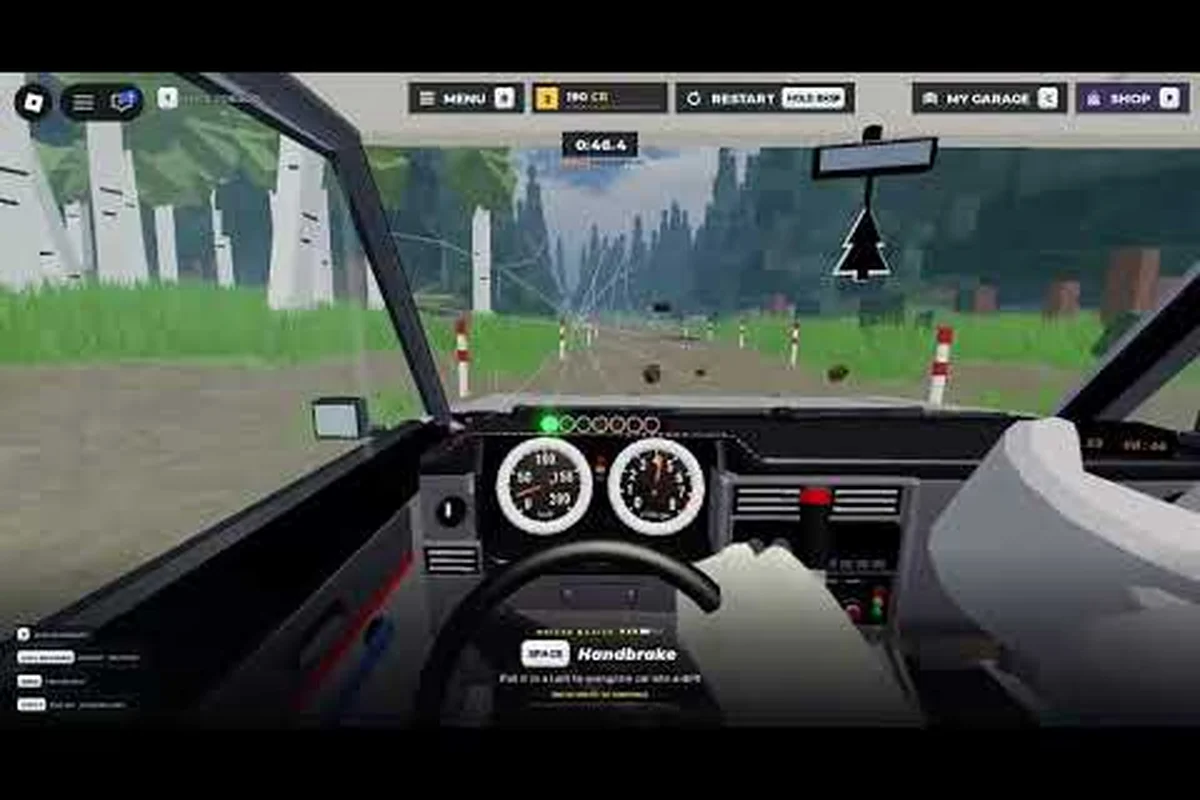
Backseat Rally can feel confusing at first because one player drives while the other calls directions, yet that shared responsibility is what makes every clean run satisfying. This Backseat Rally guide for beginners shows new players how to master the two roles, improve their calls, and build better solo and multiplayer habits from the first race.
Backseat Rally Beginner Roles and First Races
The first challenge in Backseat Rally is understanding that the driver and co-driver are equal partners in a successful run. The driver controls the car, while the co-driver reads the route and provides precise instructions; neither role can recover a bad race alone. This makes the Backseat Rally guide for beginners an important starting point because good communication and clear callouts matter more than raw speed.
A new player can quickly feel overwhelmed by the pace of the course, the changing scenery, and the need to react quickly. The good news is that each role has a manageable set of habits. A driver learns to stay smooth, while a co-driver learns to communicate early and avoid vague directions such as “turn” when a more specific landmark would be easier to follow.
| Role | Main responsibility | Most useful first habit | Common early mistake |
|---|---|---|---|
| Driver | Steering, braking, and throttle control | Keep the car settled before a corner | Overcorrecting after a small wobble |
| Co-driver | Read the route and announce hazards | Name the turn and the danger together | Waiting until the turn is already close |
| Solo player | Control and call the route | Alternate between observation and driving | Focusing only on the road ahead |
| Multiplayer pair | Coordinate timing and trust | Use the same call vocabulary | Switching between unrelated terms |
The useful idea behind these roles is also explained in the broader Backseat Rally beginner guide. However, beginners should first master one simple communication format: identify the turn, state the risk, and give the timing. For example, “left, tight barrier, now” gives the driver more useful information than a single direction.
Reading the road before the turn
The co-driver should look farther ahead than the car currently is. In many rally stages, the important information is not always at the bend itself. A sharp turn may sit beyond a crest, a narrow section may follow a quick right, or a hazard may appear just after the road opens. Looking ahead gives the driver more reaction time and reduces the need for sudden corrections.
The driver, in turn, should avoid chasing the racing line before the co-driver has finished describing the next hazard. A controlled entry is usually faster than a dramatic one because a spin or wall impact can erase a good position instantly. The practical goal for a first session is not to drive perfectly; it is to avoid unrecoverable mistakes and finish enough clean stages to understand the rhythm.
Learning the callout order
A consistent callout order removes confusion because the driver can process each cue instantly while reacting to the corner. For example, “Right, hard, long, rock” combines the turn direction, steering severity, corner distance, and roadside hazard into one sequence; the driver then receives a separate action cue such as “Brake now” if braking is required. This structured pattern helps beginners separate what the road demands from what the co-driver wants the car to do, rather than interrupting rapid calls with overlapping instructions.
| Callout order | Example | What the driver hears |
|---|---|---|
| Direction first | “Right” | Which way the car should turn |
| Severity second | “Hard right” | How much steering and braking are needed |
| Distance third | “Long right” | How much of the corner remains |
| Hazard last | “Right, narrow, rock” | The specific danger to avoid |
| Action last | “Brake now” | The immediate response required |
New players can compare both roles in the Backseat Rally acceleration and roles guide. The exact phrasing is less important than repeating the same order in every race. Once the vocabulary becomes automatic, the pair can spend more attention on the road and less energy guessing what a teammate meant.
Backseat Rally Tutorial for New Players
Backseat Rally is easiest to learn when the game is treated as a communication drill rather than a speed test. This Backseat Rally tutorial for new players focuses on a repeatable sequence: settle the car, scan the route, call early, and recover calmly. These habits work on short stages and remain relevant when higher speeds introduce more obstacles and tighter timing.
The best beginner sessions are controlled. Players should start with a road they can complete at moderate speed, listen to every call, and note where communication broke down. A missed call on a quiet straight matters less than a late call before a sharp bend. Reviewing those moments produces a better next run than repeatedly chasing a better time.
Set up your first run
Begin with a straightforward car and avoid buying every vehicle immediately. The goal of early progression is to learn the controls, earn Credits, and identify which car feels easiest to control. Buying several cars before understanding the handling differences can leave a new player unsure of whether poor results come from the vehicle or their driving.
Community walkthroughs, including ItzVexo’s Backseat Rally guide, show the early progression loop and recommend spending starting Credits carefully. Other player guides, such as VendoPlus’s walkthrough, emphasize progressing from the first stage toward the garage and learning how the head-to-head lobby works. These are practical community references, though interfaces and available cars may change as the game updates.
A sensible first-run checklist looks like this: keep the first car in the garage as a baseline, note how early stages rank steering response, and save Credits rather than immediately buying multiple vehicles. For example, if the starter car feels too twitchy through a hairpin, compare only one upgrade or alternative after you can identify whether the issue is the car’s handling, a late call, or the route itself; this makes later purchases evidence-based instead of guesswork.
-
Complete an early stage at a speed that allows clean callouts.
-
Practice both a sharp turn and a long bend before increasing the pace.
-
Earn enough Credits to compare one starter car with another.
-
Race against the AI co-driver to experience the intended role structure.
-
Review mistakes and classify them as steering errors, late calls, or poor route reading.
-
Enter one online race only after both partners understand the callout order.
The last point is especially valuable. A first multiplayer lobby can feel chaotic because unfamiliar cars, varied routes, and new voices all compete for attention. A controlled AI or solo run creates a better foundation because the player learns the call structure without depending on a stranger to provide every instruction.
Steering, braking, and camera control
New players often believe that faster steering inputs always produce a better rally line. In practice, sharp inputs can make the car feel unstable. The driver should use enough steering to follow the road, then let the car settle before adding more correction. Braking before the turn is easier to control than trying to save speed after entering it too quickly.
Camera position also affects how much warning the driver receives. A view that reveals the road farther ahead supports early co-driver calls, while a view that hides upcoming corners can make a good instruction arrive too late. Players using a mouse should review sensitivity before chasing better times. The nocrown PC controls guide demonstrates camera behavior, steering, and braking options on desktop.
| Control issue | Likely symptom | Practical adjustment |
|---|---|---|
| Steering sensitivity too high | Tiny corrections become large movements | Lower sensitivity and retest on a straight |
| Camera sits too low | The next turn appears late | Raise the viewpoint for more road visibility |
| Braking too aggressive | The nose dips during entry | Use a shorter, steadier brake input |
| Camera moves too much | The road feels unstable | Reduce camera motion if available |
| Audio too quiet | Distance warnings are missed | Raise co-driver and game volume |
Change only one input at a time so you can identify its effect instead of guessing. For example, lower steering sensitivity, drive the same three-stage route, and compare the car’s response before altering the camera or brake pressure. In a solo run, note whether each corner is completed without contact and whether the pace notes remain easy to follow; in multiplayer, compare laps rather than blaming a teammate’s driving. Retain the best setup for the next session, since Backseat Rally rewards repeatable control, not a large batch of menu changes.
Backseat Rally Solo Play: One Player, Two Roles
Solo play is more demanding because one person must act as both driver and co-driver. That constraint makes the Backseat Rally solo guide essential for players who want to improve without depending on a teammate’s timing. The answer is not to try to complete every task simultaneously at full speed. Instead, divide the road into short mental segments and prioritize the hazard that comes next.
A useful solo routine is to glance toward the upcoming road, identify the turn, then return attention to the car. Some players use a spoken sentence, such as “right, tight, through the gap,” even when no one else can hear it. Speech helps identify the hazard and prevents the eyes from wandering away from the road for too long.
Build a call-and-drive loop
The most effective loop contains three stages. First, scan far enough ahead to see the next corner. Second, describe that corner in a consistent way. Third, steer and brake before the obstacle becomes urgent. Repeat this process after every meaningful change in road direction.
| Solo stage | What to do | Why it helps |
|---|---|---|
| Scan | Look beyond the current bend | Creates reaction time |
| Name | Say the direction and severity | Prevents vague mental notes |
| Commit | Steer and brake decisively | Reduces last-second corrections |
| Check | Confirm the exit is clear | Prevents a second mistake compounding |
| Reset | Return attention to the car | Maintains a repeatable rhythm |
Some players find it easier to learn the first stages with an AI co-driver and then continue alone after understanding the callouts. Others prefer to practice entirely without assistance. Either approach works, but the best solo player builds a process that can survive a fast stage, not merely a calm early track.
Learn from mistakes without slowing down
After a run, classify the failure rather than simply saying it was messy. A common error is braking too late, which points to route reading and call timing. Another is spinning while correcting, which suggests that the driver added too much steering after an initial mistake. Hitting a wall usually indicates that the turn was entered at an excessive speed.
These classifications point to a focused correction rather than a wholesale change to driving style: a late call means the route-reading habit needs work, while excessive entry speed calls for earlier braking. For example, if the same hairpin repeatedly causes a wall strike, try completing the previous corner at a lower speed before tackling it again. This isolates the cause, keeps the solo run productive, and prevents one mistake from being mistaken for every kind of handling error.
-
Late call: Scan farther ahead and speak earlier.
-
Late braking: Increase the distance between the call and the action.
-
Steering overcorrection: Make one smooth input, then pause briefly.
-
Missed hazard: Identify the object rather than calling only the turn.
-
Tunnel vision: Check the road after each turn before accelerating.
This method turns a difficult solo run into useful practice. Instead of repeating the same mistake at the same speed, change one variable and test again. The complete Backseat Rally getting-started guide can help with broader progression, while the solo-specific technique should remain focused on attention and routine.
Backseat Rally Multiplayer Guide for New Pairs
Multiplayer introduces a human variable: your teammate may call turns earlier, later, or with different words than you expect. This Backseat Rally multiplayer guide gives new pairs a simple way to standardize communication before a lobby becomes confusing. Agree on direction, severity, distance, hazard, and action, then use those five elements consistently for every instruction.
The first multiplayer priority is trust, not speed. A driver who can predict how a co-driver describes a turn will brake earlier and steer with greater confidence. A co-driver who sees that the driver understands the route can provide precise warnings instead of repeating a direction several times.
Establish a shared vocabulary
Direction words should remain universal, but pairs can create a short list for recurring hazards. The important part is that both players know what those words mean. If “tight” refers only to a narrow road, it should not be confused with a sharp bend.
| Communication need | Standard term | Optional custom term | Rule |
|---|---|---|---|
| Basic turn | Left or right | None | Always use familiar direction words |
| Sharp corner | Hard | Tight corner | Agree before the race |
| Long bend | Long | Sweeper | Use for the same road shape |
| Narrow passage | Narrow | Pinch | Identify the physical danger |
| Immediate action | Now | Brake | Reserve for urgent timing |
| Surface issue | Low grip | Slippery | Describe what the driver feels |
Before entering a lobby, spend one short stage confirming the terms. A good drill is for the co-driver to describe a series of corners while the driver repeats the key action aloud. If the driver cannot say whether to brake immediately or merely prepare, the vocabulary is not ready.
Deal with mistakes in the moment
Even experienced pairs make mistakes. The useful response is to correct the course and continue. A driver who spins should not panic the co-driver into contradictory calls. A co-driver who realizes the call was late can issue a clear correction, such as “brake now,” rather than continuing the earlier instruction.
A simple recovery structure keeps communication calm: the co-driver should describe what the car is doing in concrete terms, distinguish a minor slide from an immediate loss of control, and avoid stacking instructions that compete for the driver’s attention. For example, if the rear steps out on a damp corner, saying “car is sliding wide, ease off the throttle” gives the driver a usable reference without adding a second steering command. The goal is to restore a predictable pace, not punish the mistake with silence or a heated debate.
-
State the immediate danger.
-
Give one clear action.
-
Confirm that the car is stable.
-
Resume the next callout.
| Situation | Co-driver response | Driver response |
|---|---|---|
| Driver enters too fast | Name the hazard again | Release steering pressure and recover |
| Call arrives too late | Say “brake now” | Prioritize stability over the ideal line |
| Driver misses a turn | Give the recovery direction | Turn only enough to regain the road |
| Both become confused | Point to the nearest clear feature | Stop accelerating until reoriented |
For deeper party-racing tactics, the Backseat Rally head-to-head guide covers how the competitive format changes the priorities. Even there, clear communication remains the foundation; an aggressive driver without reliable calls simply makes more speed with less control.
Backseat Rally Pro Tips for Faster, Cleaner Runs
Progress comes from removing mistakes before chasing a faster time. The best Backseat Rally pro tips are practical habits that reduce wasted motion, make calls easier to understand, and keep the car stable. They work for a solo time trial, an AI co-driver session, and a competitive multiplayer lobby.
One key principle is to separate route information from car control. The co-driver should describe the road, while the driver decides how to execute the movement. Mixing them—for example, shouting where the wheel should point—can create conflict. A clear “hard left, rock inside” gives the driver both the route and the constraint.
Prefer predictability over heroics
A smooth run is usually easier to reproduce because Backseat Rally’s pace notes reward a consistent rhythm rather than last-second reactions. If a player adds steering while braking, reduces throttle too abruptly, or enters a hairpin faster than the surface allows, the car’s yaw can become unpredictable and the next callout arrives with less time to recover. For example, in a solo run, releasing the throttle early on a loose surface and feeding in small steering inputs can preserve momentum; in multiplayer, the co-driver can give an earlier warning about the severity of the bend. Repeatable inputs make mistakes easier to diagnose, whether you are following a pacenote, handling a slippery stage, or practicing a new car.
| Habit | New-player version | Pro-level version |
|---|---|---|
| Steering | Avoid sudden corrections | Use measured inputs tied to the road |
| Braking | Tap the brake before turns | Brake early enough to preserve balance |
| Callouts | Name the direction | Include severity, distance, and hazard |
| Recovery | Turn back toward the road | Stabilize, realign, then accelerate |
| Car choice | Buy what looks good | Compare handling across several stages |
| Review | Notice a spin | Identify the cause before the next run |
Tune the car and progression route
Cars with different handling characteristics can change how a pair approaches a stage. A vehicle that feels stable at moderate speed may require earlier braking in a fast course. Another may turn sharply but feel slippery during sudden changes. Because handling reports can vary by platform and update, test cars on representative stages rather than relying on a single general ranking.
The early Credits should usually fund experimentation. Compare a starter car with one affordable upgrade, run each on similar terrain, and note whether steering, braking, or recovery feels better. Community guides report that snow and mud can require different control habits, but exact vehicle performance should be checked in the current version. As of October 2026, the available garage options and handling behavior should be treated as version-dependent rather than permanent facts.
A concise review sheet makes the process repeatable: record the stage’s surface, turn density, and visibility alongside the selected car, then score every major call, braking input, recovery, and result. For example, if a muddy stage produces a late turn announcement and the driver brakes sharply, mark the run as a communication loss even when the car remains stable. This distinction helps beginners separate pace notes from vehicle behavior, while the next-stage adjustment can target either earlier calls or earlier braking for the same Backseat Rally stage.
-
Stage: Note the surface, turn density, and visibility.
-
Car: Record the vehicle and any upgrade chosen.
-
Call quality: Mark whether every major turn was announced early.
-
Driving quality: Note the first braking error or spin.
-
Result: Separate a driving loss from a communication loss.
-
Change: Make one adjustment for the next attempt.
This approach supports both the Backseat Rally solo guide and the Backseat Rally multiplayer guide, because the same information helps a solo player improve personally and gives a pair concrete topics to discuss. The game’s two-role design rewards attention to both the car and the communication, so the strongest racers develop both.
Keep a reliable pre-race routine
A short routine lowers mental load. Check the selected car, confirm the controls, choose a call vocabulary, and decide what the pair will prioritize during the first corner. In multiplayer, do not attempt to cover every detail in chat before the race. Choose two or three shared cues and use them consistently.
A practical pre-race routine might include checking the selected car and confirming the controls, then choosing a shared call vocabulary and deciding what the pair will prioritize during the first corner. For example, use “left” for a corner that tightens on entry, “right” for a direction change, and “brake” for an immediate hazard. This matters because consistent calls let the co-driver communicate a developing corner early, helping the driver avoid sudden corrections and preserve momentum.
-
Verify that the driver can hear the co-driver clearly.
-
Confirm whether “now” or “brake” is the preferred immediate-action word.
-
Agree that a missed call should be repeated once, more clearly.
-
Choose a calm opening pace for the first third of the stage.
-
Reserve the most aggressive driving for clear, open sections.
-
Review the stage immediately afterward, while the memory is fresh.
These habits also make the advice in this Backseat Rally guide for beginners portable. When the cars change, the stage gets harder, or the opponent becomes faster, the underlying process still applies: read the road, communicate early, control the car, and learn from mistakes.
Frequently Asked Questions
Is Backseat Rally better played with friends or alone?
Both modes teach different skills. Solo play develops route reading, braking discipline, and the ability to switch attention between the road and upcoming hazards. Multiplayer adds communication, trust, and timing. Beginners benefit from practicing the core controls alone, then testing their callout system with a friend so each player can focus on one role.
Should a beginner buy the most expensive car first?
Usually not. Early Credits are more valuable when they help you compare handling rather than simply expand the garage. Choose a car that feels controllable, earn more Credits, and test an affordable alternative on the same types of stages. A more expensive vehicle is useful only when its handling advantage matches your driving style.
How can I improve my co-driver calls?
Call earlier, name the turn, and add one piece of useful context. Instead of saying only “right,” describe a hard right with a rock on the inside. Keep the wording consistent, because familiarity lets the driver respond without translating a new phrase during the turn. Practice the same call order on every stage.
What should a driver do after making a mistake in a solo run?
Avoid adding large steering corrections while the car is still unstable. Look toward the next clear section of road, ease off acceleration, and recover before rebuilding speed. Afterward, identify the original cause, such as late braking, excessive entry speed, or a missed route call, so the next run changes one meaningful variable.
Is voice communication necessary in multiplayer?
Clear voice communication is the most direct way to exchange time-sensitive route information, but successful pairs can also establish predictable text or signal callouts. The critical factor is consistency: both players must understand what a warning means and when an action is urgent. Test the system before a competitive race to avoid ambiguity.