
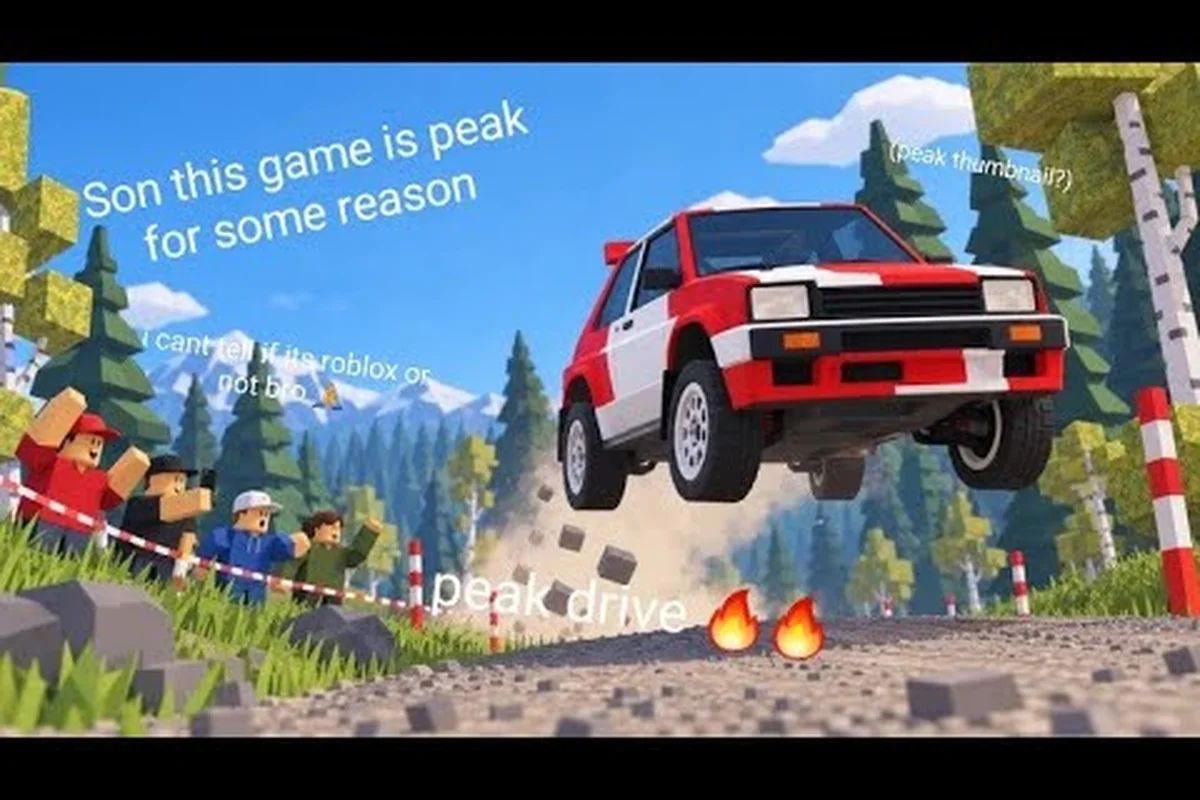
Backseat Rally mistakes to avoid can decide whether a new driver finishes on the podium or watches the leaders disappear. Small corrections in steering, braking, and pace often save more time than reckless speed, especially during your Backseat Rally first race.
Backseat Rally Mistakes to Avoid Before the Green Flag
A clean run depends on preparation, not just reflexes. The most damaging Backseat Rally mistakes to avoid include entering corners too fast, releasing the steering too abruptly, braking without a clear line, and focusing only on the car ahead instead of the road ahead. Each error compounds: a late brake creates understeer, understeer widens the racing line, and a wider line leaves no room for the next corner.
The goal is not to drive cautiously at every moment. It is to spend speed where the road allows it and control risk where the track does not. Before entering a race, review the route, identify the obvious braking areas, and decide where you will accelerate again. That simple plan gives you something concrete to execute when reaction time becomes scarce.
| Pre-race mistake | Why it hurts the race | Better preparation |
|---|---|---|
| Learning the route during the race | Corner entry becomes reactive rather than planned | Review the lap and mark braking points beforehand |
| Ignoring the weather | Grip and stopping distance can change | Check the condition forecast before the lobby |
| Chasing one rival | You lose sight of the wider track | Use the racing line instead of following every move |
| Holding the accelerator through every corner | Small errors turn into unnecessary slides | Build separate throttle and braking phases |
| Ignoring position changes | The best available line may not be the fastest line | Compare the track position with the results |
Corner-entry planning is the most valuable pre-race habit. A driver who knows where the car will slow, turn, and accelerate again can make fewer corrections during the first lap. The Backseat Rally beginner guide provides a useful foundation for learning the controls and basic race flow, while this guide focuses on the errors that most often cost time.
Set a Process Instead of a Target Speed
Speed is easier to manage when it comes from a repeatable process. For every corner, identify the marker that signals braking, select a target position on the road, turn the wheel smoothly, and apply power only as the car straightens. This process works whether the opponent beside you is faster or slower because it keeps your attention on the road rather than on a moving distraction.
Community experience reported by players consistently favors patience over emergency corrections, although exact handling can vary by route, vehicle, and platform. Treat that guidance as a practical baseline rather than a fixed speed prescription. Your own first race should answer a narrow question: did I brake too early, too late, or in the wrong place?
Steering Errors That Break the Racing Line
Steering problems often begin before the visible turn. Turning the wheel sharply while still traveling fast shifts the car toward the outside edge instead of pointing it cleanly into the corner. Drivers then correct in the opposite direction, creating a broad oscillation that costs momentum and can pull the car toward the barrier.
The primary Backseat Rally steering tips are to look farther ahead, use smaller inputs, and allow the front of the car to settle before asking for more rotation. If the vehicle is sliding, abrupt steering changes can make the slide worse. A smoother correction usually preserves more speed than a dramatic input followed by an opposite lock.
Flat Steering Versus Overcorrection
Flat steering means holding a large steering angle without meaningful adjustment. It is common among new drivers because they expect the car to follow the exact path they imagine. Overcorrection is the opposite problem: the driver reacts to a small deviation with a sudden input, then has to cancel it. Both errors waste the same available road width.
| Steering pattern | What the driver is doing | Likely result | Adjustment |
|---|---|---|---|
| Flat input | Holding the same angle through the turn | Understeer, wide exit | Release steering as the car rotates |
| Sudden input | Yanking the wheel toward the apex | Scrubbed speed or slide | Use a smaller, smoother correction |
| Opposite lock | Correcting one movement with another | Oscillating line | Let the car settle before changing direction |
| No correction | Ignoring a developing slide | Barrier contact or a missed gate | Look toward the intended exit line |
Look-through steering means directing your gaze toward the road you want to reach, not merely the obstacle currently beside the car. That habit improves both line choice and correction timing. It also reduces the temptation to stare at a rival, especially when that rival slows unexpectedly or takes a different line.
Smoothness Is Faster Than Aggressiveness
A smooth correction does not mean a slow correction. You can turn decisively while still moving the wheel in a controlled manner. The key is to avoid turning more when the car has already begun rotating. That extra input creates tire scrub, moves the car away from the desired path, and may force a second correction.
During your Backseat Rally first race, choose one corner per lap where you consciously reduce the steering input. Compare the result with the corners where you overcorrect. A useful record has four columns: corner, brake timing, steering smoothness, and exit speed. Even rough observations can reveal whether you are arriving too quickly or making the car work harder than necessary.
| Corner type | Steering focus | Common mistake | Recovery cue |
|---|---|---|---|
| Fast sweeper | Small, early correction | Oversteering the initial turn | Keep the wheel nearly centered |
| Tight hairpin | One decisive but smooth input | Adding extra lock while sliding | Hold the intended exit direction |
| Chicane | Quick direction changes | Rushing the second apex | Finish the first turn before turning again |
| Roadside bend | Stay near the usable pavement | Cutting too close to the edge | Preserve room for correction |
Steering input budget is a useful concept for beginners. If every correction is large, the driver has no reserve for the unexpected. Saving some steering range lets the car respond to bumps, slide, or traffic without forcing a dramatic input. That reserve is especially valuable when another car occupies part of the ideal line.
Braking Mistakes That Turn Corners Into Collisions
Braking errors are costly because they remove control before the corner demands it. The most common Backseat Rally braking tips begin with braking early enough for the car to settle, releasing the brake progressively, and avoiding repeated stabbing inputs. Waiting until the car visibly slides removes the margin needed to correct the line.
Braking distance is not a fixed number because road conditions, vehicle behavior, and route layout affect the result. Players report that a cautious early brake is easier to control than a late emergency stop, though the exact braking point must be learned on each course. Treat community accounts as guidance for your first clean lap, not as universal telemetry.
Use a Three-Stage Braking Pattern
A useful braking pattern has three stages: prepare, release, and verify. Prepare by lifting off throttle and lining up the car. Release with firm pressure rather than repeated taps. Verify by checking whether the car is slowing and pointing toward the intended corner. This sequence prevents the common habit of braking while simultaneously making a large steering change.
| Braking stage | Driver action | Purpose | Error to avoid |
|---|---|---|---|
| Prepare | Lift off the accelerator and select the corner line | Reduces speed before rotation | Holding full power until the apex |
| Release | Apply controlled brake pressure while steering smoothly | Lowers speed without a slide | Stabbing the brake or locking up |
| Verify | Check rotation and adjust the line | Confirms the car is following the plan | Assuming the car will turn automatically |
Braking-before-turning is the safest default when speed is uncertain. A large steering input at the same moment as hard braking can reduce grip at the front, causing the car to run wide. If the turn is very tight, brake until the vehicle is clearly slowing, then concentrate on steering through the apex.
Do Not Chase the Wrong Target
The car ahead may brake earlier or later than the ideal line. Matching its brake marker can put you off the road, especially when the gap is small. The target should be the road, not the rear bumper. Use the visible braking point for your own lane and accept that another vehicle may disappear briefly around the corner.
| Target | What it teaches you | Risk |
|---|---|---|
| Rival's exact brake point | Copying another driver's timing | Your line and speed may require a different point |
| Track edge or corner marker | A repeatable reference tied to the road | Slightly slower at first, then consistent |
| Your intended apex | A coherent line from entry to exit | Requires more focus before committing |
| Distance to the car ahead | General spacing, not a braking solution | Following too closely can lock your view |
For multiplayer sessions, review the broader race setup in the Backseat Rally race lobby guide. Knowing whether the event rewards outright pace, clean positioning, or a specific number of laps can influence how aggressively you should balance risk and consistency. Even in a fast event, however, an avoidable collision usually creates a larger loss than a controlled lap.
Pace Errors That Waste the Easy Speed
Pace errors come from driving too slowly in safe sections or too quickly in risky ones. A driver who treats every corner as a crisis may complete the lap but give away huge amounts of acceleration. The opposite mistake is equally expensive: holding maximum throttle everywhere turns a small steering error into a lost position.
Backseat Rally how to drive guidance is most effective when it connects inputs to outcomes. Smooth acceleration helps the car maintain stability. Moderate corner speed preserves the option to accelerate earlier. Controlled steering protects the front end. These choices create a faster lap because the car spends less time correcting and more time moving forward.
Measure the Exit, Not the Apex
The apex is only one part of a corner. The faster driver often enters at a similar speed but exits better, which means the next straight or transition can be used immediately. When reviewing a lap, identify how long the car spends at reduced speed after the apex. Excess time there often points to premature throttle release, excessive steering, or a line that ends too wide.
| Pace choice | Short-term result | Long-term result |
|---|---|---|
| Very low corner speed | Easy control and few errors | Lost time on every corner |
| Very high corner speed | Strong entry and possible slide | Unpredictable exits and contact risk |
| Speed matched to available grip | Slightly slower-looking entry | Faster, more repeatable lap |
| Full throttle on exits | Rapid acceleration when the car is stable | Loss of traction if the car remains angled |
Exit speed is the practical measure of a good corner. If the car keeps turning after you release the accelerator, adding power only increases understeer or instability. Straighten the vehicle, confirm that the tires have grip, and then accelerate. This sequence often creates more speed than accelerating in a straight line while the front wheels are still fighting the corner.
Learn the Fast Parts of the Route
Every course contains sections that reward commitment: short straights, gentle bends, and transitions where the road opens immediately after a turn. Identify at least one of each during route review. For the gentle bend, use enough steering to hold the line but avoid fighting the wheel. For the short straight, accelerate promptly. For the transition, plan the next corner before reaching it.
Community reports also emphasize that drivers improve faster when they repeat one clean lap than when they chase a personal best every attempt. A controlled reference lap lets you compare braking points and steering habits without constantly changing technique. Use the Backseat Rally head-to-head guide when you want to apply those habits in a competitive race rather than an empty practice session.
Weather and Traffic Mistakes That Look Avoidable
Weather changes the relationship between steering, braking, and pace. A road that accepts a fast entry on a dry lap may provide less grip on a wet or muddy one. Players report that conditions can alter speed, braking, and cornering, but exact penalties may vary by platform or version. Confirm the forecast rather than relying on visual guesswork.
When rain is expected, reduce corner entry speed before the turn and leave more room between you and the car ahead. In snow, make smaller steering inputs and brake earlier. In mud, prioritize a steady trajectory over sudden throttle changes. The Backseat Rally how weather works explains the condition system in greater detail, including how weather callouts can affect preparation.
| Condition | Primary risk | Adjustment | Mistake to avoid |
|---|---|---|---|
| Rain | Reduced grip and longer stopping distance | Brake earlier and leave more space | Entering a corner at dry-track speed |
| Snow | Low traction and unpredictable slide direction | Use smaller steering inputs | Abrupt throttle or countersteer |
| Mud | Uneven grip and poor acceleration | Hold a steady line and moderate power | Sudden acceleration out of a turn |
| Clear conditions | Overconfidence after bad-weather laps | Re-establish normal braking points | Assuming the road always rewards maximum speed |
Condition margin is the extra speed you intentionally give up when grip is uncertain. A margin is not wasted if it prevents a spin or missed checkpoint. The important part is to make that reduction consistently rather than saving the entire risk budget for a single dramatic corner.
Traffic introduces a separate problem: the racing line may be occupied even when the road itself is clear. Do not move toward the barrier just because the car ahead has moved outward. Check your available space, choose the least disruptive line, and accept a small speed loss when necessary. Good positioning preserves options for the next lap.
Avoid Copying Someone Else’s Mistake
A rival may be carrying damaged steering, entering a braking zone late, or using a vehicle setup that behaves differently. Their line can still be useful, but it is not proof that the same input will work for you. Follow the racing line when it suits your car and the conditions; copy the mistake only if you understand why it is happening.
| Behavior to copy | What to verify first |
|---|---|
| Late brake marker | Whether the rival has a shorter stopping distance or a clearer lane |
| Wide corner entry | Whether the road genuinely allows that position |
| High exit speed | Whether the car is stable or barely holding the slide |
| Close defensive line | Whether doing so blocks a legitimate passing route |
Position before panic is a simple rule: establish a stable line before reacting to pressure. If a competitor crosses your path, slow enough to avoid contact, then choose the open side. A controlled position loss is easier to recover than a broken rhythm that affects the remainder of the lap.
A Practical Race Checklist for Cleaner Laps
A checklist works better than a long list of abstract advice because it turns technique into decisions. For your Backseat Rally first race, use only three or four items at first. Trying to change everything at once makes it difficult to identify what improved the lap.
Start by reviewing the route, noting the hardest braking zone, the sharpest corner, and the best acceleration area. During the race, make one deliberate choice at each of those places. Afterward, record whether the car reached the intended exit and whether the lap felt controlled. The goal is repeatable evidence, not a vague feeling.
| Race phase | Checklist item | Observable result |
|---|---|---|
| Before the start | Identify three key locations | Braking and corner choices are already planned |
| Corner entry | Match speed to available grip | No immediate slide or wide arrival |
| Mid-corner | Use a small, smooth steering correction | The car settles without opposite lock |
| Corner exit | Straighten before adding power | Acceleration begins without extra sliding |
| Straight | Use the road fully | Little time is lost to unnecessary caution |
| Opponent nearby | Drive the available line, not the rival | Position changes without reckless contact |
A useful post-race review contains three questions: where did the car lose time, which inputs preceded the loss, and what smaller correction would you make next lap? If the answer is “I braked too late,” move the braking point slightly earlier. If the answer is “I turned too much,” reduce the initial steering input. Specific corrections are easier to practice than a general command to drive better.
Build a Repeatable Personal Limit
Your personal limit is the pace at which you can still stop, turn, and accelerate cleanly. It is not a number copied from another driver. Weather, route, vehicle, and familiarity can all change that limit. During early races, choose a pace that leaves a small margin; after several clean laps, reduce that margin gradually.
Consistency margin is the space between your current safe pace and the edge of control. Using part of the margin for faster exits can improve lap time, while spending all of it in one corner leaves nothing for mistakes. Competitive drivers often become faster because their margin is smaller, not because they make unrelated errors less often.
The central lesson is simple: drive the whole lap, not just the most dramatic moment. A clean entry, stable rotation, and timely exit create a rhythm that lasts from the first checkpoint to the finish. Once that rhythm feels natural, small increases in steering smoothness and braking precision will produce the biggest gains without turning the Backseat Rally mistakes to avoid into recurring habits.
Frequently Asked Questions
What are the most common Backseat Rally mistakes to avoid?
The most common errors are braking too late, adding too much steering at corner entry, accelerating before the car straightens, and copying a rival’s braking point. These mistakes reduce control, widen the exit, and make a clean overtake much harder. Focus first on smooth inputs and consistent line choice before chasing extra speed.
How should I approach my Backseat Rally first race?
Treat the first race as a learning session. Review the route, identify its hardest braking zone and tightest corner, and concentrate on completing clean laps rather than using maximum power everywhere. Record whether your braking happens early or late, because a consistent error is easier to correct when you know exactly where it occurs.
What are the best Backseat Rally steering tips for beginners?
Look toward the intended exit, use smaller steering corrections, and avoid adding more lock while the car is still rotating. A smoother input preserves speed and reduces the chance of an opposite-lock correction. Practice one corner per lap and compare the car’s exit direction with your intended racing line.
Where should I brake in a Backseat Rally race?
Brake according to the road, the current grip, and the vehicle’s behavior rather than the car directly ahead. Lift off the accelerator before turning, apply controlled brake pressure, and begin steering more decisively once the car is slowing. On wet or slippery routes, brake earlier because available grip and stopping distance can change.
Can I drive faster without taking more risks?
Yes, by improving the exit instead of forcing the entry. Once the car is stable and pointing down the road, applying power sooner can produce more acceleration than braking or steering longer than necessary. Smoothness, early throttle release, and a stable exit often create a faster lap because the car loses less time correcting.