
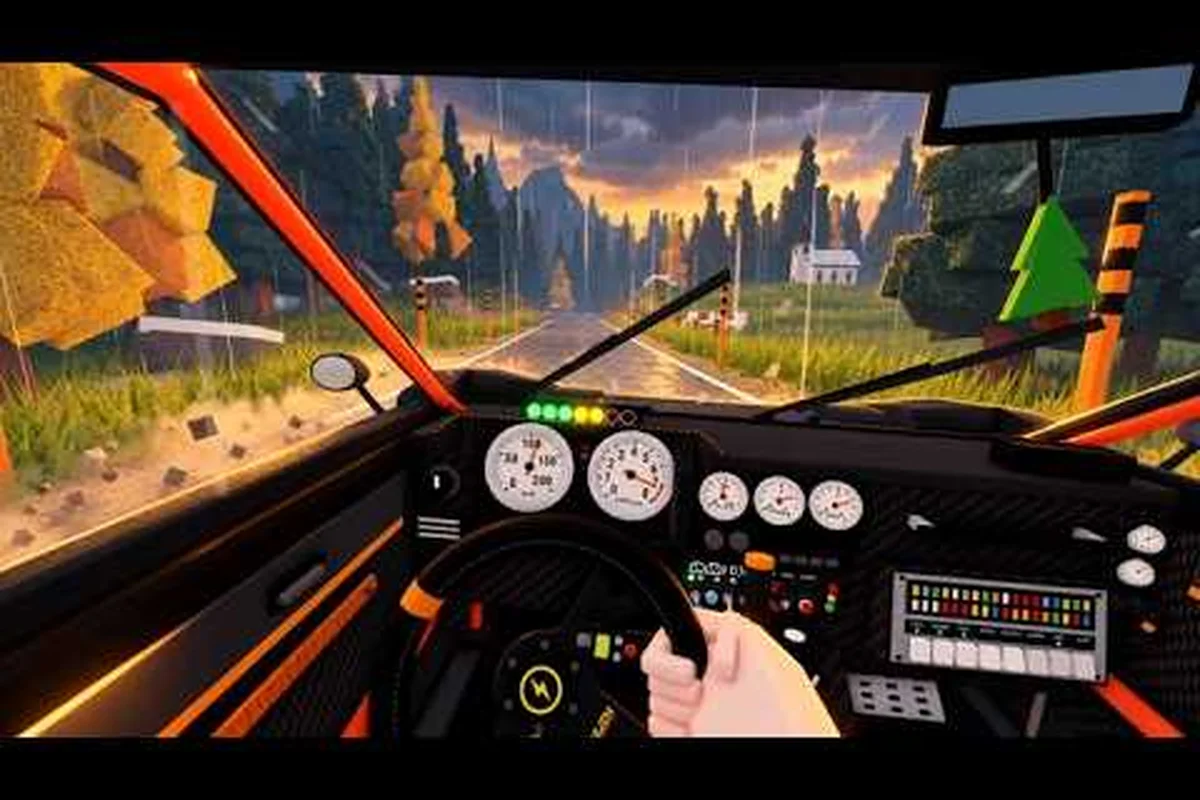
A Backseat Rally race lobby decides the pace, format, and pressure of every online contest, so mastering its modes and start gives you a stronger foundation. Learn how to set the stage, time boosts, defend position, and pass rivals with confidence.
Backseat Rally Race Lobby Setup and Mode Choices
The Backseat Rally race lobby is more than a waiting room: it establishes the rules that shape braking points, passing opportunities, and how aggressively you must defend. Players who treat lobby selection as part of the race gain a practical edge because they can prepare for the traffic pattern before the countdown ends.
Different Backseat Rally race modes reward different habits. A clean head-to-head contest emphasizes launch precision, while a crowded party race makes positioning and defensive awareness more valuable. Choose the event that fits your confidence level, then use the same pre-race routine regardless of format.
Match Types and Strategic Priorities
A reliable race lobby gives every driver a clear objective, but the best event also exposes a weakness you can exploit. Consider the number of cars, the expected contact, and whether clean separation or constant traffic is more likely. A crowded event gives you more chances to advance, although it also raises the cost of a single mistake.
| Race situation | Main advantage | Main risk | Best preparation |
|---|---|---|---|
| One-on-one contest | Predictable opponent position | Direct pressure at every corner | Precise launch and corner exit |
| Small field | Room to control your line | Less traffic to hide errors | Consistent defense rhythm |
| Large field | Multiple passing targets | Contact and blocked lanes | Conservative overtaking |
| Mixed experience | Higher chance of mistakes | Unpredictable driving behavior | Patience and rapid recovery |
The same comparison applies when you organize a private contest with friends. A stable player order and clear race settings reduce confusion, while a mixed field can create unpredictable interactions that reward adaptive driving. For broader advice on organizing multiplayer sessions, see the head-to-head and friends-racing guide.
A Pre-Race Lobby Checklist
Before entering a competitive event, verify the following items in order: first, select the Backseat Rally race mode and understand its pace, camera behavior, and overtaking demands; next, confirm that the lobby has enough participants to create a meaningful race but not so many that the start becomes crowded. Check the available practice or warm-up opportunity when possible, because it lets you test the launch and identify whether a race start rewards an early launch boost or a controlled exit. Finally, decide whether your first objective is to win the lead or simply complete a clean finish, since that choice determines how aggressively you should defend the inside line and when to attempt your first overtake.
-
Confirm that the chosen mode matches your preferred pace.
-
Check the number of participants before committing.
-
Use the practice or warm-up opportunity if one is available.
-
Decide whether your first objective is the lead or a clean finish.
-
Clear the previous race’s input or camera settings.
-
Review the track layout during the countdown.
-
Keep your attention on the start signal, not the loading animation.
This sequence prevents a common early-race problem: choosing a mode without deciding how you will drive it. A defensive player entering a crowded race should protect the inside line, while an aggressive player should save the first overtake for a place where following distance will naturally increase.
Backseat Rally Race Start and Launch Boost Timing
The first seconds of a race determine whether you enter traffic or control it. A clean Backseat Rally race start uses consistent throttle input, visual focus on the racing line, and a boost decision based on space rather than panic. The goal is not simply to accelerate hardest; it is to leave the start with a usable path forward.
Launching too early can send you into the car ahead before either vehicle has settled. Waiting too long gives faster opponents a longer run at the first bend. The practical answer is to hold the vehicle steady, watch the signal, and apply power as the countdown ends while avoiding a sudden steering input.
Reading the Start Signal
Players report that the clearest starts come from watching a fixed reference point, such as the finish line or the center of the road. This prevents the car from drifting during the countdown and makes the launch repeatable. A countdown may be less useful when the track, camera angle, or other vehicles obscure the signal.
| Start condition | Likely outcome | Adjustment |
|---|---|---|
| Clear view of the signal | More consistent throttle timing | Use a fixed visual reference |
| Opponent starts directly ahead | Limited initial path | Avoid an immediate steering correction |
| Wide road and open field | Room for a launch boost | Time it with the signal |
| Narrow road or tight grid | Higher contact risk | Prioritize a clean exit |
Timing the Backseat Rally Launch Boost
A launch boost is most valuable when it creates a clear opening rather than merely adding visual speed. In a small field, it can secure first position. In a crowded race, a boost used at the wrong moment may force you into contact and cancel the advantage you were trying to build.
Use this Launch Window rule: boost only when the car ahead has moved, your own lane is visible, and the next corner will not trap you between two opponents. If any of those conditions fail, save the boost. This conservative approach often produces a better overall time than spending it immediately.
For a deeper explanation of boost acquisition and usage, consult the Backseat Rally race boost guide. It can help you distinguish between a speed advantage and the larger strategic benefit of preserving a boost for a decisive pass.
Launch Errors and Corrections
An early steering correction is the most costly start error because it interrupts traction and often triggers contact. If the car begins to rotate or slide, ease the steering rather than making a second sharp correction. Once the vehicle points down the road, apply throttle gradually and reassess the available gap.
The same principle applies to opponents who jump the start. Do not mirror their mistake. A controlled launch gives you a predictable position, while an aggressive response can leave you stationary or sideways. Recovering from a poor start remains possible, but it requires braking earlier than planned and using the first safe opportunity to pass back.
Backseat Rally Racing Tips for Clean Position Control
Strong Backseat Rally racing tips combine speed with restraint. The fastest available line is not always the best line because contact, missed boosts, and defensive pressure can erase a small advantage. Position control means keeping enough room to accelerate, see an exit, and react to the next vehicle.
A useful framework is Track Position, Traffic Cost, and Next Opportunity. Track position tells you whether you are inside, outside, or directly behind another car. Traffic cost estimates the effort and danger required to pass. Next opportunity identifies where the following distance will grow, such as a long straight or slow hairpin.
Choose a Line You Can Defend
Inside lines often offer the shortest route, but they can trap you if another car crowds your exit. The outside line is safer when several opponents are bunched together, since you can watch the inside movement and accelerate when the group compresses. A middle line is useful in a large field when you want to preserve several options.
| Position | Benefit | Limitation | Best use |
|---|---|---|---|
| Inside line | Shortest route in many corners | Vulnerable to a crowded exit | One-on-one or clear traffic |
| Outside line | Better visibility of the field | Longer distance traveled | Dense traffic and cautious recovery |
| Middle line | Flexibility to react | Less space for immediate defense | Large fields and uncertain starts |
| Direct draft | Easier acceleration | Dependence on the leading car | Short straights before a pass |
The table describes positional options, not guarantees. A defensive line still depends on the car beside you, the road width, and the distance available after the corner. If the exit is blocked, transition to the outside instead of forcing a gap that may close on impact.
Manage Speed Before the Pass
Approach a slower car with enough braking room to choose a side. Trying to squeeze between two vehicles without that margin usually produces a slower exit and a worse position than the one you started with. A clean pass may take one extra corner, but it preserves momentum for the following straight.
These are the most reliable Backseat Rally racing tips for traffic: in a Backseat Rally race lobby, treat every overtake as a position decision rather than a shortcut. Start the move before the slower car enters the braking zone, then use the straights to close the gap without turning the pass into a side-by-side corner battle. If the rival has already slowed for the turn, waiting one corner can preserve your exit speed, protect your line, and keep the rear-view perspective clear of a closing opponent.
-
Use the straights to reduce the gap before the braking zone.
-
Avoid entering a corner already alongside a rival.
-
Prioritize exit speed after a pass rather than raw entry speed.
-
Save boost when the pass is not clean.
-
Re-enter the center after overtaking instead of drifting across the road.
-
Use the rear-view perspective to check whether another car is closing.
Learning common driving errors—especially excessive steering and late braking—can shorten your learning curve because both mistakes consume the space and speed needed for a clean overtake. For example, in a Backseat Rally race lobby, turning sharply toward the inside of a corner after arriving late on the brakes can push you off the racing line and cost more exit speed than the pass gains. The beginner mistakes guide highlights these issues that affect both solo time trials and competitive lobbies, where small errors can quickly turn a clear position into traffic.
Backseat Rally Overtaking Tips for Risky Corners
Overtaking is safest when the rival must reduce speed and the passing car can still accelerate at the exit. A long straight may look inviting, but a heavy car with a boost can close the gap before the next corner. Corners and hairpins create risk, yet they also provide natural speed differentials that can turn a pass into a lasting lead.
Evaluate the Pass Window
Before committing to a pass, identify three zones: the braking point, the overlapping area, and the exit. A useful Backseat Rally overtaking tip is to require clear visibility through all three. If the rival is hidden until the corner, wait until you can see the road ahead and choose a line that does not force immediate braking.
| Pass opportunity | Pass advantage | Pass danger | Recommended approach |
|---|---|---|---|
| Long straight | High top-speed advantage | Boost counterattack | Commit only with a clear gap |
| Fast sweeper | Continuous speed | One small error causes contact | Take the inside with room |
| Hairpin | Strong speed difference | Very slow inside line | Brake early, then use exit acceleration |
| Downhill section | Gravity-assisted speed | Uneven closing distance | Preserve the inside line |
| Final corner | Converts position into a result | One mistake may lose the race | Prefer a clean, earlier move |
The best pass is not always the immediate pass. If you reach the final corner tied, securing the inside line and the exit can settle the result. If a rival controls that line, carry speed through the corner and look for a later opportunity instead of risking a collision that gives away both positions.
Defend the Line Without Fouling
A defender should make one clear move rather than weaving across the road. Choose the inside if the rival approaches from behind, then hold a consistent line toward the apex. Excessive movement invites contact and can produce a penalty or an unstable exit, depending on the race rules.
If you are defending a Backseat Rally defense racing position, protect the racing line rather than the rival’s preferred line. Let the opponent choose a side, then cover the space toward the inside. This approach preserves your exit and makes the pass harder to complete.
Keep Momentum After Passing
Completing the move is not the same as winning the corner. Many overtakes fail because the new leader brakes immediately, allowing the previous leader to return. After passing, straighten the car, look for the next reference point, and accelerate toward the exit without making another large steering correction.
A pass also becomes easier to defend if it creates a Gap Buffer of several car lengths. That space allows you to react to a boost attack without abandoning your preferred line. If the rival stays close, avoid a second defensive movement and let them choose a less favorable approach.
Backseat Rally Defense Racing and Race Management
Good defense is active but controlled. You want the rival to know you are protecting the line without giving them an easy reason to collide with you. The objective is to make every overtake expensive, preserve your exit, and avoid spending a boost merely because a car appears behind you.
A strong Backseat Rally defense racing plan depends on corner sequence rather than the current position alone. Long straights encourage the trailing driver to use a boost. Tight corners return control to the leader. A driver who understands that rhythm can spend acceleration where it matters and defend where passing is difficult.
Defend by Corner Type
On a straight, hold your preferred line and make one early move toward the inside if the rival closes. At a hairpin, protect the apex and accept that a trailing car may briefly appear alongside. On a fast sweeper, keep enough room for both cars to remain stable, because a crowded exit creates greater risk than a small position change.
| Race zone | Defender’s target | Boost usage | Main mistake to avoid |
|---|---|---|---|
| Straight | Protect the inside entry | Hold unless a safe pass is available | Braking without a real threat |
| Heavy braking zone | Keep the line visible | Usually save | Boosting into dense traffic |
| Hairpin | Control the apex | Use after the corner | Taking the inside with no exit |
| Fast sweeper | Maintain a clean racing line | Use on exit | Moving across the rival’s path |
| Final lap | Preserve the best available line | Use for separation, not panic | Chasing every small gap |
Manage Rivals Without Chasing Them
The Threat Ladder helps you judge which car deserves attention. A car using a boost while close is an immediate threat because its speed can shorten the gap quickly. A car several positions back may not require a defensive line yet, especially if another opponent is already challenging you.
Before a race, decide what happens if a boost-using rival closes. A practical rule is to move one car toward the inside, preserve a usable exit, and avoid matching every acceleration. Constant acceleration makes it difficult to react to the second car, while controlled defense gives you information about the entire field.
Adapt to the Final Laps
Race management becomes more conservative as the finish approaches, but excessive caution can still cost positions. Check whether you need to defend a lead, secure a podium place, or simply complete the race cleanly. Those goals require different levels of risk.
If you are leading, prioritize Gap Protection and avoid unnecessary battles. If you are chasing, look for a single strong opportunity rather than several partial moves. If another car is closing rapidly, defend the inside at the next suitable corner and use the boost on the straight afterward when there is room.
For information about the competitive results and progression attached to different finishes, see the race rewards and bonuses guide. It is useful when deciding whether a risky pass matches the value of the position at stake.
Putting Together a Complete Backseat Rally Race Lobby Plan
A complete Backseat Rally race lobby plan links setup, launch, passing, and defense into one repeatable routine. The best players do not try to make every corner dramatic. They reduce avoidable mistakes, create clear opportunities, and choose their risk based on the race format and current position.
Use the following Race Control Loop before the countdown ends: link each decision to your race mode, grid position, and current objective. If traffic is dense, prioritize a clean first-lap exit and a usable line instead of forcing a pass; if the field is spread out, a timed overtake can create more value than immediate risk. This gives the backseat rally race lobby a measurable routine: launch without spin, conserve the launch boost for a clear opening, and protect your position through the opening corner.
-
Select a mode that matches your preferred pace and risk level.
-
Scan the participant count and the cars around your expected grid position.
-
Fix your attention on a reliable start signal.
-
Launch with steady steering and controlled throttle.
-
Protect one usable line through the opening corner.
-
Evaluate traffic cost before requesting a pass.
-
Save the launch boost for a visible opening.
-
Defend with one clear line rather than constant weaving.
-
Review the final-lap objective before the last sequence of corners.
Match Your Setup to Your Objective
A defensive objective calls for conservative pace at the beginning, one clear move to protect the preferred line, and a boost held for a response. An overtaking objective requires a safer launch, because poor starting position makes the first pass unnecessarily difficult. A solo-record objective favors cleaner traffic navigation, but it does not excuse reckless contact with slower cars.
| Objective | Opening priority | Mid-race priority | Finish priority |
|---|---|---|---|
| Win the race | Secure a stable launch | Protect the line and find one clean pass | Defend with a consistent gap |
| Reach the podium | Avoid early contact | Pass selectively when a gap appears | Keep the strongest available position |
| Set a personal time | Minimize unnecessary contact | Smooth inputs and clean exits | Avoid the final-lap scramble |
| Race with friends | Use a stable, fair setup | Prioritize close competition | Finish together and safely |
The best setup is one you can execute without thinking about menu choices during the race. A clear Mode Plan, Start Plan, and Defense Plan lets you spend attention on the road instead. That is the practical value of mastering the Backseat Rally race lobby: better preparation creates cleaner decisions when speed, traffic, and position pressure collide.
Frequently Asked Questions
What is the best way to prepare a Backseat Rally race lobby?
Choose a mode that matches your risk tolerance, check the participant count, and decide whether your first goal is to lead or finish cleanly. Review the expected opening corner, use the practice option if available, and set a specific overtaking rule before the countdown. A clear plan reduces the need for last-second decisions.
When should I use the launch boost in Backseat Rally?
Use the launch boost when the car ahead has cleared your lane and the next corner leaves enough room to accelerate. Avoid spending it while vehicles are tightly grouped or when the road narrows. A boost used to create a clear gap is more valuable than one used to force a risky immediate pass.
What are the best overtaking tips for crowded races?
Choose a side before entering the braking zone, preserve an exit line, and pass when your car can accelerate without immediate contact. Following too closely for several corners leaves you vulnerable to a boost response. After completing the move, straighten the car and create a small gap rather than immediately defending every direction.
How do I defend a lead without blocking the track?
Protect the racing line with one clear movement, generally toward the inside when a rival closes from behind. Hold a consistent path toward the corner exit and avoid weaving. If another car appears, remain stable and let the first rival commit, because defending both threats instantly usually destroys your own exit.
Should every race use the same launch strategy?
No, but the timing principles should remain consistent. Use a fixed visual reference, keep steering corrections small, and avoid boosting into blocked space. In a large field, restraint is more important; in a one-on-one race, a well-timed launch can be decisive. The goal is a repeatable start, not a reckless one.