
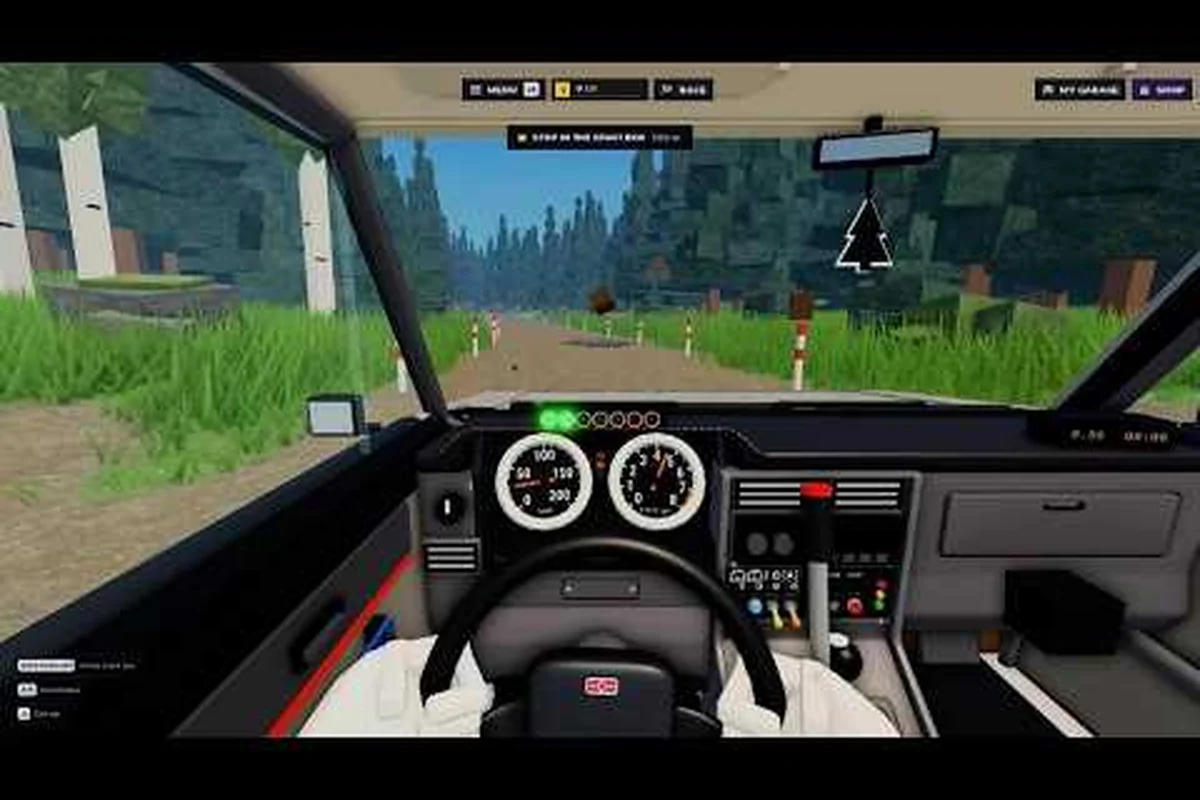
The Backseat Rally track racing guide explains how to read the race leaderboard, build consistent fastest times, and push for top records on every course. Use the lap strategies in this guide to turn practice runs into weekly leaderboard results.
Backseat Rally Track Racing and the Race for the Top Time
Backseat Rally track racing rewards precise momentum, smart braking, and clear co-driver calls. This guide explains how to use the race leaderboard, build repeatable fastest times, and turn a driving race into a weekly leaderboard push. Backseat Rally track racing rewards precise momentum, smart braking, and clear co-driver calls, while understanding Backseat Rally Race Rewards can help you choose events that match your goals and make steady progress.
Backseat Rally Track Racing Basics for Fast Laps
A competitive Backseat Rally driving race rewards preparation across three areas: the car, the route, and the driver. Because stage conditions range from mud to snow, copying one setup to every course rarely produces the best result. A useful time trial starts with a clean run, a short list of mistakes, and one measurable change for the next attempt.
The core objective in Backseat Rally track racing is simple: finish as quickly as possible while retaining control. If you drive smoothly, you carry more speed through corners and spend less time correcting slides. If you brake early and release the throttle cleanly, the car remains stable when the co-driver calls the next turn.
The Three Pillars of a Competitive Run
| Pillar | What to control | Main benefit | Common failure |
|---|---|---|---|
| Car setup | Grip, acceleration, steering response | Easier corner entry and recovery | Too much slide during acceleration |
| Route knowledge | Turns, hazards, surface changes | Earlier braking and better exits | Reacting only to the co-driver call |
| Driver rhythm | Throttle, braking, steering | More consistent lap times | Oversteering or lifting too early |
Start with one variable at a time. Changing the car, camera angle, and steering technique together makes it difficult to determine which adjustment improved the run. A clean time also depends on the car remaining stable when you accelerate, so avoid treating straight-line speed as the only measure of pace.
Reading the Co-Driver Callouts
The co-driver callouts are navigation cues, not a complete driving plan. Listen for the turn direction, but use the visible road to judge distance and surface. This matters because a call for a left turn may arrive when the corner is still hidden, and a fast driver needs to prepare before the car reaches the braking point.
Player guides report that beginners often improve fastest by practicing stages until the sequence of calls becomes familiar. CHALLS’ Backseat Rally racing guide demonstrates launch timing, inside-versus-outside line choice, and defensive driving in head-to-head matches. Those ideas also translate to time trials, although a solo run removes the contact risk and lets you focus entirely on the route.
For broader setup information, VendoPlus’s Backseat Rally walkthrough covers early car selection, stage progression, Credits, and differences between snow and mud handling. Use that reference to identify the car category suited to a route, then focus your personal testing on one setup at a time.
Backseat Rally Track Racing: Car Setup and Surface Control
The fastest available car is not automatically the best choice for every record attempt. Grip, power delivery, and steering behavior interact differently with mud, snow, and dry ground. Since Backseat Rally track racing is partly a control challenge, choose a car that remains predictable when you feed in throttle or make a late adjustment.
Community observations from the Stage 5 record run by GakuranBoy highlight the value of momentum on muddy ground. The run reportedly shows early braking before off-camber sections, a steady throttle through deep ruts, and a line that preserves speed without allowing the rear of the car to break loose. Those are transferable principles for any slippery course.
Matching the Car to the Surface
| Surface | Main handling concern | Best driving response | Time-trial focus |
|---|---|---|---|
| Mud | Loss of grip and deep-rut drag | Brake before the rut, then keep throttle smooth | Carry momentum without sideways movement |
| Snow | Reduced braking grip and delayed steering response | Use gentler inputs and earlier braking | Make small corrections, not abrupt turns |
| Dry ground | Less grip than mud, but clearer road edges | Commit slightly earlier while preserving exit speed | Balance rotation and traction |
| Mixed route | Sudden changes in surface | Adapt before the surface becomes visible | Learn where grip changes occur |
Surface transition points deserve special attention. A muddy corner followed by a dry straight can encourage too much steering, while a dry braking zone leading into snow may cause the car to rotate farther than expected. Identify these locations during practice and define a simple rule for each one.
A Practical Setup Testing Sequence
Use a repeatable three-run sequence rather than changing the car after every mistake. First, run with the current setup and record the time. Second, repeat the route while noting whether the car understeers, oversteers, or struggles to accelerate. Third, change one relevant characteristic and run the same route again.
If the car pushes wide under braking, favor earlier braking and a tighter line. If it rotates on throttle, reduce steering angle at entry and apply power more gradually. If acceleration feels weak after a corner, prioritize a cleaner exit instead of forcing an immediate slide. This diagnostic method makes Backseat Rally track racing practice more efficient because each run answers a specific question.
Backseat Rally Fastest Times Through a Disciplined Route Plan
Fast times come from reducing hesitation, not simply steering more aggressively. A reliable route plan identifies where the car should slow down, how it should enter each turn, and where acceleration can safely begin again. When those three points are clear, the driver can execute with fewer corrections and preserve speed over a complete stage.
The Backseat Rally race leaderboard provides a useful benchmark even when official medal thresholds are not available in the interface. Compare your clean run with nearby competitors, then focus on the gap rather than every position. A small improvement at several corners can produce a much larger gain than one dramatic save.
Route Planning Worksheet
| Segment | Time-trial question | Driver action | Result to measure |
|---|---|---|---|
| Launch | Is the initial acceleration clean? | Apply throttle only after the car settles | No wheelspin or immediate correction |
| Fast entry | Where is the latest safe braking point? | Brake before the corner, not during it | Lower entry speed without missed apex |
| Mid-corner | Is the car still balanced? | Reduce steering or throttle if it rotates | No sudden steering correction |
| Exit | Is traction available? | Accelerate gradually to full input | More speed carried forward |
| Final straight | Is the route clear? | Avoid unnecessary lane changes | Lowest finishing time |
A useful split is not limited to formal checkpoints. Mentally divide the course into launch, turn, exit, and straight segments, and note the time lost after each category. If you lose most of your time during corner exits, prioritize traction. If you lose it before turns, move the braking point earlier. If your mistakes occur on the final straight, you may be carrying excessive risk rather than a lack of speed.
Why Clean Runs Beat Chased Records
Many players chase a bad run by driving beyond the car’s control limit. That approach can look impressive in a highlight, but it is inefficient for the Backseat Rally fastest times because each correction consumes both speed and confidence. A slightly conservative setup that produces no mistakes is often better than an aggressive setup that scatters lap time across several corners.
The Backseat Rally guide by ItzVexo covers the game’s callout system, which is valuable for route study. Listen for the first warning, identify the physical corner, and assign yourself a brake marker. Repeating that process teaches anticipation, which is more valuable than memorizing the full stage at once.
Backseat Rally Race Leaderboard Strategy and Weekly Targets
Leaderboard performance depends on consistency as much as peak pace. A driver who posts several similar times is more likely to rise in the Backseat Rally race leaderboard than one who alternates between excellent runs and costly mistakes. The practical goal is to make your best clean result repeatable before attempting to shave another fraction from it.
The Backseat Rally weekly leaderboard can also change the way you judge progress. A new weekly reset may make a competitive time feel unreachable at first, yet it also provides a clean target for the next set of attempts. Compare your current result with your own recent best rather than with the absolute leader, because the gap to first place is often less useful than the gap to yesterday’s personal record.
Turning One Fast Run into a Repeatable Benchmark
| Run type | Goal | What to record | When to change setup |
|---|---|---|---|
| Baseline | Learn the route | Total time and major mistake locations | Only after a clean baseline |
| Consistency run | Repeat the same plan | Variation between attempts | If the car behaves differently |
| Tuning run | Test one change | Time, traction, and corner confidence | After the tested variable is isolated |
| Record attempt | Combine proven improvements | Full time and split-by-segment losses | Only when the normal race is stable |
Use three checkpoints for a record attempt: the first clean sector, the fastest sector, and the final sector. A strong overall time does not require equal sectors, but it should not contain a major loss. If the middle of the stage is inconsistent, repeat that portion until your entry speed and exit rhythm match. Short, targeted practice is particularly useful for a Backseat Rally driving race because it reduces the number of variables between attempts.
Comparing Weekly Performance
| Metric | Better result | Practical use |
|---|---|---|
| Best clean time | Lower elapsed time | Confirms a genuine improvement |
| Average of three runs | Lower and steadier average | Reveals reliable pace |
| Clean-run rate | More runs without mistakes | Reduces crash and reset risk |
| Best sector | Lower sector time | Identifies where full-stage gains are possible |
| Record margin | Time ahead of previous personal best | Measures progress between weeks |
Do not treat a leaderboard position as a substitute for lap data. If you move upward after one exceptional run, preserve the setup and turn it into a repeatable process. If you remain near the same position, analyze the slowest sector rather than changing the car again. The Backseat Rally PC guide by nocrown is useful for checking camera behavior, steering, braking sensitivity, and callout settings before a detailed record session.
Backseat Rally Race Records: Advanced Techniques for Chasing the Top
Advanced record attempts require consistency under pressure. When the car is sliding, the co-driver is giving rapid instructions, and another clean run would improve your standing, the temptation to make sudden inputs becomes strongest. A record strategy should therefore define what kind of error is acceptable, because a small mistake is often better than losing the entire run through a larger correction.
Backseat Rally race records are rarely created by one universal trick. They emerge from a route-specific combination of braking, traction management, and consistent exits. Community record attempts provide useful examples, but community data may vary by platform, car, and update. Treat shared runs as references for technique rather than permanent guarantees that every time remains competitive.
Managing the Three Types of Mistakes
| Mistake | Early sign | Recovery method | Time-saving priority |
|---|---|---|---|
| Late braking | Brake occurs inside the turn | Accept a slower entry and straighten the wheel | Medium |
| Excessive steering | Car begins rotating at the apex | Ease off steering and stabilize throttle | High |
| Overcorrection | A small slide becomes a spin | Look where the car should go and reduce input | Critical |
| Early throttle | Rear grip breaks on exit | Pause throttle until the car settles | High |
| Poor launch | Wheelspin or abrupt body movement | Apply input smoothly after traction loads the tires | Medium |
A major error should be classified before the next run. If the car spun because the driver entered too fast, repeating the same line is not a solution; braking earlier is. If the car recovered but lost the exit, a cleaner entry will matter more than a stronger launch. This cause-and-effect approach improves the Backseat Rally race records you can realistically target.
Building a Record-Attempt Checklist
Complete the checklist before attempting a competitive time:
-
Vehicle readiness: Confirm the chosen car handles predictably on the course surface.
-
Route recall: Identify the first turn, major braking zone, hazardous section, and final acceleration area.
-
Control settings: Use a camera position and sensitivity that allow smooth, accurate inputs without blocking the road.
-
Input pattern: Keep steering and throttle movements small enough to prevent immediate instability.
-
Mental rule: Choose one recovery limit and apply it consistently instead of improvising after every correction.
A successful attempt does not require perfection. It requires a car that remains controllable, a route that stays familiar, and a driver who avoids converting a minor error into a major loss. That is especially important when a weekly ranking update could separate nearby competitors by a fraction of a second.
Practical Track Racing Routine for Better Records
A productive session alternates between route study, controlled driving, and record attempts. Studying the entire course repeatedly without driving is less effective than linking each corner to a physical braking marker. A three-stage routine—orient, rehearse, attack—turns visual observation into time-trial execution.
Begin with a normal pace run and identify where the car loses control. Next, rehearse only those sections, focusing on a repeatable entry and exit. Finally, complete one full run at the level you expect from a competitive race. If the result is clean, record it; if not, choose one correction and return to rehearsal.
Session Structure
| Phase | Approximate effort | Main objective | Stop condition |
|---|---|---|---|
| Orientation | Medium | Learn landmarks and surface changes | Route is recognized |
| Rehearsal | Controlled | Fix one corner or transition | Target segment feels repeatable |
| Consistency | Fast but controlled | Complete three stable runs | Variation is small |
| Record attempt | Maximum | Combine the best proven actions | Run is complete or ruined |
Keep the fastest clean time as a separate target from the fastest time overall. The latter may include a lucky save, while the former demonstrates controllable pace. When analyzing your Backseat Rally race records, use the clean run to identify technique, then use the record attempt to combine those improvements.
Frequently Asked Questions
How do I improve my Backseat Rally track racing time?
Improve your time by braking earlier, carrying cleaner exits, and reducing corrections rather than chasing a reckless entry speed. Record the same route several times, identify the slowest segment, and rehearse it until your braking point and throttle application feel consistent. A clean full run is the best foundation for a faster one.
Where can I check the Backseat Rally race leaderboard?
Check the leaderboard in the game’s race interface after completing a track. Compare your time with nearby competitors and your previous personal best, then use the gaps to choose a practice target. Platform differences or updates may affect rankings, so focus on repeatable improvement instead of treating one position as permanent.
What is a realistic target for Backseat Rally fastest times?
A realistic target is your own best clean time, improved by small margins through better exits and fewer mistakes. Exact medal or leaderboard thresholds can vary by course, car, platform, and version, so use in-game results as the authority. The best practical benchmark is whether you can reproduce the run without relying on a major save.
How do I set a new Backseat Rally race record consistently?
Set a new record by first establishing a repeatable baseline, isolating one setup change, and making a full run only after the affected corner feels stable. Record sector-like checkpoints, including the first turn, final sector, and total time. This method turns a fortunate attempt into a repeatable process for the weekly leaderboard.