
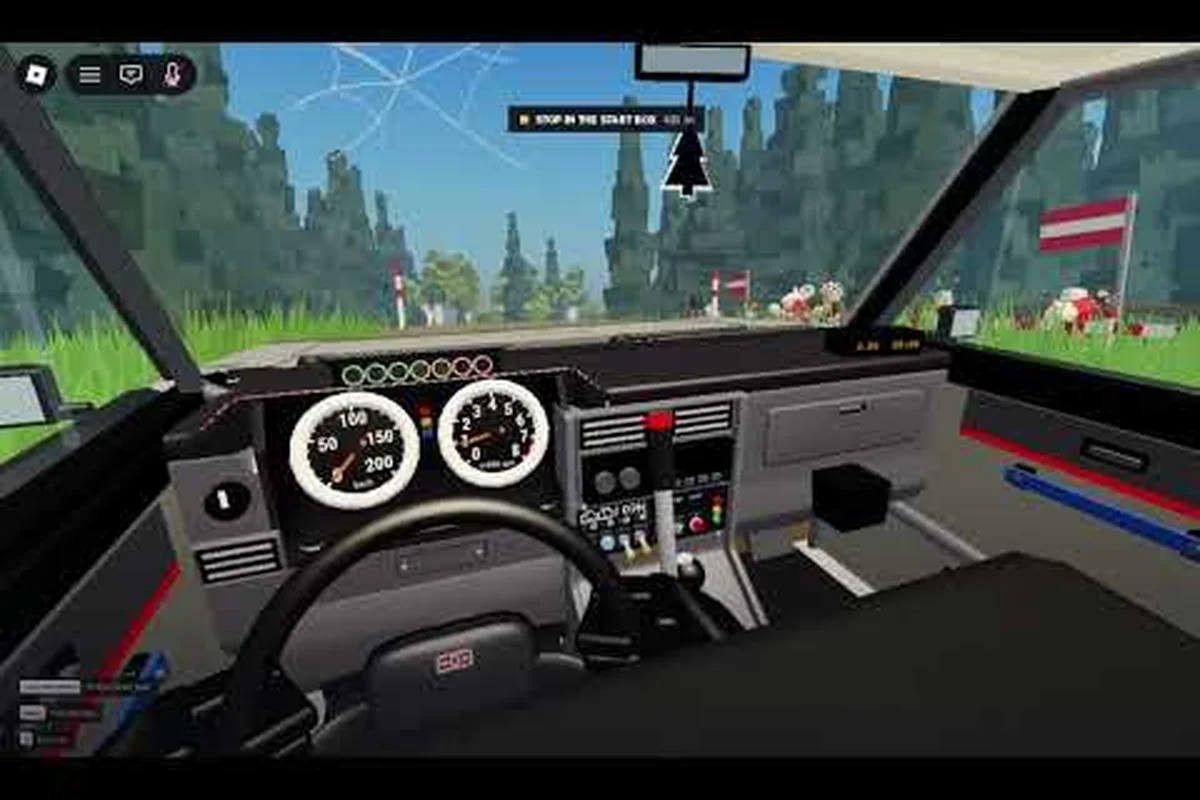
Backseat Rally cars how many? The game launches with 7 unlockable cars across 5 stages, so choosing the right vehicle can shape every run. This guide compares the garage, explains which cars suit medals and racing, and shows how to buy smarter.
Backseat Rally Cars How Many: The Complete Garage Count
The official Backseat Rally on Roblox page lists 7 unlockable cars and 5 stages. That makes the starting garage small enough to understand but varied enough for different road conditions. The cars appear across forest, snow, cherry-blossom, rain, and mud environments, with weather changing grip and braking during a run.
The important point is that the car count does not equal the number of cars immediately available. Players begin with limited Credits, earn more by progressing and racing, and use those Credits to unlock additional vehicles from the garage. Community walkthroughs also report a small Credits boost in head-to-head multiplayer, which can accelerate the route to a larger collection.
| Garage fact | Confirmed information | What it means for players |
|---|---|---|
| Unlockable cars | 7 | A complete collection requires several purchases |
| Launch stages | 5 | Cars must serve multiple terrain types |
| Solo co-driver | Available | Practice does not require another player |
| Multiplayer Credits | Reported boost | Racing others can fund faster garage progress |
| Weather effects | Rain, mud, and snow alter handling | One car rarely handles every condition equally |
The Five Stage Context
The five stages create the real challenge behind the question of how many cars exist. Forest roads offer relatively familiar grip, while snow reduces traction and mud makes acceleration more demanding. The cherry-blossom route adds a visually distinct setting, and rain introduces a wet-weather braking challenge. Because the official page identifies dynamic conditions, a vehicle’s value cannot be reduced to one universal speed number.
A practical Backseat Rally car guide should therefore treat each car as a set of tradeoffs. Top speed helps on open sections, but acceleration, handling, and braking determine whether that speed is usable. A car that feels excellent on a dry forest stage may require earlier braking in the rain. That makes the full garage worth collecting rather than treating an early purchase as a permanent answer.
How the Garage Unlocks
Garage progress follows a simple loop: complete stages, collect Credits, compare costs and performance, then test a new car on the conditions where it can make the greatest difference. The full Backseat Rally car collection is useful for checking each vehicle’s purchase status and available stats before committing scarce Credits.
Do not rush every purchase on the first afternoon. Medals, stage completion rewards, and competitive races can all feed the same progression path, but a focused buying order preserves money for the car that solves your current weakness. Treat the first purchase as a foundation and the later vehicles as specialized upgrades for medals, muddy stages, or competitive lobbies.
Backseat Rally Car Stats Comparison: What Really Determines Performance
A useful Backseat Rally car stats comparison looks beyond the largest number. Drivers need to know how quickly the car accelerates, how confidently it changes direction, how far it stops, and whether it maintains control when a surface becomes slippery. The official game page establishes that rain, mud, and snow change grip and braking, making those stats directly relevant to race planning.
Because the game presents a driver and co-driver rather than a conventional cockpit view, the co-driver’s callouts also shape performance. A smooth machine still loses time if the driver brakes too late, while a less dramatic car can excel when its handling matches the route. Player guides on this Backseat Rally walkthrough emphasize early car selection, stage progression, and handling differences on snow and mud.
| Stat category | What it influences | Best situations | Common mistake |
|---|---|---|---|
| Acceleration | Leaving corners and climbing slower sections | Mud, exits, repeated turns | Ignoring wheel spin on loose ground |
| Top speed | Long straights | Dry forest and open roads | Forgetting that grip still matters |
| Handling | Direction changes and corner confidence | Narrow, twisting stages | Cornering too early at full speed |
| Braking | Stopping before hazards | Rain and snow | Braking distance expands on wet ground |
| Traction | Maintaining control on loose surfaces | Mud and snow | Treating every car as identical |
Reading the Numbers Without Overrating Them
A car with lower theoretical top speed can remain valuable if it accelerates cleanly, resists sliding, and stops in a predictable distance. Conversely, a fast car becomes a liability when the driver cannot place it consistently on the road. The useful question is not simply which label is largest, but whether the machine’s strengths match the stage being attempted.
This is where a Backseat Rally which car is best question depends on the objective. A medal-focused driver needs control and repeatability. A competitive racer may favor responsiveness because the head-to-head lobby leaves little room for recovery. For individual purchases, prioritize the stat that prevents your most common mistake rather than the stat you can see most clearly in the garage.
Stats and Surface Behavior
Dynamic weather prevents a static garage chart from telling the whole story. The same car may feel stable in a forest, lively in rain, and excessive on mud if its grip is poorly matched to the surface. Community experience suggests that handling tends to matter more than raw speed in slippery conditions, while launch behavior and corner exits become more important once acceleration is working normally.
| Condition | Main handling concern | Practical car preference | Driving adjustment |
|---|---|---|---|
| Forest | Fast corner entries | Responsive and stable | Carry speed while saving room for correction |
| Snow | Low grip and long stops | Controlled handling | Brake earlier and keep steering smooth |
| Cherry blossom | Tight directional changes | Agile response | Avoid abrupt steering at speed |
| Rain | Reduced braking confidence | Predictable brakes | Leave more space before hazards |
| Mud | Weak acceleration and traction | Strong low-speed control | Avoid abrupt throttle and steering |
For a more formal review of purchase priority, compare the Backseat Rally vehicle statistics overview before upgrading. Look for balanced performance first, then identify the stat that matches the stages and medal targets you have not yet mastered.
Best Backseat Rally Cars for Medals: Control and Consistency
The Backseat Rally best car for medals is usually the vehicle that lets you repeat a clean run, not simply the one with the biggest performance number. Gold targets punish excess time, while head-to-head medals depend on delivering that clean run against another driver. Balance, predictable braking, and enough acceleration to recover from minor mistakes matter across both formats.
The Backseat Rally medal-oriented car ranking can help separate time-trial value from competitive speed. If your current vehicle loses time at corner exits, prioritize acceleration. If it feels nervous on entry, handling is the better investment. If repeated wall contacts or late stops remain the issue, review braking and grip before assuming the car is simply too slow.
| Medal goal | Priority order | Why it helps | What to practice |
|---|---|---|---|
| Stage gold | Consistency, braking, clean exits | Limits time lost to mistakes | Following callouts without late corrections |
| Time-trial gold | Acceleration, handling, top speed | Improves repeated fast sections | Choosing the safest racing line |
| Multiplayer medal | Launch control and recovery | Helps against an active rival | Avoiding oversteer on the opening corner |
| All-surface medals | Balanced grip across weather | Reduces bad-stage surprises | Adapting speed to each surface |
The Medal-Focused Purchase Strategy
Begin by replaying the stage where you lose the most time. Record whether the problem happens at the start, in the middle turns, or on the final straight. A mistake cluster at corner exits points toward acceleration, while late braking or understeer suggests that grip and braking should guide the purchase. This diagnostic method is more reliable than selecting a car because its appearance or headline stat impressed you.
After buying, change one driving habit at a time. Practice earlier braking on one run, smoother throttle on the next, and a more deliberate launch after that. Since the co-driver calls distance and direction, treat the audio as live information rather than background noise. The Backseat Rally garage and buying guide complements this process by helping you avoid paying twice for the same strength.
Why Balance Often Wins Medals
A balanced car preserves options. When the road changes from dry to wet, the driver can brake a little earlier, ease off the throttle, and retain the same basic line. An extreme car may dominate one condition and demand constant correction in another. Since medals require a finished, repeatable run, that flexibility can create more value than a specialized advantage that is difficult to exploit consistently.
Use the community-developed Backseat Rally tier list and vehicle ratings as a second opinion, not a replacement for practice. Player performance can vary by route, update, and driving technique, so test any recommendation in the stage that matters most to you. A car that the community ranks highly is still only as consistent as the driver using it.
Best Cars for Racing: Head-to-Head Performance
The Backseat Rally best car for racing depends on whether the race is an AI stage or a competitive lobby. AI events favor a clean, versatile setup, while head-to-head races reward fast starts, responsive direction changes, and the ability to defend a line without running wide. The Backseat Rally competitive car ranking offers a useful starting point for narrowing the field.
A verified guide from CHALLS on YouTube focuses on launch timing, inside and outside lines, overtaking through narrow sections, and defensive driving. Those details matter because a fast car only creates an advantage if the player can preserve speed through corners and avoid surrendering space on corner entry.
| Race situation | Most valuable traits | Winning approach | Common error |
|---|---|---|---|
| Straight-line start | Acceleration and launch control | Get traction before steering | Applying steering during wheelspin |
| Tight rival duel | Handling and braking | Set an early line and stay committed | Chasing an inside move too late |
| Slippery stage | Grip and stability | Smooth inputs and earlier braking | Sudden corrections at speed |
| Defensive position | Predictable control | Cover one side without contact | Blocking recklessly and losing exit speed |
| Final sprint | Top speed and acceleration | Preserve tires and avoid mistakes | Forcing a risky pass on the last corner |
Launch, Cornering, and Race Position
In a head-to-head event, the first meaningful corner often decides more than the opening straight. A strong launch leaves the rival behind, but an oversteered start can make the driver lose positions during the first turn. Keep the initial input smooth, finish acceleration before concentrating on the racing line, and avoid making a late inside move that forces an unnecessary reset.
Away from the start, choose a line based on the next hazard. The inside may be shorter but narrow, while the outside can preserve momentum if the section opens afterward. Community guides emphasize that narrow tree-lined roads reward a committed line. Position the car early, accept a slightly wider entry when necessary, and concentrate on the exit because that is where acceleration can erase a small deficit.
Competitive Practice Routine
Complete one stage without a rival to learn the vehicle’s braking point, then enter a head-to-head lobby and focus on the opening sequence. The first three corners should have simple goals: clean launch, stable entry, and controlled exit. Once those become automatic, work on one defensive technique, such as using the outside line and avoiding contact when the rival brakes early.
The solo AI co-driver gives you a dependable way to test changes, while multiplayer provides the final test. A PC controls and camera setup can also help because consistent sensitivity removes avoidable steering corrections. Medal targets and multiplayer positions both become easier when your controls respond in the way you expect.
Backseat Rally Car Guide: Buying, Testing, and Upgrading
A complete Backseat Rally car guide follows the same progression: earn Credits, buy a useful upgrade, test it on several stages, and refine your technique. The seven-car garage gives enough variety for focused collecting without requiring a spreadsheet-sized spreadsheet. The Backseat Rally purchase and ranking reference can help you compare candidates before spending.
Do not buy merely because a vehicle is affordable. A cheaper car can be a better interim purchase when it fixes a specific weakness, but an expensive car that does not match your route may produce less progress. Value comes from clean time saved, not Credits spent. Compare a candidate’s handling, acceleration, and braking with the stages where you need improvement.
| Purchase goal | Suitable choice type | Credit strategy | Validation stage |
|---|---|---|---|
| First major upgrade | Balanced all-around car | Save after several stage runs | Forest, then rain |
| Mud or snow improvement | Strong grip and control | Keep a reserve for a specialist | Mud and snowy stages |
| Time-trial chasing | High acceleration and top speed | Purchase after mastering the route | Fast forest sections |
| Competitive racing | Responsive handling and launch | Buy only if it fixes a clear weakness | Repeated head-to-head lobbies |
| Full collection | All seven cars | Complete the garage over time | Every stage type |
A Seven-Step Garage Plan
-
Finish the early route. Earn enough Credits to make an informed purchase rather than using every coin immediately.
-
Identify one recurring weakness. Review your losses and separate acceleration, braking, handling, and traction problems.
-
Buy a balanced upgrade. This usually produces more reliable improvement than a narrow early purchase.
-
Test the car twice. Drive the same stage before and after the purchase, then compare mistakes rather than relying on one lucky lap.
-
Adapt to weather. Revisit rain, mud, and snow because those conditions can change the value of the same car.
-
Try multiplayer. A competitive lobby exposes poor launches and hesitant lines that solo practice may hide.
-
Complete the garage. After the seven-car collection is within reach, complete the collection for variety and future challenges.
How to Earn Credits Efficiently
Solo stage completion provides a dependable baseline, while the reported multiplayer boost can shorten the wait for a larger purchase. A practical routine is to complete the stages you have not mastered, improve your medal times, and then test those routes in multiplayer. This approach produces Credits while also developing skills that reduce future runs.
Community guides also describe starting-Credit choices and the two-role system, including how the co-driver communicates turns and distance warnings. That information makes an early car selection more meaningful. Rather than trying every purchase at once, learn the calls, identify your most frequent error, and let that information guide the next upgrade.
Car Recommendations by Player Situation
There is no single champion for every situation, so the best recommendation depends on what currently prevents progress. New players generally benefit from balanced control, while experienced racers can exploit acceleration when they already brake confidently. Collectors should preserve Credits for all seven cars instead of overinvesting in one early vehicle.
| Player situation | Recommended direction | Why | Avoid |
|---|---|---|---|
| New player | Balanced first upgrade | Supports learning across five stages | A difficult-to-control specialist |
| Slow corner exits | High acceleration | Recovers time after corners | Buying only for top speed |
| Late stops on rain | Better braking and grip | Improves repeatable medal runs | Ignoring surface-specific behavior |
| Competitive driver | Responsive handling | Supports launches and rival battles | Uncontrollable power |
| Mud specialist player | Grip-focused car | Adds variety and stage utility | Replacing a stable all-around car too early |
Beginner, Medal Hunter, and Collector
A beginner should seek a car that makes the co-driver’s instructions easy to follow. A medal hunter should focus on the objective: braking and control for gold targets, acceleration and response for time trials. A collector can use the seven cars as a completion project, but should still buy in a sensible order so the garage remains useful during the journey.
The best car for medals and the strongest car in a race can differ. Medal runs punish mistakes, whereas a close multiplayer battle can reward a more aggressive setup. Read the conditions, inspect the stat differences, and test the candidate on the exact mode that inspired the purchase.
Making the Final Choice
Before buying, ask three practical questions: Which stage causes most failures? Which stat would directly address that failure? Can I test the new car without spending hours relearning the route? If the answers point to a balanced improvement, choose it. If they point to a specialist, make sure your current car can still handle the other stages.
The official game page confirms the key structural information: seven unlockable cars, five stages, changing weather, and both solo and multiplayer play. Everything else should be validated through your own results, because player reports may vary by version and driving style. Use community rankings as a filter, then let measured stage times and medal results make the final decision.
Frequently Asked Questions
How many cars are in Backseat Rally?
Backseat Rally has 7 unlockable cars and 5 stages, according to the official Roblox game page. The cars are not all available at the start; players spend Credits earned through stage progress and racing to build out the garage. Different vehicles handle forest, snow, rain, and mud conditions in distinct ways.
Which car is generally the best in Backseat Rally?
There is no single universal winner because each car balances top speed, acceleration, handling, braking, and traction differently. A balanced vehicle is usually safest for beginners and medals, while an acceleration-focused car can excel in time trials. Test candidates on the stage where you lose the most time rather than choosing solely from a ranked list.
What is the best car for earning medals in Backseat Rally?
The strongest medal car is usually the one with repeatable control, predictable braking, and enough acceleration to avoid slow exits. Clean consistency matters more than a dramatic peak statistic, especially on rain, mud, and snow. After changing cars, compare mistakes and split times on the same route, because personal driving can outweigh small differences in the displayed stats.
Should I buy the most expensive car first in Backseat Rally?
Not necessarily. A more expensive car only provides better value if its strengths address your current stage times or your preferred race format. Save Credits, identify a recurring weakness, and purchase a balanced upgrade before specializing. Once the seven-car garage is close, preserving the remaining Credits can make the final collection much easier.
How can I test a car before choosing it permanently?
Replay a familiar stage with the new vehicle and compare corner entries, braking points, exits, and total mistakes against your previous car. Test it in both solo and head-to-head play, because medals reward clean consistency while competitive races expose launch control and defensive handling. Keep the same route when possible so the comparison remains meaningful.