
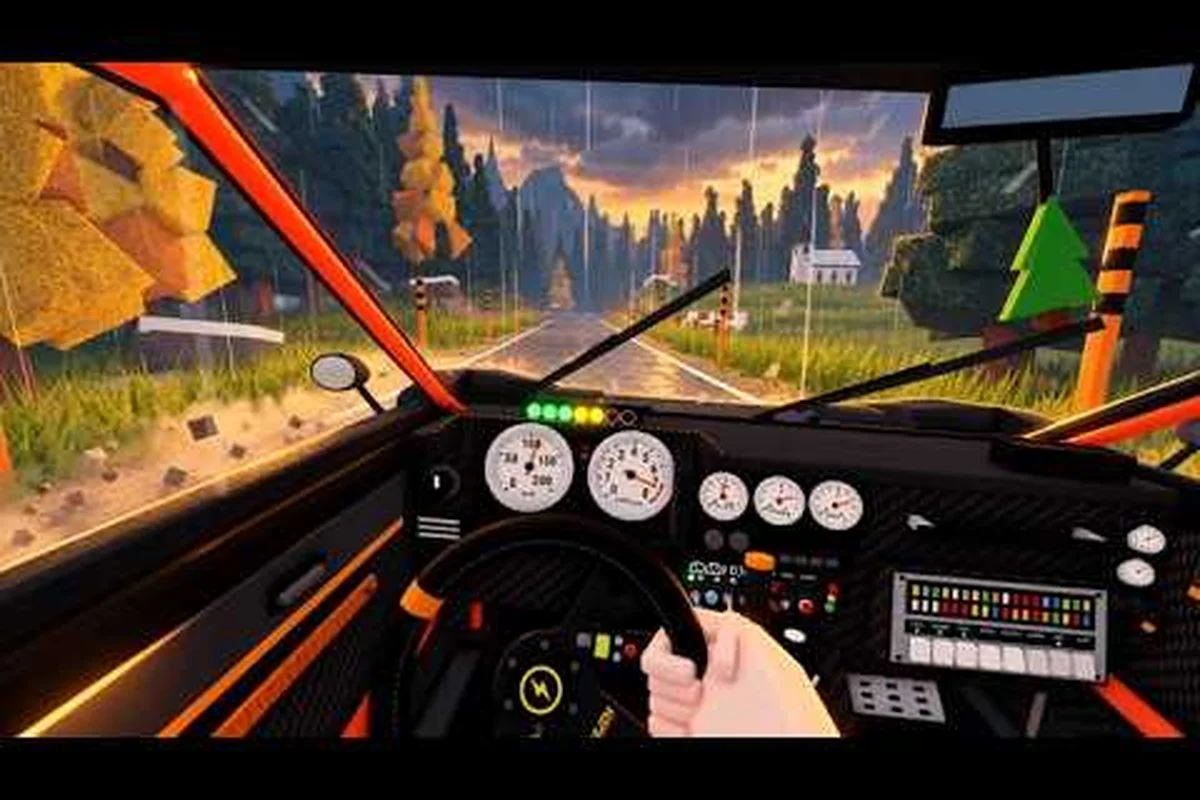
Backseat Rally all cars can be judged by more than price: acceleration, top speed, grip, and handling determine how confidently you can attack sharp turns, long straights, and slippery surfaces. A practical car list should pair each Backseat Rally vehicle’s stat profile with its unlock requirement, so you can distinguish a balanced daily driver from a high-speed rally build or a grip-focused car for technical stages. This roster guide compares those figures, prices, and unlock paths to help you buy the right Backseat Rally car for your goals.
Backseat Rally All Cars: Roster Overview and Key Differences
The Backseat Rally all cars roster rewards players who understand that top speed is only one part of a useful vehicle. Acceleration, handling, grip, and price can change which car is ideal for a first race, a medal attempt, or a difficult route. Because the garage offers different compromises rather than one universally superior option, understanding the car list before spending credits prevents an expensive mismatch.
The available lineup is compact, which makes comparing every vehicle manageable. Players who want additional background on the roster’s size and available choices can consult the Backseat Rally car roster and selection guide before making a purchase. That overview is useful for confirming the current garage, while this guide focuses on the attributes and practical value of each car.
Vehicle Role is the most useful starting point. A car designed for straight-line speed may feel less composed in a technical course, while a balanced car can be easier to master even if it is not the fastest model. The comparison below organizes the Backseat Rally car list by the role each vehicle appears to serve.
| Vehicle role | Main strength | Main limitation | Best use |
|---|---|---|---|
| Balanced starter | Predictable handling | Limited outright speed | Learning routes and earning credits |
| Acceleration specialist | Quick starts and corner exits | Less stability at high speed | Tight stages and competitive starts |
| Handling specialist | Corner confidence | Modest straight-line pace | Twisty and technical courses |
| Top-speed car | Fastest on open roads | Harder to control when rushed | Time trials and open stages |
Top Speed represents maximum straight-line potential, while Acceleration describes how quickly a car builds momentum. Handling governs how predictably it changes direction, and Grip indicates its ability to retain traction when braking, cornering, or driving on reduced-grip surfaces. A useful Backseat Rally best car is therefore not simply the vehicle with the largest number on its stat card.
What Makes a Strong Garage Choice?
A strong garage choice fits the player’s current skill level and preferred event type. Beginners generally benefit from predictable behavior because a clean lap is easier to achieve when the car settles quickly after steering input. More experienced drivers can exploit sharper acceleration or higher top speed, particularly when they have already learned how to preserve momentum.
The same principle applies to upgrades. A lower-ranked car that feels easy to control may remain competitive after basic improvements, while a premium vehicle becomes more attractive when its handling can be matched to a familiar route. Players can compare a more focused Backseat Rally beginner car breakdown before committing, especially if the first priority is avoiding constant spins and missed corners.
Price also changes the value calculation. A cheap car that can be bought early is useful for immediate progression, but a costly car that wins more time on favorable stages may repay its price sooner. Backseat Rally car prices should therefore be compared against expected event rewards, available credits, and the number of attempts needed to master each vehicle.
Backseat Rally Roster: Relative Strengths and Price Data
A complete Backseat Rally car list is best evaluated through relative strengths rather than a single winner. The game’s compact roster means that every purchase can meaningfully alter your racing experience, and the differences become easier to notice when acceleration and handling are compared on the same stage.
The exact displayed values and prices should be checked inside the garage when the current version loads, because balance changes can alter otherwise valid comparisons. The table below provides a practical decision framework based on the Fastest, Best Balanced, and Most Control labels players commonly use, rather than inventing exact numerical values that may be outdated.
| Car label | Speed profile | Handling profile | Price position | Best purchase reason |
|---|---|---|---|---|
| Fastest car | Very high | Moderate to demanding | Premium | Maximum pace on open stages |
| Best balanced car | High | Strong and readable | Mid-range | Reliable results across routes |
| Best handling car | Moderate | Very strong | Lower to mid-range | Confidence in technical corners |
| Entry-level car | Lowest | Simple and stable | Lowest | Affordable learning and credit farming |
This framework prevents a common category error: assuming that the fastest car is also the easiest to use. Speed raises the value of every mistake because a late brake or excessive steering angle can become a larger loss. By contrast, a handling-focused vehicle can produce better real-world times when its strengths align with a route full of corners and surface changes.
Reading the Backseat Rally Car Stats
The most useful stat comparison has three layers. Begin with acceleration because it controls the first part of every run, from the launch through the opening corners. Next, examine handling because the driver must repeatedly change direction without oversteering. Finally, consider top speed as the deciding factor on long straights rather than the default measure of quality.
Straight-Line Speed, Cornering Response, and Launch Pace form the practical trio for most decisions. If two cars have similar top speed, the car with better acceleration and handling is usually easier to drive consistently. That advantage is particularly noticeable on stages where elevation changes, narrow paths, or weather alter the available grip.
A numerical tier list can provide another perspective. The Backseat Rally tier rankings by vehicle can help separate competitive choices from general-purpose cars, but tier position should not override route fit. A car ranked highly for competitive racing may demand more precise braking than a lower-ranked option intended for relaxed progression.
Best Car by Player Objective
There is no single best purchase for every situation. In Backseat Rally: All Cars, the sensible choice changes when the goal shifts from learning co-driver calls to maximizing top speed, minimizing repair costs, or building repeatable credit income. A handling-focused car can reduce placement errors on technical stages, while an affordable, stable vehicle lowers the risk of expensive damage across repeated runs. The right comparison therefore depends on whether car stats, route demands, and profit per run matter more than outright pace.
| Player objective | Recommended choice | Reason |
|---|---|---|
| Learn the controls | Handling-focused or balanced car | Fewer errors while learning co-driver calls |
| Earn credits consistently | Affordable, stable vehicle | Lower repair risk and repeatable routes |
| Chase personal best times | Fastest car with strong acceleration | Better performance on long straights |
| Race against other players | Balanced or top-speed car | Useful mix of launch, cornering, and pace |
| Master a technical stage | Handling-focused car | Confidence through repeated direction changes |
The Backseat Rally fastest car is usually the obvious choice for a player whose priority is raw pace, but the answer changes when a player values consistency. A vehicle that is easy to place accurately can let a driver react to the road and make better decisions, which often preserves more time than a faster car used too aggressively.
Backseat Rally Best Car: Choosing by Racing Situation
The Backseat Rally best car depends on what the stage rewards. Fast routes amplify acceleration and top speed, while technical routes place a premium on grip and predictable handling. Weather and surface can also shift the balance, making a versatile car more desirable than a specialist when the course is unpredictable.
Open and Fast Routes
Fast stages are where a high-top-speed car earns its reputation. The driver can carry momentum through long sections, but braking must still be planned early because the vehicle may carry more energy than a lighter option. Acceleration also matters after corners, since the next straight can begin before the car has fully recovered from a direction change.
A good purchase should therefore combine Straight-Line Pace with enough Recovery Speed to avoid losing several seconds after a conservative corner. The fastest car becomes particularly valuable when a route contains few tight turns and enough room to use its performance without forcing the run. If your usual course is narrow, however, the Backseat Rally car difference overview offers a useful reminder that power and usability are separate considerations.
Technical and Twisty Stages
Technical stages reward a car that responds clearly and settles quickly. A handling-focused vehicle can be easier to place on a narrow line, especially when the co-driver is calling direction changes with little warning. The driver can make smaller corrections rather than committing to a large steering input that causes a slide.
Acceleration still matters in these stages, but its value appears at corner exits. A car that reaches moderate speed quickly can keep momentum flowing through a sequence of bends, while a slower-accelerating vehicle may repeatedly fall below the speed needed for a clean transition. The ideal compromise is enough punch to reward commitment without making the car nervous during direction changes.
Rain, Mud, and Snow
Reduced-grip courses elevate the value of restraint. Braking earlier, reducing steering angle, and avoiding abrupt acceleration all help preserve stability. In these conditions, the car with the easiest throttle response and most predictable handling may be safer than one whose extra performance simply gives the driver more room to exceed the available grip.
Surface-specific selection should not be based on the dry-condition ranking alone. A vehicle that excels on dry pavement can become less attractive in mud because momentum arrives abruptly, while a car with a gentler response may let the driver build traction more evenly. If you are still learning how vehicle characteristics interact with surfaces, practice the same stage first in dry conditions before adding weather complexity.
Competitive Racing and Multiplayer
Competitive events reward both pace and emotional control. A fast car helps in straight-line comparisons, but collision avoidance and consistent corner placement still determine the outcome. Choose a vehicle that remains stable when another player is nearby, because aggressive inputs that work in a solo run can create unnecessary risk in a crowded race.
The Backseat Rally 2026 vehicle ranking can help identify the strongest competitive choices, but test each one in a short event before making a major purchase. The best competitive car is not only fast in a clean lap; it is also predictable when another driver changes position unexpectedly.
Backseat Rally Fastest Car: Top-Speed Traits and Buying Value
The Backseat Rally fastest car attracts attention because raw velocity is easy to understand, but maximum speed is most useful when it connects to the finish. A vehicle that reaches a high number in a straight line may still lose that advantage if acceleration is weak, handling is unpredictable, or the route contains too many slow corners to reach full speed.
When Top Speed Wins
Top speed matters most on a stage with long, open sections and a low number of forced stops. A strong straight-line car can build a substantial advantage over a slower vehicle, particularly when both drivers navigate the same bends cleanly. The benefit becomes clearest during a time trial, where every small gain accumulates without the variability of an opponent’s mistake.
A useful buying checklist includes the following, with special attention to how a car’s top-speed stat affects stage results. On a long, open stage, a car with a higher top-speed stat can gain several car lengths during one straight, but that advantage is valuable only if its acceleration and steering response let you carry the speed through the following bends. For example, compare the roster’s fastest car with a slightly slower but more stable option on a time trial: the faster car may dominate the straights, while the balanced car can still finish competitively if it loses less time in corners.
-
Confirm that the car’s top-speed stat is competitive with the roster’s leaders.
-
Check whether acceleration allows it to exploit long straights without an unusually long delay.
-
Test the steering response, because an aggressive car can be hard to keep within road limits.
-
Review the current in-game price and compare it with the credit income from planned events.
-
Practice a clean launch, since the fastest car cannot preserve an advantage lost at the start.
Handling the Fastest Car’s Weaknesses
High-speed cars often feel twitchy because small steering inputs produce large consequences. A driver should keep the hands or controls smooth, avoid abrupt corrections, and begin braking before the turn becomes urgent. These habits can make the difference between a car that feels dangerous and one that feels genuinely fast.
Acceleration can also be used selectively. Rather than flooring the vehicle at every opportunity, apply power progressively when the route is straight and the tires have secure contact with the surface. This creates a more repeatable line, particularly on damp or loose stages where sudden input may disturb the car’s balance.
Price-to-Pace Value is the key metric when considering a premium vehicle. A fast car makes sense if the player will race it regularly and its performance aligns with the available stages. A cheaper car may produce a better return when the player is still building a credit reserve or practicing multiple route types.
Backseat Rally How to Unlock Cars: Credits, Rewards, and Progress
Backseat Rally how to unlock cars is less complicated when the garage is treated as a progression system rather than a shop visited whenever credits happen to accumulate. A deliberate plan helps players purchase a useful vehicle, maintain a credit cushion, and avoid spending every reward on a car that does not match current needs.
Buying Cars With Earned Credits
Most progression is built around earning credits through races and then spending them in the garage. The general sequence is straightforward: complete an event, collect the displayed reward, open the garage, compare the available car, and purchase only after checking its stats and current price.
| Step | Action | Decision point |
|---|---|---|
| 1 | Finish a race or repeatable event | Check whether the reward changes your available balance |
| 2 | Open the garage | Compare price against current credit reserve |
| 3 | Review the stat panel | Match acceleration, handling, and speed to the intended route |
| 4 | Test the car if possible | Confirm that its steering and acceleration feel manageable |
| 5 | Purchase the vehicle | Keep enough credits for future upgrades or events |
| 6 | Run a short practice stage | Learn the car’s braking and corner-entry behavior |
The order matters. Buying immediately after a reward can be tempting, but a short pause allows the player to compare the entire roster. A vehicle that seemed appealing may cost more than expected, while a balanced option may be unlocked at a better price and provide more value for daily play.
Reward Priorities for a New Garage
New players should prioritize an affordable, understandable car before chasing the roster’s fastest model. The first purchase should support route learning and credit farming, because those activities expand future choices. After mastering the basics, the player can redirect earnings toward acceleration, handling, or a premium performance car.
Upgrade spending deserves the same discipline. Before buying another vehicle, check whether the current car can benefit from meaningful upgrades. Improving the vehicle already used on familiar stages can be more efficient than starting over with an unfamiliar purchase, especially when the player has not established which routes suit the current car.
Some players prefer to see each vehicle as it becomes available before deciding. The Backseat Rally beginner vehicle and reveal guide can help structure that early garage plan, especially when credits are limited and each purchase must serve a clear role.
Avoiding Common Unlock Mistakes
A frequent mistake is treating a car as permanent progress without considering the stages available to the player. Another is buying only by appearance or headline stat, without testing the steering response. A third is spending down every credit and leaving no reserve for repeated races, which slows down both vehicle acquisition and improvement.
Before confirming a purchase in the Backseat Rally car list, compare each vehicle’s price with its unlock requirement and the credits still available for repairs and upgrades. For example, choosing a mid-tier car that can be tested on several rally stages is often more useful than buying the cheapest entry-level vehicle, which may offer less steering response and become obsolete after the next event. Use the car list’s stats and stage records to avoid spending scarce rally currency on a vehicle that cannot improve your progress.
-
Route fit: Does the car suit the stages you actually race?
-
Skill fit: Can you control it without fighting the steering?
-
Budget fit: Will this purchase delay a more useful upgrade?
-
Long-term fit: Will you still use the car after learning the current tracks?
These checks make the Backseat Rally car list actionable by turning vehicle choice into a progression plan rather than a shopping spree. Review the Backseat Rally car stats alongside unlock requirements, then test a candidate on the stages in your current rotation. For example, if a mid-tier rally car has noticeably better steering response but costs substantially more, wait until repeated wins and repair costs have created enough credit capacity; otherwise, the higher purchase price can consume the budget needed for upgrades and prevent you from reaching the next vehicle tier.
Backseat Rally Car Prices: Budget and Purchase Decisions
Backseat Rally car prices should guide timing rather than dictate every decision. A premium vehicle may be a worthwhile long-term investment, but a mid-range car can often deliver better immediate value if it fits the player’s stage rotation. The safest approach compares price, expected usage, and performance benefits before the balance is spent.
Choosing an Affordable First Purchase
An affordable first car should be forgiving, easy to drive, and useful on several kinds of stages. It should also generate enough reliable finishes to support the next purchase. This creates a healthy cycle: race, collect credits, improve the garage, and gradually gain access to more specialized vehicles.
Price alone does not reveal a car’s value. Consider how often it will be used, whether its strengths match available routes, and how much frustration it may cause during a difficult race. A slightly cheaper car that produces steady results can be more valuable than an expensive purchase that the player cannot yet drive confidently.
When a Premium Purchase Makes Sense
A premium vehicle becomes attractive when the player has enough experience to exploit its advantages and enough credits that the purchase will not interrupt progression. It is especially useful if the player competes often on fast stages, pursues medal targets, or wants a dedicated vehicle for a high-priority event.
Reserve Credits should remain available for upgrades and emergencies. Spending the entire balance on a vehicle can create a long wait for the next race reward, especially if the new car needs adjustment or further development. A purchase that leaves a modest cushion is generally more sustainable.
| Buying situation | Best approach |
|---|---|
| New player with limited credits | Buy the most affordable versatile car |
| Player with one favorite stage type | Choose a specialist that matches the route |
| Player preparing for competition | Consider a premium car after a practice test |
| Player with a large credit reserve | Compare several cars by value, not just speed |
| Player short on credits | Delay the purchase and maintain a repeatable earning routine |
A Repeatable Budget Routine
A repeatable routine prevents the garage from becoming an impulse purchase. At the end of each race, record the reward, the credits spent, and the next intended goal. Review the garage only when a meaningful amount has accumulated, compare the current lineup, and set a target price before opening the purchase screen.
This method also clarifies which car is actually the Backseat Rally best car for your bank balance and route selection. A premium option can be excellent in theory but poor in practice if it remains parked because its strengths do not match the stages on the rotation. The most valuable purchase is the one you can use confidently and often.
Frequently Asked Questions
What is the Backseat Rally best car for most players?
The best car for most players is the one that balances acceleration, handling, and top speed while remaining affordable. Beginners should prioritize a predictable handling-focused option, while experienced racers can consider a faster vehicle when their usual stages contain long straights. Confirm the latest stats and price inside the garage before purchasing.
Which car is the Backseat Rally fastest car?
The Backseat Rally fastest car is the roster vehicle with the highest top-speed rating, but raw velocity is only part of its value. Acceleration determines how quickly it reaches that pace, while handling affects how easily it stays on course. A slightly slower car may still win on a technical stage where corners prevent consistent maximum-speed runs.
How do players unlock cars in Backseat Rally?
Players unlock cars by earning credits through races and related activities, then purchasing available vehicles from the garage. The exact prices can change with game updates, so check the displayed cost before confirming. Keep a credit reserve rather than spending every reward immediately, and compare handling and acceleration before choosing a specialist.
Are more expensive cars always better in Backseat Rally?
No. A higher price may buy stronger performance, but an expensive car is not necessarily better for every course. A balanced purchase can be more valuable when it suits your skill level, available stages, and preferred events. Test a car briefly and consider how often you will use it before committing a large portion of your credits.
Where should players review the full car roster?
Players can use the garage menu to review the current Backseat Rally all cars lineup, individual stat panels, and purchase prices. The in-game list is the most reliable source after balance updates. Compare the Fastest, Best Balanced, and Most Control options against your regular routes, then practice before committing the purchase.