
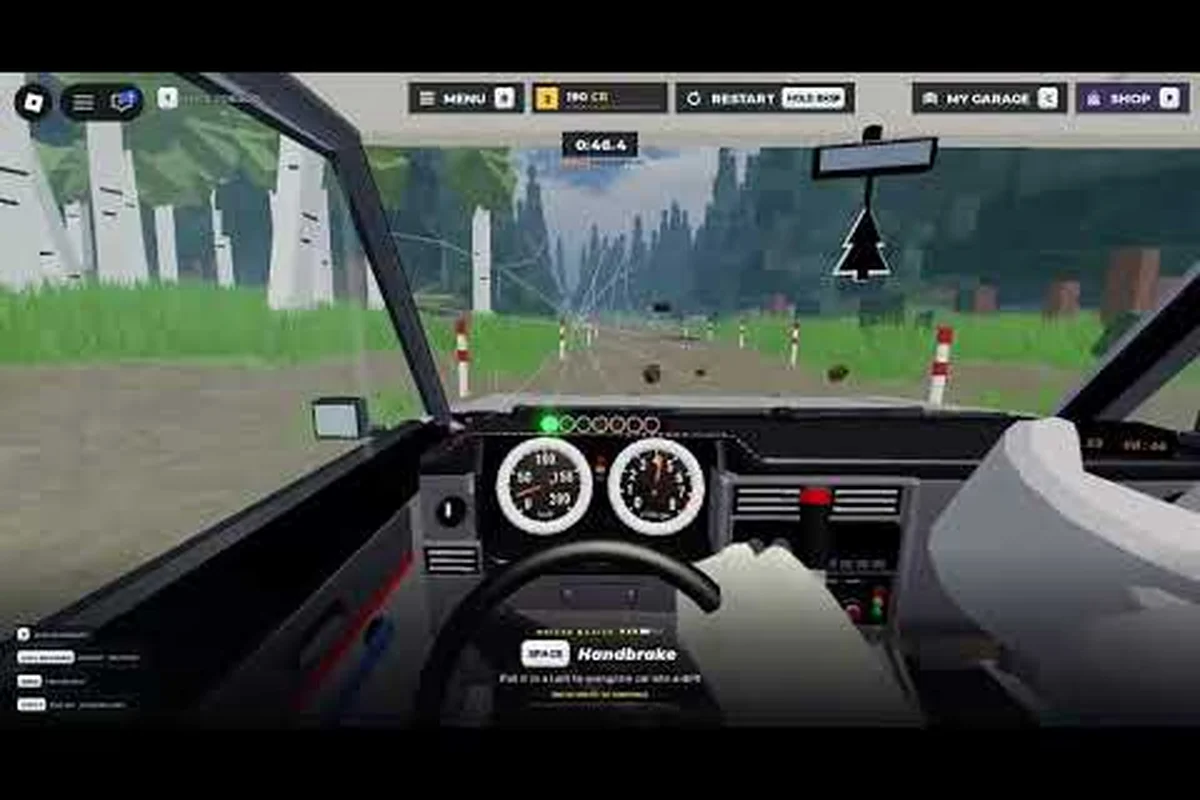
Backseat Rally cars for beginners matter because the right starter car makes muddy forests, snowy passes, and narrow roads easier to learn. A forgiving rally sports car can help you judge grip, braking distance, and gear changes before you chase a faster backseat rally car with sharper handling but less tolerance for rough surfaces. Start with an affordable unlock, test it on early stages, and compare how each vehicle handles slides, collisions, and tight corners; that experience makes it easier to decide which later car reveal is worth your budget.
Backseat Rally Cars for Beginners: What Matters First?
Choosing a first car in Backseat Rally is less about finding the fastest vehicle and more about avoiding early mistakes while you learn the co-driver system. The driver sees only a small amount of road, so predictable steering, manageable speed, and a clean throttle can matter more than a dramatic top speed.
The official Backseat Rally game page on Roblox lists seven unlockable cars and five stages. Its environments include forests, snowy passes, cherry-blossom roads, rain, and a mud cross, which means there is no single surface for which every car is ideal.
| Beginner priority | Why it matters | Best time to value it |
|---|---|---|
| Predictable steering | Fewer sudden corrections when the co-driver calls a turn | First forest stages |
| Manageable acceleration | Prevents overshooting corners on narrow roads | Early races |
| Reliable braking | Creates a consistent stopping distance in rain or mud | Weather stages |
| Clear speed feedback | Helps the driver judge when to ease off | Every stage |
| Affordable price | Leaves Credits for later upgrades or cars | Garage purchases |
Control before speed is the central rule. A car that feels lively but repeatedly crosses the inside curb will frustrate a new driver more than a balanced car that can earn clean stages consistently. In practice, prioritize predictable steering, manageable acceleration, and reliable braking from the table above: if the car keeps clipping the inside curb on a forest stage, ease off the throttle before the co-driver’s call and choose a setup with clearer speed feedback. A sports car may be quicker in a straight line, but that extra pace can turn a narrow corner into a missed apex or an early slide, so consistency is the better first unlock goal.
The beginner buying checklist
Before buying, inspect how the car accelerates from a standstill and how quickly it stops when you release the accelerator. Then test its turning response on a wide bend. A good beginner vehicle should not force constant corrections when the co-driver announces a gentle curve.
-
Braking distance: Check that you can stop before the road edge without abrupt counter-steering.
-
Corner entry: Tap the throttle rather than holding full acceleration through a bend.
-
Road visibility: Remember that your own view is limited, so slower reaction gives you more decision time.
-
Surface stability: Expect less grip in rain and mud than on a dry forest road.
A broader comparison of every Backseat Rally car can help when you already know which attributes matter to your driving style. For your opening purchase, however, begin with affordability and easy control rather than attempting to solve the full meta immediately.
Beginner Car Choices Compared for Early Stages
Backseat Rally rally car options generally suit players who want a natural introduction to competition, while the Backseat Rally sports car category tends to attract drivers who enjoy higher speed and sharper handling. The names describe broad preferences, but the car you can responsibly use depends on your Credits, stage conditions, and comfort with the limited-view camera.
There is no responsible basis for assigning exact prices, acceleration values, or rankings without a current verified stat sheet. Community guides can still help with general handling impressions, but exact numbers may change as the game updates. The official game page currently provides the more reliable foundation: seven cars, five stages, and weather-dependent road conditions.
| Driving preference | Car direction to examine | Beginner advantage | Main trade-off |
|---|---|---|---|
| Easy pace and steady progress | Standard rally-oriented starter | Usually easier to control at moderate speed | Less excitement on open sections |
| Lightweight, responsive feel | Compact rally variant | Quick direction changes | Can feel twitchy over bumps |
| High-speed road feel | Sports-oriented option | Better suited to fast, flowing stages | More mistakes if you brake too late |
| Wet-road confidence | Grip-focused variant | More stable in rain and mud | Higher cost may limit early experimentation |
| Long-term value | Mid-range unlock | Balances purchase price and performance | May not be the cheapest first car |
Affordable stability gives a new player more opportunities to react to the co-driver’s pace notes. For example, in rain, a grip-focused variant may make mud, braking points, and the limited-view camera easier to manage, while a sports-oriented car can feel less forgiving if you brake too late. A faster car does not create an advantage if the driver cannot place the vehicle consistently on the road.
Rally-oriented or sports-oriented?
Beginners should treat vehicle choice as a feedback loop. Drive a candidate, note where you braked too late, and decide whether the problem came from your inputs or the car’s behavior. The right choice is not always the slowest option, but it should reduce the number of avoidable crashes.
Rally-oriented cars are generally the safer first experiment because their appeal centers on composed road behavior and a rally-style progression. A Backseat Rally rally car can be ideal for learning narrow forest roads if it accelerates predictably and stops without a long skid.
A Backseat Rally sports car may be more exciting on longer straights, yet speed magnifies every camera and co-driver timing error. Drivers who choose one should spend their first races learning how early to brake rather than treating it as a test of top speed.
The Backseat Rally car difference overview is useful once you own multiple vehicles and want to understand why two similar-looking cars feel different. During the first garage session, focus on the differences you can personally observe: launch response, turn-in, braking, and stability after a bump.
A practical test-drive routine
Use the same short stretch for every candidate. Complete three passes: one cautious lap, one moderate lap, and one lap without deliberately correcting a small slide. If the car becomes easier to place after the first attempt, it is likely a strong beginner match.
| Test | What to watch | Beginner-friendly result |
|---|---|---|
| Standing launch | Wheelspin, nose dip, and acceleration | Smooth and gradual |
| Straight-line braking | Stopping point and recovery | Little sliding |
| Wide corner | Body movement and steering response | Predictable rotation |
| Small bump | Suspension recovery and line stability | Returns to course quickly |
| Short route | Confidence through repeated turns | Fewer visible corrections |
Repeatable control matters more than a short demonstration because backseat rally sports cars can react differently to identical inputs depending on grip, weight transfer, and slide momentum. Use the same route, camera angle, and throttle discipline for every candidate, then compare the standing launch, braking recovery, wide-corner rotation, bump response, and repeated-turn corrections. A car that stays predictable across all five tests is easier to learn than one that only feels fast in a single run.
How to Earn Cars Without Breaking Your Budget
Progress should fund the Backseat Rally earn cars plan gradually. Because Credits appear to come from completing stages and competitive play, a beginner can build a vehicle collection by improving consistency rather than spending every available balance on the first attractive unlock.
Community walkthroughs report that solo stages use an AI co-driver, while head-to-head lobbies can provide a small Credits boost for racing other players. The VendoPlus Backseat Rally walkthrough also walks through early car selection, stage progression, and the garage. Treat those as community demonstrations, while checking the current game for exact reward rules.
| Earning route | Best use | Budget effect | Beginner note |
|---|---|---|---|
| Repeated solo stages | Learn callouts and roads | Steady income | Lowest competitive pressure |
| Clean stage finishes | Improve race pace | Faster progress | Often tied to medal goals |
| Head-to-head lobbies | Add Credits while practicing overtaking | Bonus income | Join once the basics feel stable |
| Careful garage purchases | Reserve funds for the next car | Keeps a reserve | Avoid buying several cars at once |
| Event rewards, if active | Add temporary opportunities | Variable | Confirm current event details |
Keep a purchase reserve until you understand the difference between a starter vehicle and an upgrade you can use consistently. Credits spent on one car still contribute to your experience, but a reserve gives you room to respond to a favorite vehicle or a discounted unlock.
Set a simple earning target
Choose one modest target rather than aiming for every vehicle. For example, make your first goal a rally car that handles the forest and rain stages cleanly. After that, race for a sports-oriented car if you want a different driving feel. This sequence keeps the garage focused and makes every purchase understandable.
-
Stage one: Finish enough races to understand the budget and unlock process.
-
Stage two: Buy one versatile rally car rather than several marginal choices.
-
Stage three: Practice until you can consistently handle rain and mud.
-
Stage four: Save for a Backseat Rally sports car if its speed suits your confidence level.
-
Stage five: Compare medals, costs, and handling before expanding the collection.
A broader beginner-oriented vehicle ranking can help you distinguish a practical first choice from a dedicated medal hunter. Avoid buying an advanced car merely because it appears at the top of a list; the top vehicle still has to suit the driver.
Spend Credits only after test driving
Garage screens can make cars look better in isolation than they perform on a wet road. Unlock or preview a vehicle, then complete a short race before committing the remainder of your budget. Pay attention to whether the co-driver’s distance warning arrives early enough for you to respond.
The Backseat Rally car reveal also gives you a chance to identify why a new vehicle feels different. Does it accelerate harder? Does it settle sooner after a turn? Does it need more braking distance? Those observations matter more than a reveal animation, because they tell you what practice the vehicle requires.
Unlock All Cars in a Controlled Order
Players who want to Backseat Rally unlock all cars should treat the garage as a progression path, not a checklist to complete in one sitting. A sensible order moves from a forgiving first car to more specialized rally and sports machines while keeping enough Credits for testing and mistakes.
The seven-vehicle count from the official page makes a staged purchase plan practical. The order below prioritizes driving confidence, but it is a framework rather than a fixed stat tier. Confirm the current garage labels and prices when the car reveal presents each option.
| Unlock order | Purchase reason | Skills it develops | What to verify |
|---|---|---|---|
| 1 | Lowest sensible commitment | Braking, co-driver calls, route reading | Easy launch and recovery |
| 2 | Improved rally handling | Greater confidence in narrow corners | Stability through bumps |
| 3 | Specialized grip option | Rain and mud technique | Reduced slides and better recovery |
| 4 | Balanced performance car | Faster stage pace | Braking before open straights |
| 5 | Sports-oriented unlock | High-speed control | Steering at moderate pace |
| 6 | Performance-focused rally car | Precision in technical stages | Weight transfer and turn-in |
| 7 | Remaining collection option | Long-term mastery | Fit with the routes you enjoy |
One car per milestone prevents the common mistake of earning several vehicles before learning any of them. Master a purchase, note its weaknesses, and then decide whether the next unlock solves one of those weaknesses. For example, if the first car loses grip during a rain stage, choose unlock three only after practicing controlled slides with the second car; if crashes come from late braking, the fourth unlock’s faster pace may be less useful until you can brake reliably before open straights. This approach turns each car reveal into a targeted test, preserving Credits for repairs and allowing a Backseat Rally sports car or performance-focused rally car to reward improved driving rather than simply expand the garage.
Match purchases to repeated difficulties
A garage strategy works best when it responds to actual driving problems. If you repeatedly carry too much speed into hairpins, prioritize braking and turn-in over raw acceleration. If you lose time on muddy exits, seek stability and recovery. If you feel limited only on open roads, then a sports car may be worth pursuing.
| Repeated problem | Likely car trait to value | Training adjustment |
|---|---|---|
| Late braking | Stronger deceleration or control | Stop earlier before the turn |
| Front sliding | Stable grip | Ease off during turn-in |
| Oversteer after bumps | Controlled weight response | Avoid sudden steering inputs |
| Slow muddy exits | Predictable acceleration | Apply throttle progressively |
| Lost time on straights | Higher road speed | Hold a cleaner line and brake earlier |
Unlock by bottleneck rather than by appearance. A new car should solve a recurring problem or offer a genuinely different experience. For example, if your repeated issue is late braking, favor a backseat rally car with stronger deceleration or control, then stop earlier before the turn to preserve speed for the exit. A stable-grip car can help with front sliding, while predictable acceleration addresses slow muddy exits. Otherwise, its purchase may add garage variety without improving your stage times.
Do not skip the garage
Every time a Backseat Rally car reveal offers a new vehicle, spend a few minutes with its handling before racing immediately. Test launch, braking, cornering, and recovery from a modest mistake. These first impressions are more reliable than the car’s menu description because the actual roads determine which strengths matter.
The complete car list and unlock reference can serve as a checklist, while this article’s staged strategy prevents the collection from becoming a race against the shop. Your goal is not merely to own seven cars; it is to own cars you can use in progressively more demanding conditions.
Handling Lessons for Every Backseat Rally Vehicle
Even the strongest car cannot compensate for late braking, and the weakest can finish stages when its driver controls the input. For Backseat Rally cars for beginners, treat handling as a sequence of habits: look through the corner, reduce speed early, rotate the car, and accelerate only after the road opens.
The co-driver provides turn calls and distance warnings, but the driver remains responsible for the car. A PC setup and control walkthrough by nocrown emphasizes camera behavior, steering, braking sensitivity, and desktop controls, all of which affect how naturally a car responds.
| Road situation | Common beginner error | Better input pattern | Result |
|---|---|---|---|
| Tight forest bend | Full throttle into the turn | Brake, turn, then add power | Less understeer and fewer clips |
| Muddy exit | Sudden acceleration | Apply power gradually | Less wheelspin |
| Snowy approach | Braking too late | Begin slowing before the marked corner | More predictable arrival |
| Narrow straight | Steering corrections for no reason | Hold a centered line | Better speed retention |
| Rainy section | Assuming dry-road grip | Increase following distance | More reaction time |
| Bump after a corner | Immediate full steering | Let the car settle, then correct | Less severe slide |
Smooth inputs reveal more performance than frantic corrections. If a car feels difficult in the first minute, repeat the same section at a lower pace; carrying less speed exposes steering load, tire grip, and the car’s balance beneath repeated mistakes. For example, in a tight forest bend, brake to settle the backseat rally car, turn, and then add power gradually instead of demanding full throttle; a muddy exit handled that way can retain grip where an abrupt acceleration input starts wheelspin. On a narrow straight, hold a centered line rather than making small steering corrections, because unnecessary inputs can unsettle the car and reduce speed retention.
Focus on one skill per practice run
Do not try to improve braking, racing lines, and overtaking simultaneously. A focused practice run produces a clearer result. For example, complete one stage without worrying about the medal, concentrating only on the co-driver’s distance calls and your braking point.
-
Braking drill: Mark the first turn of each stage and arrive at a consistent speed.
-
Line drill: Use the outside of the road on entry only when your visibility and control allow it.
-
Recovery drill: When you clip a bump, return to the road before adding power.
-
Launch drill: Practice matching throttle release to the stage’s early bends.
-
Head-to-head drill: Avoid risky overtakes until braking and line consistency feel automatic.
Community race guides report that launch timing, inside-versus-outside lines, and defensive driving matter in direct competition. The CHALLS Backseat Rally guide provides a practical example: a front-seat driver can block the racing line, force a slower pass, and then use the inside line on corner exit. For beginners in backseat rally cars, leaving a wider gap on straights and avoiding a door-to-door move until both cars’ braking points are visible can prevent contact and preserve a better exit for the next stage.
Tune the experience, not just the car
Steering sensitivity, braking behavior, camera placement, and audio clarity can influence your confidence. Make small adjustments and retest the same stage. If the car feels twitchy, reduce sensitivity when possible. If the road feels unclear, verify that the co-driver’s audio and distance warnings remain clear during the run.
A camera change can alter perceived speed without changing the vehicle. That means comparisons are only fair when your settings remain constant. Keep a simple record of your best clean run, the car used, the stage, and whether the result came from solo or head-to-head play.
Your First Garage Plan and Long-Term Collection
The best starter car is the one you can drive consistently. Begin with an affordable rally-oriented option, master braking and co-driver timing, then save for a sports car when you want more speed. Build the collection one verified experience at a time, and use each new Backseat Rally car reveal as the start of a practical test rather than an impulsive purchase.
| Progress goal | Car strategy | What success looks like |
|---|---|---|
| Survive the first races | Buy one forgiving starter | Complete stages without repeated spins |
| Earn medals | Improve the same car first | Cleaner, faster stage results |
| Master changing roads | Add a stability-focused vehicle | Better mud and rain confidence |
| Enter competitive lobbies | Add a balanced performance car | Confident launches and overtakes |
| Complete the collection | Unlock the remaining options | Seven understood vehicles, not seven surprises |
A focused garage is faster than a crowded one. Improving one car at a time makes every purchase predictable: a forgiving starter helps you complete stages without repeated spins, while a stability-focused rally car addresses mud and rain before you consider a balanced performance car for competitive lobbies. For example, reserve Credits for the sports car only after you can reduce avoidable errors and use the baseline rally car consistently, rather than buying a faster vehicle that amplifies braking mistakes or poor co-driver timing.
Keep the rally car as a dependable baseline, test the sports option on familiar roads, and use community reports as guidance rather than unquestioned facts. The Backseat Rally vehicle ranking and meta guide can help organize later comparisons, while the official game page remains the best source for the current number of cars and stages.
Frequently Asked Questions
What is the easiest first car to buy in Backseat Rally?
Choose an affordable, rally-oriented car that accelerates predictably and brakes without excessive sliding. Exact prices may change, so verify the current garage before purchasing. Your priority should be easy recovery and consistent road placement, not maximum speed, because clean early races help you learn the co-driver calls and build Credits for later unlocks.
Should beginners buy a Backseat Rally sports car?
A sports car can suit a confident driver, but it is not automatically the easiest choice. Its speed may make narrow roads and late braking more punishing if the camera view is limited. Test it on familiar stages, compare its braking with a rally car, and choose it when you can repeatedly enter corners at a controlled pace.
How can I earn Credits for more cars in Backseat Rally?
Complete stages regularly, improve for medal targets, and use head-to-head lobbies when the gameplay is available. Community walkthroughs report a small competitive Credits boost, so extra races can support your garage budget. Check the current game rules before planning around any specific reward because bonus values and modes may change.
What is the best order for unlocking all seven cars?
Begin with one affordable, forgiving car, then choose vehicles that solve a problem you personally experience, such as weak mud grip or insufficient road speed. A practical sequence is one starter, one improved rally option, one stability-focused car, one balanced performer, and then the sports and remaining performance variants.
Does the Backseat Rally car reveal show every important stat?
A reveal can introduce a car, but it may not explain every quality that matters during a race. Test launch response, braking, turn-in, and stability after bumps. Community guides can describe handling impressions, yet the official game page and your own test drives are more dependable for current prices, roster details, and stage-specific behavior.