
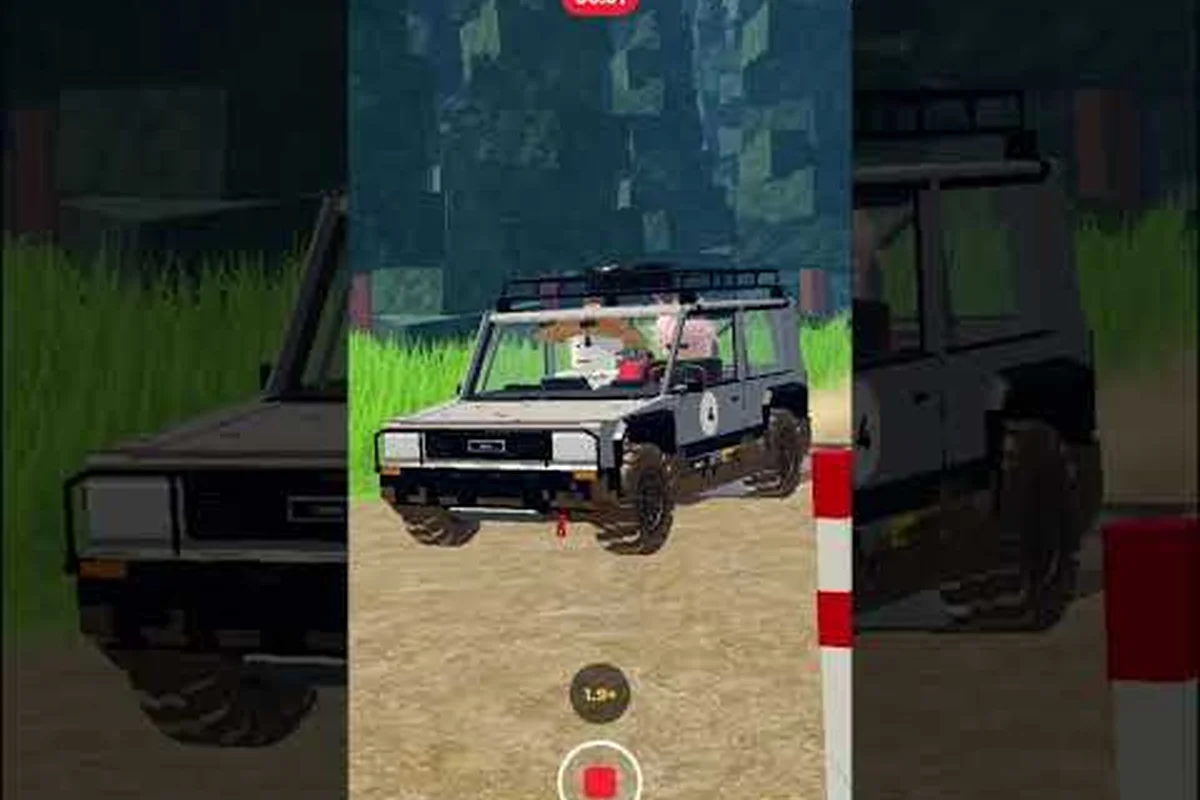
Backseat Rally friend mode turns every corner into a shared test of timing, trust, and communication. A strong co-driver does more than name turns: they build a repeatable rhythm that lets the driver focus on momentum. In practice, the backseat rally co-driver should call the hazard first, state the action second, and confirm the line third—for example, “left hairpin, brake, stay inside”—so timing stays clear even when the AI co-driver is handling pace notes. This structure reduces overlapping backseat rally callouts, helps the driver anticipate weight transfer, and keeps both players focused on the road instead of correcting each other.
Backseat Rally friend mode fundamentals
The best Backseat Rally friend mode setup begins with deciding who drives, who navigates, and how both players will communicate. That division matters because a crowded callout can distract the driver, while silence can leave a crucial corner unannounced. A clear co-driver role keeps each turn focused on the road ahead.
Think of the co-driver as a live route controller rather than a passenger making occasional comments. The navigator observes the upcoming path, identifies hazards, and gives the driver a short, meaningful warning. The driver then turns that information into a clean line. This division of labor makes the co-op guide for Backseat Rally friend mode much easier to apply.
| Setup choice | Best for | Main advantage | Main risk |
|---|---|---|---|
| Driver plus active co-driver | Learning new stages | Real-time guidance | Talk overlaps |
| Two experienced drivers | Competitive runs | Faster decisions | Assumed information |
| Driver plus AI co-driver | Solo practice or testing | Consistent support | Less adaptation |
| Alternating driver roles | Casual sessions | Builds overall control | Roles may remain unclear |
Fixed route language matters more than elaborate vocabulary. Agree on a small vocabulary for straights, sharp turns, junctions, hazards, and braking zones, then use it consistently. If one player says “left” while the other interprets it as a wide bend, the callout system becomes slower than simple silence.
Define the co-driver’s attention zone
The co-driver should focus on the portion of the stage immediately ahead, not narrate every visible object. This attention zone creates a natural rhythm: the co-driver checks the upcoming corner, prepares a call, and stays quiet once the driver has committed. The backseat driver role guide expands on how the two perspectives work together during two-player stages.
A useful pattern is look, name, confirm. The co-driver identifies the hazard, gives the call, and then confirms only when necessary. If the driver corrects the line early, an extra confirmation may only add noise. If the vehicle remains committed toward the outside, one concise reminder can prevent a costly mistake.
Agree on callout terms and mistake recovery
Backseat Rally communication works best when agreed before the countdown. State the route order, choose short callout terms, and decide what happens after a mistake. These rules should remain simple enough that both players can remember them during a fast stage.
Before the stage begins, give each callout a specific trigger and a short phrase—for example, “over crest” for a blind brow, “left tightens” for a tightening bend, and “brake now” for immediate slowing. The driver repeats nothing during the run, while the Backseat Rally co-driver gives one clear instruction at a time; this reduces overlapping callouts and helps both players recover quickly if the first attempt goes wrong.
-
The co-driver will announce major direction changes and immediate hazards.
-
The driver will keep corrections and braking for the vehicle.
-
The co-driver will stay quiet once the driver has entered the corner.
-
A missed call is treated as information, not blame.
-
The route order will be reviewed after the first run.
This structure makes the Backseat Rally co-driver role feel like a real partnership because each callout has a defined purpose, timing, and recovery rule. If the driver mistimes a crest or enters a bend too quickly, the co-driver can respond with a specific correction—such as “brake now”—instead of debating whether the mistake was the driver’s or the callout’s fault. In Backseat Rally friend mode, that shared cause-and-effect language preserves momentum, keeps the next run focused, and turns a missed call into a practical lesson for the route order review.
Backseat Rally co-driver callout system
An effective backseat rally callout system should minimize speech while keeping the driver’s attention on the road. A useful Backseat Rally co-driver instruction identifies the action, its urgency, and any immediate adjustment, rather than describing scenery in detail. For example, “Hard right, brake” tells the driver to prepare for the corner and reduce speed before the apex; “Still right” resolves a route uncertainty without interrupting the rally pace. This focused Backseat Rally co-op guide approach makes short directions, danger warnings, and speed adjustments easier to act on during each turn, reducing talk time without sacrificing the information needed to maintain momentum.
Begin with a three-part callout sequence for corners: direction, severity, and any correction. For example, a medium left followed by a tighter left can become “Left, medium—then hard left.” This saves time while preserving the route information the driver needs.
| Callout type | Suggested format | Example | Timing |
|---|---|---|---|
| Standard turn | Direction plus severity | “Soft right” | Before the turn begins |
| Direction change | Direction plus new direction | “Right, then left” | Immediately after the first turn |
| Hazard | Object plus location | “Rock, left side” | Enough time to adjust |
| Braking | Zone plus urgency | “Brake now” | At the final approach |
| Commitment check | Short confirmation | “Still right” | Only if the driver is uncertain |
The severity-first language option is especially useful for new duos. A driver can build speed around corners labeled “soft,” “medium,” or “hard,” while the co-driver avoids vague comments such as “turn” or “watch out.” Over time, the driver will recognize the pattern and react before the full route description is needed.
Keep each instruction actionable
A good Backseat Rally callout tells the driver what to do next. “Danger ahead” identifies a problem but leaves the response unclear. “Rock, right” tells the driver where the hazard sits and which side to protect. The small difference reduces decision time during the most crowded moments of a stage.
| Less effective callout | More actionable callout | Why the revision helps |
|---|---|---|
| “Watch out” | “Truck, right” | Gives location information |
| “Turn soon” | “Hard left, thirty” | Establishes urgency |
| “That way” | “Left at the fork” | Defines the route |
| “Slow” | “Brake before the right” | Links speed to a feature |
| “Straight” | “Short straight, then hard right” | Prevents missed turn |
Avoid inventing a complex radio code system. Plain action words are easier to hear, especially when engine noise, acceleration, or player nerves reduce attention. The vocabulary should be simple enough that both players can use it without consciously translating it.
Practice with a low-pressure stage
The first shared stage should emphasize clean communication rather than a quick time. Choose a route with recognizable corners and enough repetition to reveal whether your terms are effective. If the co-driver says “sharp left” but the driver expects a wide bend, revise the term instead of blaming the delivery.
The vocal calls and navigation guide provides additional examples for turn signals, hazard notices, and map reading. Pair those concepts with a fixed call order so the co-driver does not have to decide from scratch every few seconds.
A useful practice target is 90 percent understood calls on the first run, not a perfect lap. Measure comprehension by asking the driver what changed after a call. If the answer matches the intended turn or hazard, the system is working.
Backseat Rally AI co-driver and player support
An AI-supported co-driver can be useful when practicing stages without another person at the controls. It can provide route guidance while the player learns the road, compare braking points, or test whether a callout is arriving early enough. The Backseat Rally AI co-driver should therefore be treated as a training reference, not a promise of human-level adaptation.
AI consistency creates a stable baseline. Human co-drivers can improve, but they may forget a hazard under pressure or interpret a corner differently. An AI prompt can show whether the route is still challenging because of the driving itself rather than a confusing explanation.
| Practice need | AI support approach | What to observe | What to change afterward |
|---|---|---|---|
| Learn a route | Request frequent corner reminders | Whether the call arrives before commitment | Increase or reduce reminder frequency |
| Test speed | Request early braking warnings | Braking point and reaction delay | Shift the warning earlier |
| Reduce shouting | Request only major turns | Driver tension and missed details | Add back critical hazard calls |
| Check consistency | Repeat the same stage | Route accuracy and error points | Humanize only the unclear moments |
Compare AI guidance with the needs of a live co-driver. A human may understand that “the next turn is tighter” is unnecessary when the driver has already seen the corner. AI callouts are mechanically repeatable, so human communication can add context based on speed, confidence, and the driver’s current line.
Use AI output to refine human timing
Run a stage with the AI providing basic reminders, then make a second run with fewer prompts. The gap between the two attempts shows which reminders carried real value. If the driver improves when the AI gives an early warning before a difficult braking zone, include that timing in the human Backseat Rally callouts.
This creates a practical callout timing test: record the distance or time between the Backseat Rally co-driver’s warning and the driver’s braking or steering response, then compare that interval with the AI co-driver’s prompt. For example, if the AI warning arrives two seconds before a hairpin but the human callout lands only 0.5 seconds beforehand, the shorter lead time may explain the delay. Measure the driver’s reaction, not the length of the call, because a concise hazard call can still work when its timing matches the Backseat Rally co-op guide.
-
Note the corner or hazard that caused the largest delay.
-
Compare the AI warning with the moment the driver reacted.
-
Define how much earlier a human should speak.
-
Test that new timing during the next shared attempt.
-
Keep the revised call only if the driver’s line improves.
The test is valuable because it evaluates useful information rather than simply adding more speech. A shorter warning delivered too late may be less helpful than a quiet stage with one early hazard call. In Backseat Rally friend mode, compare timing across runs: if the human Backseat Rally co-driver calls a hairpin 2 seconds before the turn but the driver still brakes late, shortening that call to 0.5 seconds will probably add noise without improving the line. Use the AI co-driver only as a timing reference, then let the human Backseat Rally callout remain silent when no immediate hazard requires attention. This matches the Backseat Rally co-op guide by prioritizing the driver’s response and stage control over constant commentary.
Know when human input adds value
Human co-drivers can react to mistakes that a fixed AI route prompt may not prioritize. A driver who oversteers into a corner may need a different instruction next time, while a nervous driver may benefit from fewer prompts. Players have reported that communication works better when the co-driver distinguishes between route information and encouragement.
The trust-focused duo guide explores how players divide control and recover from mistakes. Use that principle when replacing AI guidance: keep the route facts from the AI, but let the human co-driver adjust tone, frequency, and detail to the driver’s needs.
Backseat Rally co-op guide for duo rhythm
A fast duo is rarely the one that talks most. It is the one that avoids wasted words, aligns both players around the stage, and makes corrections predictable. This Backseat Rally co-op guide focuses on three rhythms: pre-stage preparation, in-stage delivery, and post-stage review.
Create a three-beat stage routine
The three-beat routine keeps setup lightweight. Before the stage, agree on the role and route priority. During the stage, call only what affects the current corner. After the stage, identify one useful adjustment for the next run. This approach is more sustainable than trying to solve every issue at once.
| Beat | Duration | Driver action | Co-driver action |
|---|---|---|---|
| Prepare | Before countdown | Confirm comfort with route | Review major turns and hazards |
| Drive | During the stage | Apply calls and maintain momentum | Watch the next route section |
| Review | After the attempt | Note the main error | Suggest one timing or wording change |
One change per retry makes it easier to identify progress. If the co-driver adds three new calls while the driver changes braking technique, neither player can tell which adjustment helped. A single priority fix preserves a clean learning loop.
Match the callout to the driving phase
Calls should change as the driver moves from approach to turn to exit. During the approach, provide the route and severity. During the turn, mention only a meaningful correction. During the exit, warn about the next obstacle if it arrives before the vehicle has settled.
This timing avoids interrupting the driver’s strongest concentration point. A co-driver who continues talking through the entire corner may cause the driver to second-guess an already correct line. A co-driver who waits until the exit can help the driver prepare for the next turn.
Review mistakes without blame
A post-stage review works best when it records observable events rather than assigning blame. Instead of saying that the co-driver warned too late, note that the warning came after the driver had already begun turning. Instead of saying the driver ignored a call, check whether the call used a term the driver had never heard.
A useful comparison is to review the same corner twice, once with the callout and once without it, then mark where each action began. For example, if the co-driver says “left 3” at the moment the car is already braking, the issue is the call’s placement, not the driver’s response. Likewise, if “cut” means “hold the current line” to one player but “prepare to turn” to the other, a shared callout vocabulary prevents the co-driver’s intended instruction from arriving as a misleading cue.
-
Route clarity: Did both players identify the same upcoming path?
-
Call timing: Did the warning arrive before the driver committed?
-
Action quality: Did the instruction produce an immediate, useful response?
The teamwork communication guide provides a broader framework for call systems and shared instructions. In backseat rally friend mode, a reliable callout should pair a precise route cue with a clear action: “left 3, tighten” or “crest, brake now” tells the driver what is coming and what response is expected. Defining terms before a stage also reduces ambiguity: if “cut” means “stay wide” for one player but “prepare to turn” for the other, the same call can create different actions. A consistent callout vocabulary turns encouragement into repeatable coordination, making post-stage review focus on observable timing and response rather than blame.
Advanced Backseat Rally callout improvements
Once the basic routine feels stable, refine the system around edge cases. Advanced Backseat Rally callouts are not about speaking longer; they are about protecting clarity under pressure. Focus on repeated corner sequences, recovery after mistakes, and the difference between route information and tactical coaching.
Handle linked turns as one thought
A short sequence is easier to understand when it is delivered as one route instruction. Instead of saying “right, right, left” with pauses, phrase it as “Right, right, then left.” The driver can then plan one smooth transition rather than reacting to three isolated words.
| Corner pattern | Basic delivery | Refined delivery | Driver benefit |
|---|---|---|---|
| Two equal turns | “Right, right” | “Right, then right” | Clearer sequence |
| Tightening turn | “Left, then hard left” | “Left, tightening hard left” | Earlier severity warning |
| Short straight | “Straight, then right” | “Short straight, hard right” | Better speed expectation |
| Open hairpin | “Big right” | “Wide right, hold speed” | Reduces unnecessary braking |
The route chunk is the unit of communication. A co-driver should not describe every bend in isolation when several bends combine into one memorable section. Labeling a route chunk by its sequence makes later corrections easier because both players can refer to the same named pattern.
Build recovery calls
Recovery calls matter after a missed turn, a late brake, or an incorrect line. The first instruction should return the driver to the route; only the second should suggest a tactical change. For example, “Left, then straighten” is better than combining route recovery, braking advice, and criticism in a long sentence.
A reliable recovery sequence is correct, stabilize, prepare. First, correct the route: “Left at the junction,” then wait for the driver to turn before adding “Now straighten.” Next, stabilize the car’s speed and line with one call, such as “Ease off the brake” or “Hold the inside line.” Only after that should you prepare the next feature with a single cue, like “Hairpin right.” This staged structure prevents overlapping backseat rally callouts, so the driver hears one actionable instruction at a time and has time to respond.
Protect the signal from overload
If every corner is called “hard,” the label loses meaning. Use a limited severity scale and reserve the strongest warning for genuinely sharp features. If two corners are both “medium,” consider whether one is actually “soft-medium” or “medium-tight.” Slightly richer labels reduce the need for long explanations.
| Signal budget | Maximum calls per corner | Best use |
|---|---|---|
| Minimal | 1 | Direction or urgent hazard only |
| Standard | 2 | Direction plus severity |
| Detailed | 3 | Direction, severity, and recovery |
| Full coaching | More than 3 | Training or recovery analysis, not live racing |
The goal is signal clarity, not a complete audio log. In backseat rally friend mode, keep live driving at the Standard budget of two calls per corner—direction plus severity—and reserve the Detailed channel, with a third recovery note, for reviewing the run afterward. For example, call “left, medium-tight” while driving, then explain “brake early, then feed power” during replay. This separation preserves the backseat rally co-driver’s useful timing cues without flooding the driver with unnecessary backseat rally callouts.
Backseat Rally communication habits that build trust
Strong Backseat Rally communication is built through predictable behavior. The co-driver should not invent a problem, exaggerate a warning, or criticize a driver before the stage ends. The driver should honor a clear call, admit when a line was missed, and avoid blaming the navigator for a route that was communicated correctly.
Separate facts from feelings
A factual review begins with what happened: the call was late, the corner was labeled medium, and the driver moved toward the outside. A feeling-based review becomes accusatory: the navigator was useless or the driver ignored instructions. Facts can be adjusted; labels only make the next run more stressful.
Use a shared record with three columns: observation, impact, adjustment. The impact should describe the racing consequence, such as carrying too much speed or needing a late correction. The adjustment should be small enough to test during the next run.
Let the driver choose the detail level
Some drivers benefit from constant route updates, while others prefer silence unless danger is immediate. A useful mid-stage adjustment is to ask, “More detail or less?” This question is not needed every few seconds, but it can prevent long-term communication fatigue.
In Backseat Rally friend mode, the co-driver can match callouts to a three-tier detail setting chosen by the driver. For example, select Critical calls when approaching an unannounced hairpin, Standard calls for a routine junction, and Confidence calls when confirming that the car remains on the racing line. This prevents the Backseat Rally AI co-driver from flooding both players with redundant directions while ensuring that time-sensitive hazards still reach the driver immediately.
-
Critical calls for hazards, missed routes, and severe braking points.
-
Standard calls for ordinary turns and direction changes.
-
Confidence calls for precise reassurance when the driver is clearly on the intended line.
This structure is especially helpful for a new duo because it keeps the Backseat Rally co-driver focused on information that changes the next action. For example, the Backseat Rally AI co-driver can warn the driver to brake for a sharp bend, then fall back to Confidence calls once the car is visibly aligned, avoiding a stream of redundant directions during the corner. Silence remains appropriate when the driver has already made the correct correction, since extra Backseat Rally callouts could distract both players rather than improve the co-op run.
Finish with one repeatable takeaway
After a stage, select one strength and one adjustment. The strength reinforces behavior that already works, such as an early brake before a sharp turn. The adjustment addresses the biggest remaining issue, such as giving a direction change before the driver settles after the first turn.
A strong stage summary might be: “We read the first sequence correctly; the right-side rock needs a two-second-earlier warning next time.” This is specific enough to practice. It also closes the review without turning the session into a blame session.
Frequently Asked Questions
Can Backseat Rally friend mode work with one new player?
Yes, as long as the experienced player gives route information early and the new driver focuses on vehicle control. Begin with major turns, hazards, and braking points, then add finer route details after the driver demonstrates consistent timing. The solo mode companion guide can help the driver build familiarity before coordinating with a co-driver.
Should the Backseat Rally co-driver describe every curve?
No. Describe only details that change the driver’s next action, including major turns, linked direction changes, hazards, and braking points. A constant stream of scenery can hide critical information and distract from the turn itself. Silence is useful when the driver has already corrected the line.
Does the Backseat Rally AI co-driver react like a human partner?
An AI co-driver generally provides more consistent route guidance, but it may not interpret mistakes, confidence, or changing line quality as thoughtfully as a human. Treat AI prompts as a baseline for timing and route practice, then add human judgment about urgency, tone, and how much detail the driver needs.
What is the simplest Backseat Rally communication system for a new duo?
Use “soft, medium, or hard” for corner severity, say each direction once, and add “left” or “right” after hazards. Use “brake now” only for genuine braking points and remain quiet after the driver commits. Review one timing issue after each attempt so the system gradually becomes cleaner.
How should two players handle a missed call?
Treat it as data, not blame. Record whether the route was unclear, the terminology was unfamiliar, or the warning came too late, then change one factor for the next run. A player who omits one call should not fill the silence with long explanations, because that can make the next instruction even harder to hear.