
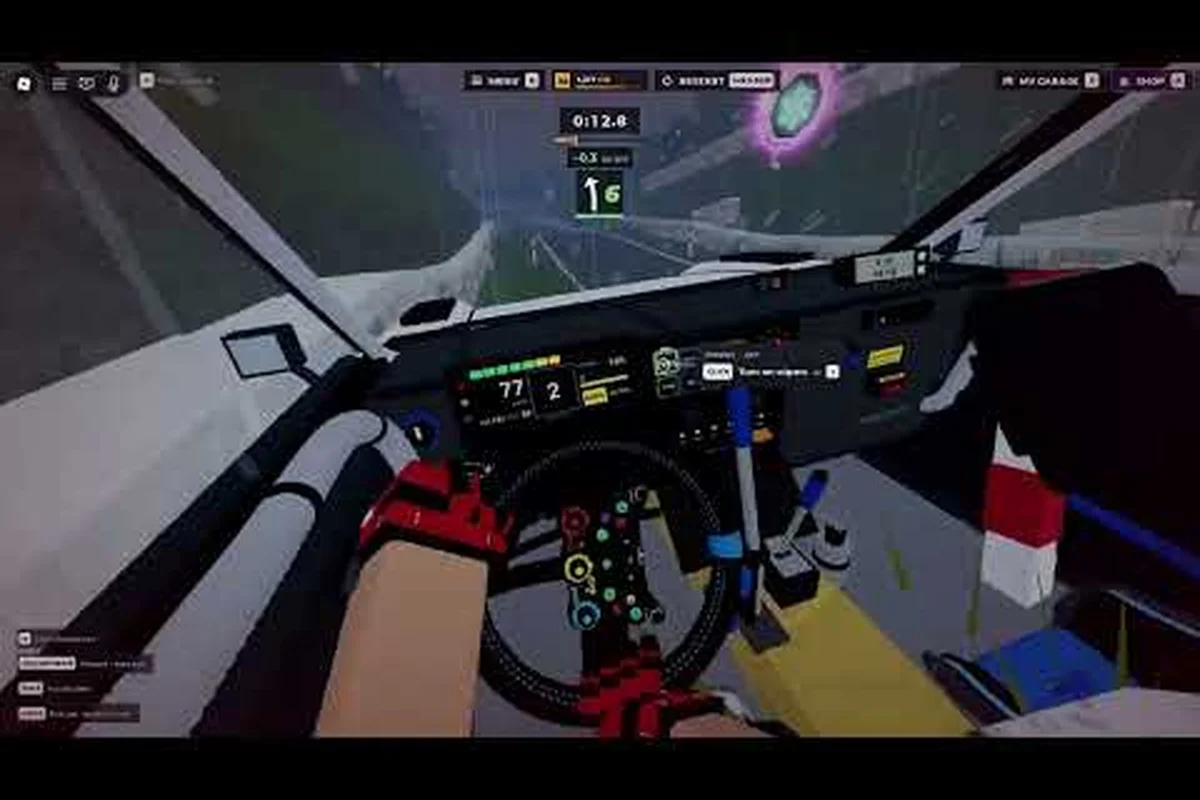
Backseat Rally solo mode gives you an AI co-driver, clear route guidance, and useful pacing support without a second player. That matters because a steady rhythm can lower your crash rate, reveal a better driving line, and turn practice into faster, more consistent runs.
Backseat Rally Solo Mode: Using the AI as a Timing and Rhythm Tool
The AI co-driver is most useful when you treat it as a timing and rhythm tool rather than an automatic navigator. It can keep the route in view while you concentrate on steering, braking, and choosing how aggressively to attack each section. In Backseat Rally solo mode, your best result comes from pairing those instructions with a repeatable approach instead of reacting to every call in isolation.
A reliable solo run has three connected parts: preparing the route, deciding when to act on an AI co-driver call, and resetting your pace after a mistake. In Backseat Rally solo mode, the call should confirm a plan you could already execute—for example, approaching a hairpin early enough to brake before turn-in rather than waiting for the voice cue and then correcting late. This turns the co-driver into a timing reference instead of a substitute for route reading, helping you preserve steering control, maintain a repeatable rhythm, and avoid overdriving sections where grip, not the apparent width of the road, determines the safe entry speed.
-
Route awareness: Know what the next corner demands before the call arrives.
-
Speed control: Match the car’s grip and handling to the surface, not merely the road’s apparent width.
-
Recovery discipline: Use a small correction after a mistake rather than making a dramatic change that compounds the error.
The advantage is especially clear for players who struggle with keyboard controls or who want to improve a time-trial routine without coordinating with another person. If you are still building the fundamentals, the Backseat Rally beginner guide provides a useful foundation for controls, vehicle choice, and early race routines.
| Solo-mode priority | What it changes | Practical result |
|---|---|---|
| Early route scanning | Improves recognition of upcoming turns | Fewer last-second steering inputs |
| Controlled braking | Preserves usable speed at corner entries | Smoother direction changes |
| Pace discipline | Prevents overdriving on repeated sections | More consistent completion times |
| Error recovery | Reduces damage after a small mistake | Fewer cascades of mistakes |
Build a Simple Pre-Race Routine
Before starting a stage, spend a moment identifying the car’s strongest trait and its most noticeable weakness. If the car accelerates well but turns slowly, plan a later brake point. If it corners confidently but carries less speed, protect the front end and use a wider entry. This prevents you from applying the same speed target regardless of vehicle behavior.
Next, decide on an opening pace. Starting too aggressively creates extra steering corrections in the first minutes, and those corrections often persist after the mistake has passed. A slightly conservative first run is useful because it gives you a clean baseline from which to compare later attempts.
For solo practice, record three numbers after each run: completion status, total time, and the number of major mistakes. Time alone can hide unstable driving, while a clean run at a moderate pace gives you a much better foundation for a faster personal best.
Use the AI Without Over-Relying on It
The AI co-driver supplies navigation cues, but the driver still owns the car. Listen for the relevant instruction, then look ahead toward the physical road markers and road shape. If every cue triggers a large steering input, you are reacting rather than anticipating.
A useful test is to keep your eyes moving forward whenever possible. Confirm what the call describes, but use the road to determine exactly when to act. That approach makes Backseat Rally co-driver tips more useful because the call becomes a checkpoint in your planning process instead of a command that demands instant obedience.
Call Timing and Driver Rhythm in Backseat Rally Solo Mode
The strongest solo drivers create a steady rhythm: identify, prepare, act, settle. They do not wait for every call, because they understand the sequence of road features. This makes the difference between simply reaching the finish and improving your pace consistently.
Identification happens while the road is still visible ahead. Preparation means easing off the accelerator, lining up the car, or moving the brake to a comfortable position. Action is the turn, straight, or obstacle response. Settlement returns the car to a neutral position so the next corner does not begin with unwanted sideways momentum.
Learn the Difference Between Warning and Action
A call may tell you what is coming, but it does not always dictate the exact instant to turn. The physical road remains the best timing reference. Treat a directional call as a prompt to prepare, then use the bend, lane position, or visible marker to determine your precise input.
| Call timing | Driver response | Result |
|---|---|---|
| Call arrives early | Check the road and prepare | Smoother, earlier positioning |
| Call arrives on time | Act using the visible corner entry | Predictable handling |
| Call arrives late | Make a measured correction | Limits unnecessary steering |
| Call seems uncertain | Slow slightly and verify the road | Reduces blind commitment |
This is where Backseat Rally driver tips matter. A fixed response to every call can make a fast section slower than necessary, especially when the AI is simply providing information instead of timing a steering input for you. In backseat rally solo mode, treat informational calls as context, not commands: if the call announces a tight left only as the corner enters view, begin positioning early, but still wait for the visible apex to set the steering angle. Responding identically to every prompt risks late countersteering, unnecessary lane changes, and a slower line through switchbacks. The key distinction is whether the call adds new information about the road or merely repeats a cue already visible from the driver’s seat.
Build a Three-Stage Call Sequence
Use a simple sequence for every instruction: confirm, commit, correct. First, confirm what direction or feature the AI mentioned. Next, commit to a smooth action based on what you can see. Finally, correct only if the car’s position or speed requires it.
This method reduces tiny steering movements that can make the car feel unstable. It also creates a repeatable rhythm that is easier to maintain through a long stage. The same principle appears in the Backseat Rally trust game, where clear role expectations make the driving process easier to understand.
Adjust Your Inputs, Not Just Your Speed
Slowing down is not always the best response to a difficult section. Sometimes the problem is that you are accelerating and steering at the same moment. A cleaner approach is to release acceleration earlier, complete the steering input, and then restore power once the car is aligned.
This creates a useful input separation habit: prepare the car with one action, commit to the corner with another, and restore momentum afterward. Repeating that sequence on practice runs teaches your hands and eyes to work together without requiring a human co-driver to call every correction.
Backseat Rally Co-driver Strategies for Faster Solo Runs
Solo pace is not simply about driving as fast as possible. It is about finding the highest speed the car can repeat. A slightly slower clean run is often more useful than one aggressive attempt because it gives you a baseline that can be improved safely.
The best Backseat Rally co-driver strategies combine restraint, anticipation, and deliberate repetition. Begin each attempt with one small goal rather than trying to change everything. Good goals include braking earlier on a named corner, avoiding one specific steering correction, or keeping the car centered through a narrow section.
Use a Three-Run Improvement Cycle
Treat the three runs as a controlled comparison rather than three general attempts. In backseat rally solo mode, begin the reference run with no deliberate pace increase, using clean notes on corner entry, braking rhythm, and acceleration timing. Next, change only one variable—for example, earlier braking into a hairpin—and keep steering, pace, and acceleration otherwise consistent. The final run repeats that exact adjustment with minimal variation, revealing whether the cornering rhythm improved without introducing a new handling error. This structured test also makes solo-driver feedback more precise than simply trying to drive faster repeatedly.
| Run | Purpose | What to change |
|---|---|---|
| Reference run | Establish a clean baseline | No deliberate pace increase |
| Target run | Correct one weakness | Adjust one corner or rhythm element |
| Confirmation run | Test the improvement | Repeat the same change with minimal variation |
This cycle prevents a common solo-driving mistake: changing braking, steering, and acceleration simultaneously. When several variables move at once, it becomes difficult to determine which change improved the run. A controlled comparison makes later coaching of the AI more precise as well.
Learn Where the Car Loses Momentum
Watch for points where speed falls without a major collision. Those are often caused by excess steering, late braking, or acceleration during a turn. They can also reveal that the chosen car is a poor match for the stage’s surface or layout.
Do not immediately blame the AI co-driver. Check whether you slowed before the instruction, whether your view of the road was clear, and whether the car was already turning before the call became relevant. The solution may be earlier preparation rather than a different navigation setting.
A momentum break is a useful label for a smooth but unnecessary loss of speed. Record its location after every attempt, then compare runs. If the same break appears three times, make it the target of your next focused practice session.
Match Your Pace to Road Conditions
Road width, visibility, surface grip, and the car’s handling all influence a sensible speed. When these factors change, the same braking point may no longer be appropriate. Keep enough safety margin to correct a small steering error without spinning or leaving the route.
Rain, snow, or loose ground may require a different pace than a dry stage, although the exact effect can vary by version and vehicle. Treat reported conditions as useful context rather than a fixed number, and confirm how the car behaves in practice. The Backseat Rally versus mode guide explains how broader race conditions can also affect preparation.
Reading the Road and Adjusting Your Backseat Rally Solo Plan
The AI provides direction, but the road tells you how to drive. Look at the shape of the lane, the position of the course edges, and the distance between visible features. These details help you determine whether the upcoming turn is broad, tight, sharp, or followed by a short recovery.
Scan in Three Distances
Divide your attention into three practical ranges: immediate, middle, and distant. The immediate range shows the car’s position and any immediate correction. The middle range contains the next corner entry and exit. The distant range shows the broader route rhythm, such as a sequence of bends or a narrow approach.
This layered scanning prevents tunnel vision. When you look only at the nearest piece of road, your speed can rise without a clear plan for the next two corners. When you scan too far ahead, you may miss a close correction. A balanced scan keeps both the car and the upcoming route in view.
| Viewing layer | Information to gather | Driving action |
|---|---|---|
| Immediate | Lane position and car stability | Correct minor drift early |
| Middle | Next corner entry and exit | Choose brake point and line |
| Distant | Longer route rhythm | Set an overall pace target |
Make One Correction at a Time
When the car begins to move away from the intended line, use a small correction rather than reversing the previous steering input. Large counter-steering can cause the rear to move farther, particularly on a loose surface. A measured correction preserves control and keeps the car’s momentum more predictable.
The same rule applies to power. If you accelerate while making a significant steering correction, the car may move farther than expected. First settle the steering, then decide whether more power will help. This sequence makes the car easier to control and gives the AI’s route information more practical value.
Use the Route to Plan the Next Stage
After completing a run, study where you spent time braking and where you arrived with excess speed. If the stage is technically demanding, choose a car whose handling supports the narrow sections rather than relying on acceleration alone. If the road is fast and open, a stable car with strong top speed may be easier to drive consistently.
The Backseat Rally guide for beginners can help with vehicle selection and initial setup. In Backseat Rally solo mode, the right car reduces the number of corrections required, which is often more valuable than a small increase in raw acceleration.
Turning Solo Practice Into Repeatable Progress
Solo mode becomes rewarding when the player can identify progress without constantly changing the rules. Use a short checklist before and after every attempt. This creates a controlled loop that supports cleaner driving and makes weak points easier to solve.
Before the Run
Prepare the car and route with a consistent sequence. Confirm the selected vehicle, review the first meaningful corner, and choose one pace target. If the previous run ended in a common failure, decide which single adjustment you will test this time.
During the Run
Keep the call sequence short: confirm, commit, correct. Preserve your scan between the middle and distant layers, and avoid a hard brake followed by immediate power. If you make a mistake, return the car to a stable state before deciding what comes next.
After the Run
Compare more than the final time. In solo mode, review the stage’s pace notes, braking points, and line through each corner, then check whether the car settled faster after the apex and whether the same mistake appeared again, such as arriving at a hairpin with too much speed. A second run with a deliberately lower entry speed can show whether the issue was pace or consistency, helping you choose one specific practice target instead of simply repeating the stage.
| Tracking field | What it reveals | Useful adjustment |
|---|---|---|
| Total time | Overall pace | Reduce repeated braking losses |
| Major mistakes | High-risk decisions | Slow the first version of one section |
| Recovery speed | Vehicle control under pressure | Practice smoother corrections |
| Section consistency | Repeatability across attempts | Hold back pace on weak segments |
This measurement loop turns vague impressions into actionable information by linking the tracked data to each mistake, missed braking point, or inconsistent corner. For example, if the Total time shows a small loss on every run but Major mistakes spikes at one hairpin, prioritize earlier braking there rather than changing the whole stage. If Recovery speed is steady while Section consistency varies, repeat the weak segment at a lower pace. These results also give you a clear reason to revisit the AI settings when a call arrives too late for your preferred solo driving style.
When to Use a Human Co-driver
Solo practice is ideal for learning, testing, and improving consistency, but a human partner can expose weaknesses that the AI cannot. When you play with a friend, each person can handle a different part of the challenge: one concentrates on the road while the other handles timing and route awareness. That split can improve learning even when the final time is not your best.
Backseat Rally friend co-driver sessions are especially useful for testing call clarity. Ask your partner to describe difficult corners in simple terms, then compare the human call with the AI’s delivery. You may discover that your issue is not the co-driver’s information but the point at which you act on it.
Backseat Rally play with friend sessions can also reveal which parts of the route you understand subconsciously. For example, a friend may notice that you enter one corner too quickly because you know the road looks deceptively open. A fresh perspective turns that habit into a clear practice target.
Frequently Asked Questions
Can Backseat Rally solo mode replace playing with a friend?
Solo mode is excellent for learning routes, testing cars, and improving consistency because it removes communication delays. A friend remains useful for practicing teamwork, timing calls, and recovering from mistakes. Use solo runs to build the fundamentals, then compare them with a co-op session to identify habits that only become visible when another person is watching.
Should the AI co-driver be used more as a timer or a navigator?
Treat the AI primarily as a navigator and use the visible road to control timing. The call tells you what feature is coming, while lane position, road shape, and visible markers determine when to act. Reacting at the last possible moment can produce abrupt steering, so confirm the information early and move smoothly.
What is the best pace for a first solo run?
Choose a pace that lets you finish without repeated large corrections. A slightly conservative opening run establishes a clean reference, making later improvements easier to identify. After each attempt, change only one behavior, such as braking earlier at a named corner, and compare the result.
How can I tell whether the car or my driving is the problem?
Compare the same corner across several runs while keeping the car unchanged. If the car repeatedly understeers, slides, or struggles to accelerate, test a different vehicle. If the same mistake follows a late visual scan or late braking, adjust the driver technique before switching cars.
Does Backseat Rally solo mode work well for time-trial improvement?
Yes, because it provides repeatable route guidance and removes the variability of live communication. Track total time, major mistakes, and recovery quality rather than focusing only on the clock. Consistent solo practice can reveal where speed is being lost, while the Backseat Rally friend mode guide offers a clear way to compare those habits with cooperative play.