
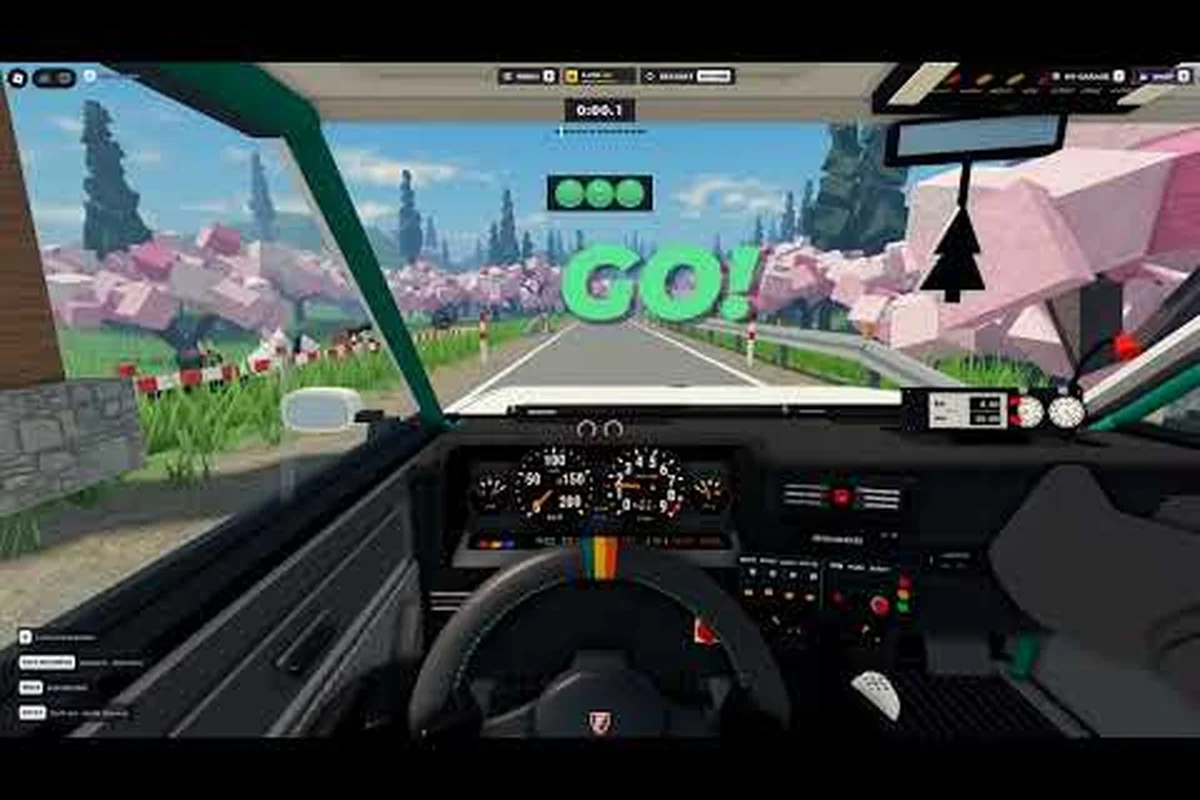
The Backseat Rally level list organizes every course and map in the game, from tight forest routes to slick, ice-covered climbs, so you can compare route demands and plan stage tactics. Use this list to identify each track's main challenge, check map details, and target your practice before racing for gold times.
Backseat Rally Level List and Course Overview
Knowing the Backseat Rally level list matters because every course rewards a different balance of speed, traction, and restraint. This Backseat Rally level list groups the available stages by their defining challenge, then explains the strongest route choices without pretending that one driving style wins everywhere. Use the map overview to identify the terrain ahead, compare the demands of each course, and turn repeated attempts into targeted practice. The verified Stage 5 record shown by GakuranBoy offers a useful reference point for comparing a personal run with community evidence, though course times can change with version and platform.
| Course type | Main challenge | Best first objective | Common mistake |
|---|---|---|---|
| Forest route | Tight sightlines and uneven edges | Find a clean racing line | Forcing speed before the corner opens |
| Snowy pass | Low grip and long recovery zones | Keep momentum under control | Sudden steering corrections |
| Rain or mud | Reduced traction and longer stops | Smooth inputs and conservative braking | Oversteering through puddles |
| Cherry blossom route | Technical bends and rhythm | Link corners into one flow | Treating every bend separately |
| Mountain or off-road section | Narrow terrain and elevation | Pick one safe line | Wandering across the full track |
| Stage 5 community challenge | Mixed conditions and pressure | Compare routes by sector | Chasing a single lap immediately |
The course-by-course map breakdown is the center of this Backseat Rally level list. It is designed to answer three practical questions: where the course becomes difficult, which part of the route usually costs the most time, and what should a player practice before requesting another attempt.
Backseat Rally Maps and Terrain Demands
A useful Backseat Rally course guide starts with the surface, because the map tells you which inputs will remain reliable. Weather changes can multiply the difficulty of an already technical route, so a stage should never be judged only by its scenery. Compare the dry layout with the conditions you are actually driving, and use the Backseat Rally all stages map overview when you need a broader look at the environments in the course rotation.
| Route category | Grip expectation | Visibility | Main skill tested | Practical target |
|---|---|---|---|---|
| Forest | Moderate, with edge variation | Limited by trees and bends | Braking consistency | Enter bends at a repeatable speed |
| Snow | Low and variable | Generally clear | Smooth throttle control | Avoid abrupt steering input |
| Rain | Low to moderate | Reduced in spray | Confidence under braking | Leave a safe stopping margin |
| Mud | Low, especially on the surface | Variable | Traction management | Build speed in straight sections |
| Cherry blossom road | Moderate to high | Clear | Technical rhythm | Link several corners smoothly |
| Mountain path | Moderate but narrow | Restricted by elevation | Route selection | Keep the car on one committed line |
| Stage 5 reference route | Mixed | Depends on conditions | Consistent execution | Compare sectors, not only final time |
Forest and Cherry Blossom Routes
Forest stages demand restraint because the apparent shortest line is rarely the safest one. A corner may look open from a distance, yet the usable road narrows as the vehicle approaches trees or a bend. The strongest route is usually a single committed line that lets the driver brake, turn, and accelerate without emergency corrections. Community reports commonly describe cleaner forest runs as faster because the car retains momentum instead of repeatedly losing it at the exit.
Cherry blossom road follows a similar principle through a more technical sequence of bends. Rather than isolating each corner, plan the bend-to-bend rhythm: the next steering input should follow the car’s rotation from the previous one. This approach prevents the common pattern of an early entry, a late correction, and a completely new acceleration zone. Compare this route with the Backseat Rally driving-line and stage-time guide when you want to learn how a wider route can produce a faster lap.
Snow, Rain, and Mud Routes
Snowy, rainy, and muddy courses reduce the margin for abrupt inputs. Braking, acceleration, and steering all become less predictable, especially where the surface changes between the racing line and the shoulder. The key is to make the car’s movement smooth enough to remain readable. If the rear of the vehicle begins moving, reducing steering and steering again can preserve more control than an abrupt correction.
Weather stages also reward a different kind of route planning. On a dry course, the driver can use the full width of the road to shorten the path. In poor conditions, that freedom becomes a liability because a wider line may place the car on a softer surface. The Backseat Rally winter and wet-weather driving guide provides focused techniques for these reduced-grip stages and the visual cues that can help you avoid abrupt changes.
Backseat Rally Stage Tactics by Route
Backseat Rally stage tactics should be based on the phase of the course rather than a single command applied to the whole lap. Break the route into braking zones, direction changes, and acceleration zones, then assign a different goal to each. The table below shows a practical structure for reviewing a failed run and identifying the section that deserves another attempt.
| Course phase | What the driver sees | Tactical priority | Result to protect |
|---|---|---|---|
| Entry | Long view or concealed corner | Confirm the braking point | Stable entry speed |
| Apex | Vehicle is close to the corner | Use a small steering correction | Balanced rotation |
| Exit | Road opens or elevation changes | Apply power only when grip is secure | Earlier acceleration |
| Straight | Long acceleration zone | Keep the car balanced | Higher terminal speed |
| Technical complex | Several connected bends | Link the rhythm | Fewer lost tenths |
| Weather transition | Grip or visibility changes | Reassess inputs | Reduced error rate |
| Final sector | Fatigue can affect concentration | Repeat earlier cues | Consistent finish |
Build a Repeatable Four-Part Routine
A four-part routine keeps practice purposeful. First, watch one clean run and identify the route’s three most difficult features. Second, repeat the stage while concentrating on only one feature per attempt. Third, compare the outcome with your previous run, focusing on whether the car stayed on the intended line. Fourth, combine the features into a complete lap. This process turns a frustrating retry into measurable work on a specific weakness.
| Practice block | Focus | Success signal |
|---|---|---|
| Course reconnaissance | Corners, surface, elevation | You can name the major braking zones |
| Corner isolation | One difficult turn or sequence | Entry and exit become repeatable |
| Route linkage | Connections between corners | Less time lost changing direction |
| Full-lap pressure | All features under time pressure | Fewer mistakes late in the stage |
| Record comparison | Personal and community times | Clear evidence of improvement |
The four-part routine is more useful than repeatedly driving at maximum intensity. Each block has a specific question to answer, which makes feedback easier to interpret. A slower lap that produces a clean exit is often better practice than a fast lap full of corrections, because the latter reinforces inconsistent habits.
Read Your Mistakes Instead of Chasing Time
When a run goes wrong, inspect the moment before the mistake rather than the crash itself. Did you brake while turning? Did the car drift because the surface changed? Did you carry too much speed into a blind corner? These answers determine which tactic to adjust. A useful review names the error as brake timing, entry speed, line choice, or traction, because each category has a different correction.
Time chasing can also distract from actual progress. A faster lap with more corrections may represent instability, while a slightly slower lap with a clean finish may be faster in the long run. The goal of this Backseat Rally level list is therefore not merely to list tracks; it is to provide a repeatable method for reducing the mistakes that create slow laps.
Backseat Rally Routes and Best Practice Plans
Your route choice should reflect the conditions and the time you have available. Some stages are best used as technique drills, while others work well as endurance tests because their rhythm changes repeatedly. The table below organizes the Backseat Rally stages by the value they provide during a practice session rather than by an invented difficulty score.
| Stage practice type | Useful training goal | Conditions to emphasize | Practice length |
|---|---|---|---|
| Beginner control | Gentle braking and steering | Dry, clear conditions | 3 to 5 focused attempts |
| Forest precision | Staying within a narrow line | Forest edges and blind bends | 5 to 8 attempts |
| Weather control | Smooth input on low grip | Snow, rain, or mud | 5 to 8 attempts |
| Rhythm stage | Connecting several corners | Cherry blossom or technical route | 5 to 10 attempts |
| Endurance stage | Maintaining focus late in the run | Longer mixed course | 3 to 5 full laps |
| Record challenge | Chasing a benchmark | Stage 5 or another time target | 3 to 6 measured runs |
This route-based planning makes the Backseat Rally course guide practical for different sessions. A short practice block can isolate a single technique, while a longer session can test consistency. It also prevents a common mistake: replaying a difficult stage without deciding what evidence would show improvement.
Choose a Goal Before Restarting
Set one measurable goal before every restart. Examples include keeping all four wheels within the road on the forest section, avoiding steering corrections during the final third, or improving a personal time by focusing on one corner. “Drive faster” is too broad, because it gives you no clear indication of which behavior to change. A specific rehearsal target makes each lap more useful and makes progress visible.
For medal-oriented play, pair the route rehearsal with the Backseat Rally rain-stage medal and gold-time guide. The important principle is to separate pace from consistency: first drive a clean route, then reduce time at the highest-value braking or technical section. Changing several things at once often makes it impossible to know which adjustment worked.
Compare Community Evidence Carefully
Community data can help identify a realistic benchmark, but it is most useful when the evidence is treated as a reference rather than a promise. The verified Stage 5 Backseat Rally record video by GakuranBoy demonstrates a community run on Stage 5, giving the route a visible benchmark without claiming that every platform or version produces the same result.
| Evidence source | What it can show | What it cannot prove |
|---|---|---|
| Verified community video | One driver’s route and execution | Your exact attainable time |
| Personal run history | Your consistency and progress | The ideal line for every condition |
| Community route reports | Common trouble spots | Universal setup performance |
| Course layout | Available direction and terrain | Current patch-specific behavior |
Because the available course information here does not include official per-stage time standards, avoid presenting invented medal thresholds as fact. Use current in-game results and clearly labeled community evidence instead. This keeps the level list accurate and prevents a polished-looking table from spreading unverified numbers.
Backseat Rally Stage Practice Plan for Faster Improvement
A productive practice session needs a sequence, not just repetition. Warm up on an easy course, choose one target stage, isolate its hardest feature, then test the full route under realistic effort. End with a recorded comparison so that the next session begins from evidence rather than memory. The table below provides a repeatable schedule that can be adapted without changing the core method.
| Session stage | Duration | Route choice | Main task |
|---|---|---|---|
| Warm-up | 5 to 10 minutes | Short or familiar stage | Settle steering and braking |
| Skill isolation | 10 to 15 minutes | Course with one clear weakness | Practice one feature |
| Route linking | 10 minutes | Technical course | Connect corners smoothly |
| Full attempt | 10 to 15 minutes | Target stage | Complete a clean measured run |
| Review | 5 minutes | Review data and notes | Identify the next adjustment |
The practice plan works because each stage has a separate purpose. Warm-up laps should not be used to set a time, and isolated drills should not be judged as complete runs. Keeping those roles separate prevents a fast but unstable lap from distracting you from the exact behavior you are trying to learn.
Use Data Without Chasing Perfection
Record the result after every measured attempt, but limit yourself to a few numbers. Total time, the location of the largest mistake, and whether the line stayed intact are usually enough. These points connect directly to the stage review model in the Backseat Rally off-road and medal guide, which can help you interpret the wider challenge of technical surfaces and medals.
Avoid the temptation to change the car setup or approach after every lap. A driver who changes three things at once cannot identify the result. Keep the setup stable for a block, change one tactical behavior, and compare the outcomes. This approach builds confidence because each successful adjustment has a clear cause.
Rest Between Full-Stage Attempts
A full course may demand more concentration than a short practice drill, especially when the route contains many direction changes. Fatigue reduces the speed at which a driver can recognize a developing error, which can make later laps slower even when the driver feels more aggressive.
Take a short break after several full attempts and spend it reviewing rather than immediately restarting. Mark the point where the run began to deteriorate. If mistakes cluster after a long straight, the issue may be sustained concentration. If they cluster in one technical section, returning to an isolated drill will usually be more productive than completing another entire stage.
Frequently Asked Questions
What is the best way to use the Backseat Rally level list?
Treat the level list as a map of practice priorities rather than a simple ranking. Start with the course that matches your weakest skill, learn its major braking zones and surface changes, and set one goal per attempt. This Backseat Rally course guide approach makes each session measurable and helps you improve the specific reason your previous lap was slow.
Which Backseat Rally stages are hardest for new drivers?
Technical routes with narrow edges, blind bends, and changing grip are usually the most demanding because they combine steering precision with braking control. A forest course can punish an early entry, while a snowy or muddy route magnifies abrupt inputs. The exact challenge also changes with weather, so inspect the current conditions before choosing a target.
Should I use the shortest route in every Backseat Rally course?
No. The shortest visible path is not always the fastest drivable line, especially when it crosses a soft shoulder or forces an emergency correction. Choose a line that matches the surface, allows smooth rotation, and preserves acceleration. On technical stages, a slightly wider route can produce a faster lap because the car exits the corner straighter and more stable.
How can I improve my Backseat Rally stage tactics without changing the car?
Focus on repeatable behavior: use a consistent braking cue, avoid abrupt steering on low-grip surfaces, and link corners instead of treating each bend separately. Record only a few details after each attempt, including the main error and the section where it occurred. Isolate that section in the next practice block before trying to lower the total time again.
Is a community record a realistic target for my Backseat Rally routes?
A community record is useful as a reference, but it is not a guaranteed target. The driver, platform, route choice, weather, and game version may differ from your run. Use verified community evidence to study execution, then compare personal attempts under the same conditions. The most meaningful result is steady improvement supported by your own consistent laps.