
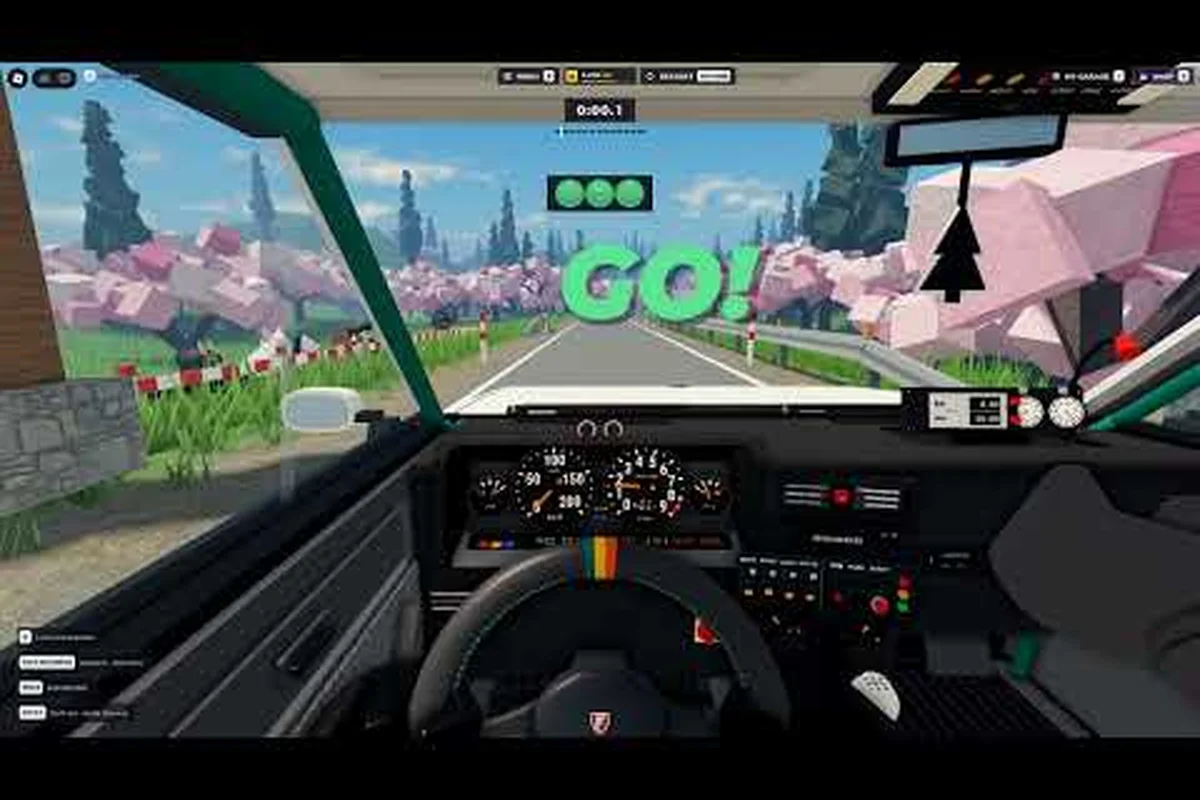
Backseat Rally stage weather decides grip, visibility, and medal pace before the engine revs. Learn how rain, snow, and mud change braking, throttle control, co-driver calls, and racing lines so you can stay fast without turning a wet stage into a recovery drive.
Backseat Rally Stage Weather: Rain, Snow, Mud Effect
Backseat Rally weather is not a cosmetic layer placed over the same stage. Rain can soften the surface and reduce braking traction, snow can hide the racing line, and mud can pull the car away from the direction you point it. The same corner that produces a clean medal time on a dry surface can consume several seconds when grip, visibility, and steering response change together.
The useful approach is to adjust the whole driving system rather than make one isolated correction. Your co-driver should describe hazards earlier, your braking should begin sooner, and your throttle should stay smoother whenever the tires are working near their limit. That matters because Backseat Rally rewards a co-driver who helps the driver anticipate, not merely react.
| Condition | Main grip change | Biggest visual risk | Medal-pace priority |
|---|---|---|---|
| Dry | Strongest braking and steering response | Limited | Commit to the fastest visible line |
| Rain | Reduced traction and longer braking distance | Reflections and standing water | Brake early and keep the car settled |
| Snow | Low grip with uncertain grip buildup | Covered edges and hidden bumps | Smooth inputs and early preparation |
| Mud | Low grip and uneven traction | Deep ruts, soft shoulders, and spray | Preserve momentum without fighting the slide |
Judge Surface Conditions Before the Line
A useful Backseat Rally condition tip is to judge the surface before judging the racing line. The center of the road may look best but can also hold water, loose gravel, snow, or mud. A slightly rougher line that remains stable can be faster than the ideal-looking line that causes a correction.
Community-reported runs in the Stage 5 record by GakuranBoy demonstrate the practical mud problem: the momentum-focused route becomes harder to hold when the car enters deep ruts, the braking point moves earlier, and the throttle must remain steady through slippery sections. The run is especially useful for studying why a technically smooth line can still lose time when traction changes beneath the tires.
The core lesson is simple: line quality is relative to grip. On mud, the cleanest path may not be the fastest one. Use visible wheel tracks, firmer ground, and the inside edge of a corner when they offer a more consistent surface. A driver who accepts a wider route can preserve speed that would otherwise disappear in a slide.
Build a three-part condition check
Before committing to a pace, divide the upcoming stage into three questions: the condition, its location, and the grip you can still trust. This turns a vague “the road is wet” reaction into a stage-specific judgment: heavy rain on a fast straight, for example, may mainly increase braking distance, whereas snow packed into a hairpin can pull the car wide and erase usable steering response.
-
What changed? Determine whether the issue is wet pavement, accumulated snow, loose mud, or reduced visibility.
-
Where will it hurt? Look for braking zones, hairpins, off-camber sections, ruts, and narrow crests where a small slide becomes expensive.
-
What remains reliable? Identify the braking distance, steering response, and acceleration that still feel consistent.
This check prevents a common mistake: treating every wet section as equally bad. A wet straight may only require modest smoothing, while a narrow mud corner may need a completely different line and much earlier braking. The broader Backseat Rally weather guide provides a useful foundation for understanding grip changes and slippery-road effects.
Rain, Snow, and Mud: Surface-by-Surface Control
Rain, snow, and mud reduce confidence, but they do not fail in the same way. Rain often creates a clear contrast between wet and drier patches. Snow disguises the edges of the road and makes grip change gradually. Mud can produce heavy steering loads, deep ruts, and sudden loss of forward drive. Your inputs should reflect those differences.
Rain: reduce speed before reducing control
In Backseat Rally rain, braking distances increase because the tires have less friction with the road. The solution is not to hover over the brake; that can cause late pressure and a sharper response. Apply the brake progressively, stop applying it as the car enters the turn, and use controlled throttle to settle the car on exit.
A practical rain routine has three stages: first, the co-driver should describe the hazard before the corner, such as “long right, puddle on entry”; second, the driver must reduce speed and progressive braking before the turn, because wet grip extends stopping distance and makes abrupt pressure more likely to unsettle the car; third, once the car is rotating, the driver can use smooth, gentle throttle to stabilize the exit. The goal is not simply to slow the Backseat Rally car, but to prevent a single input from transferring too much force onto a tire with reduced grip.
-
Approach: Move the braking point earlier and look for a firmer, more visible route.
-
Turn-in: Reduce steering input if the front begins to wash toward the outside.
-
Exit: Add throttle gently and let the rear follow the intended line.
| Rain symptom | Likely cause | Driver response | Co-driver response |
|---|---|---|---|
| Long braking distance | Surface moisture | Brake earlier and progressively | Call the hazard, not just the corner |
| Car washes wide on entry | Low cornering grip | Unwind steering and reduce entry speed | Describe the exit and the danger line |
| Sudden snap after braking | Patchy grip | Release brake and use smooth throttle | Warn about a grip change immediately |
| Spray obscures view | Water thrown by traffic | Keep a safe gap and trust the call | Give earlier, clearer hazard calls |
The strongest co-driver call is one that changes behavior before the danger arrives. Calling “left, left, long” at full speed gives the driver little time to choose a slower entry. A better call identifies the reason for caution: “Long left, wet entry; stay right of the puddle.” This tells the driver what to avoid, how much time remains, and what action is needed.
Snow: trust gradual grip changes
Backseat Rally snow can make a road look deceptively clean. Snow may cover lane edges, bumps, and the true boundary of the surface. It can also make identical-looking sections behave differently if one area has been cleared or packed by previous cars.
Avoid sudden inputs. Small steering corrections work better than large movements, while excessive throttle can break traction and push the car toward the edge. The safest line often stays near visible evidence of the road, even if that means leaving the geometrically shortest racing line.
Snow also changes braking priority. Begin slowing before the visual hazard becomes urgent, because the driver may not immediately recognize the grip loss. The winter-driving reference adds further detail on cold-weather stages, wet-weather handling, and snow-stage technique.
Mud: manage momentum, not just steering
Backseat Rally mud is the most punishing of the three conditions because the surface can deform, rut, or pull the car sideways. A hard throttle application may initially produce little forward progress while adding a lateral load. A sudden steering correction can then dig a wheel into a rut and worsen the yaw.
Use the momentum shown in the Stage 5 run as a reference, not as a rigid racing line. Brake before the off-camber section, keep the throttle steady through the deepest rut, and select the part of the road that gives the most continuous traction. A steady input that preserves direction is usually more useful than a dramatic input that briefly points the car toward the ideal line.
| Mud area | Risk | Best correction | Pace trade-off |
|---|---|---|---|
| Deep central rut | Wheel trap and lateral pull | Use a smoother shoulder where possible | Slightly longer route |
| Soft shoulder | Sudden sink and rising resistance | Keep the car centered and avoid excursions | Lower maximum speed |
| Rut exit | Wheelspin and tail movement | Apply throttle progressively | Brief acceleration delay |
| Puddled crest | Hidden drop and changing grip | Stay composed and avoid abrupt inputs | Reduced landing confidence |
For a dedicated route breakdown, the Backseat Rally mud-route analysis examines how terrain choice and condition handling influence the time available on slippery stages. In practice, the route matters because a shorter line across the deep central rut may cost more time through wheelspin, wheel-trap recovery, and traction loss than a slightly longer shoulder route. The comparison is especially useful at the puddle crest, where hidden grip changes can turn an apparently clean exit into extra momentum correction time. Choosing the surface that supports continuous traction preserves a usable rhythm, while repeated ruts, soft shoulders, and abrupt throttle inputs add delay even when the car remains pointed in the right direction.
Co-Driver Calls That Preserve Medal Pace
A co-driver cannot create grip, but clear calls can prevent the driver from wasting it. The central task is to convert road information into a simple sequence of decisions: hazard, action, and reference point. This is especially important when Backseat rally condition tips are needed quickly rather than discussed after the run.
Use location, hazard, and action
A useful call contains three elements: the location reference, the stage-weather hazard, and the action required. This combination lets the driver translate a rain-soaked, snow-covered, muddy, or rutted stage into a specific response before the next decision point. For example, “crest, ice-like, do not accelerate” matters because grip may return unevenly over the brow, while “right-left, wet, hold line” keeps the car away from a soaked edge. The call should identify the detail most likely to change braking, line choice, or throttle; adding a second hazard can still be useful when both are visible, but unrelated scenery only creates noise.
-
Location: “Right-left” or “crest.”
-
Hazard: “Wet,” “snow,” “mud,” “ice-like,” or “ruts.”
-
Action: “Early,” “stay right,” “hold line,” or “do not accelerate.”
Compare a generic call with a condition-aware call by adding only the stage-weather detail that changes the driver’s next input: for example, “left four, early for mud” turns a corner call into a braking instruction, while “over crest, loose on exit” warns that grip may return unevenly after the brow. In Backseat Rally, the useful distinction is not more words but better timing: a condition-aware call reaches the driver before the braking point, when braking distance, line choice, or throttle still can be adjusted.
| Generic call | Condition-aware call | Why it helps |
|---|---|---|
| “Left four” | “Left four, early for mud” | Gives the driver time to reduce speed |
| “Long right” | “Long right, stay off wet edge” | Defines a usable reference line |
| “Straight” | “Straight, snow hides the bump” | Explains why caution is necessary |
| “Over crest” | “Over crest, loose on exit” | Warns about grip returning unpredictably |
Calls should be timed to the decision, not to the scenery. Calling the corner only when the car is already at the braking point wastes the information. Calling too many unrelated details creates noise. Prioritize the condition that will most likely alter braking or line choice.
Build a shared condition vocabulary
Agree on short, consistent terms before the stage. For example, “hold” can mean maintain a committed line, “early” can mean begin braking sooner, and “soft” can identify a low-grip section. The exact wording matters less than making sure both racers interpret it the same way.
| Call term | Practical meaning | Expected driver response |
|---|---|---|
| Early | Brake before the obvious turn-in point | Reduce entry speed |
| Hold | Keep the current line through the feature | Avoid overcorrecting |
| Soft | Grip is lower than the surrounding road | Smooth steering and throttle |
| Cut | A firmer inside reference is available | Take the tighter but stable route |
| Back off | Reduce throttle before traction recovers | Prevent wheelspin |
The condition callout reference provides a broader look at weather penalties, braking changes, and the communication cues that support better stage execution. In rain, snow, or mud, a stage becomes a test of anticipation rather than outright speed: the driver should name the next feature—early, hold, soft, or cut—before committing to it, while the pacer uses the callout to link grip changes with specific actions. For example, “soft, back off” warns the driver to reduce throttle before traction returns, whereas “early” signals braking before the obvious turn-in point. Keeping those cues tied to the table’s meanings helps both racers react to changing weather without confusing a grip warning with a route instruction.
A Condition-by-Condition Pace Plan
Medal pace does not mean ignoring danger or driving below your normal pace in every corner. It means spending time only where the condition actually demands it. On a damp straight, you may still carry strong momentum. Before a snow-covered braking zone, you may need to give up a small amount of entry speed. The goal is to preserve total stage time by preventing slides, impacts, and off-road excursions.
Compare the time cost of different mistakes
The fastest-looking mistake is often more expensive than the cautious-looking choice. A wide slide can cost a fraction of a second and recover; hitting a rut, cutting a corner badly, or missing the road can cost several seconds. The wider weather strategy guide is useful for comparing route options when the surface changes repeatedly.
| Decision | Immediate benefit | Likely cost | Better when |
|---|---|---|---|
| Keep maximum entry speed | Small theoretical time gain | Slide or line loss | Grip remains consistent |
| Brake earlier | Slightly slower corner entry | Better control on exit | Weather is changing the braking zone |
| Use a wider line | Lower cornering demand | A longer distance to recover | Mud or snow makes the center unstable |
| Lift throttle briefly | Prevents wheelspin | Slight momentum loss | Rear grip is already breaking away |
| Resume full power | Restores acceleration | Snap rotation if grip is uneven | The car is stable and pointing correctly |
Use a four-stage driving loop
A repeatable loop helps the driver and co-driver divide attention in changing backseat rally stage weather. Keep the same call order after rain, snow, mud, or a dry-to-wet transition: the co-driver calls the upcoming hazard, the driver confirms the reference point and grip condition, then both act on the same decision. For example, approaching a flooded braking zone, agree on an earlier release and a wider escape route before the corner; this prevents late, conflicting steering and brake inputs when visibility or traction drops.
-
Scan: Identify surface changes, braking zones, obstacles, and escape space.
-
Plan: Choose a line that suits the current grip rather than the default dry line.
-
Execute: Apply smooth steering, braking, and throttle inputs.
-
Recover: If the car steps out, reduce the conflicting input and regain a stable direction.
The important part is that the loop continues after an error. A driver who reacts to every slide may create a second error. Once the car is moving again, use a short stabilizing input, confirm the reference point, and resume the plan.
Set pace tiers by confidence
A useful stage has at least three confidence levels: Push for consistent grip, Controlled when rain, light snow, or one tricky section reduces predictability, and Survival when mud, obscured edges, or repeated grip changes demand the safest possible line. The tiers concern the co-driver’s pace call, not the car’s maximum speed: raising a tier after a slide can cost more time than driving cautiously through the weather from the outset.
| Pace tier | When to use it | Driving standard |
|---|---|---|
| Push | Grip appears consistent | Use the normal planned line and full available acceleration |
| Controlled | Rain, light snow, or a single tricky section | Brake earlier, smooth inputs, protect the line |
| Survival | Deep mud, obscured edges, or multiple grip changes | Sacrifice time, avoid unnecessary corrections, regain control |
Move between pace tiers early, especially when a crest hides a surface change. If the crest looks dry but the landing area is muddy, switch from Push to Controlled before the crest, then consider Survival if that section also obscures the road edge. This matters because the tier changes the co-driver’s pace call and driving standard, not just the maximum speed: entering the next corner too fast can turn a manageable rain patch into a long slide and a larger time loss than choosing the safer tier before the grip changes.
Rain, Snow, and Mud Preparation Checklist
Preparation is most valuable before the stage starts. Confirm the selected conditions, review the route, and assign specific responsibilities to the co-driver. The goal is not to predict every corner perfectly; it is to recognize the first meaningful change and respond without confusion.
Pre-Run Weather Checks
-
Read the weather forecast: Check whether rain, snow, or mud is expected and whether conditions may change during the run.
-
Choose a stable vehicle setup: Avoid making a large setup change solely for the forecast if the current configuration already suits the terrain.
-
Review the route: Mark likely puddles, exposed sections, ruts, crests, and places where the default racing line may fail.
-
Agree on call terms: Establish short instructions for early braking, soft surfaces, line changes, and traction warnings.
-
Set a first-corner pace: Use the most weather-sensitive area to determine whether the planned pace is realistic.
Mid-Stage Condition Adjustments
-
Change tier early: If grip is uncertain, move down a pace tier before the critical braking area.
-
Keep inputs quiet: Small steering corrections and progressive throttle usually preserve more control than abrupt movements.
-
Protect the exit: A safe entry is wasted if traction breaks during acceleration out of the corner.
-
Call the cause: Tell the driver why the pace must change, not merely which direction the road bends.
-
Rejoin deliberately: After a slide or off-road excursion, return to a clear reference before attempting the fastest line again.
The broader dynamic-weather reference explains how changing terrain and off-road behavior affect pace notes, grip, and line choice. Use that knowledge when a stage moves from rain-darkened tarmac to gravel, mud, or snow: the same corner can demand a lower pace tier, a wider entry, or an earlier release of the handbrake as water, loose aggregate, or ruts change the available traction.
Post-Run Weather Review
Review not just the mistakes but the conditions around them. A slow corner in dry weather may indicate a poor line. The same slow corner in mud may represent correct caution or an unnecessary correction. Separate driver error from the condition’s real effect so the next run improves rather than reinforces the wrong lesson.
A useful review includes three questions: when did the Backseat Rally stage weather make the car behave differently from the crew’s expectation, which weather-related co-driver call changed the driving plan, and whether the crew’s response to rain, snow, or mud actually improved the stage result? Record the condition, the grip change, and the chosen line together; for example, a muddy approach that prompted an earlier handbrake turn may have protected the car but cost several seconds compared with carrying more momentum.
-
Where did grip change earlier than expected?
-
Which co-driver call produced the best response?
-
Where did conservative driving cost time without preventing a mistake?
Compare the same stage notes across events when the Backseat Rally weather forecast repeats. A later run in steady rain may reward the earlier decision to sacrifice entry speed for a safer line, while heavier rain can make that same choice unnecessarily cautious. Track the forecast, grip change, chosen route, and stage time together so each answer produces a better stage plan for the next attempt, especially when the same Backseat Rally weather forecast appears in a later event.
Frequently Asked Questions
Does rain change medal targets in Backseat Rally?
Rain can alter medal pace indirectly by increasing braking distance, reducing cornering grip, and making traffic spray more disruptive. It does not need to create a constant slow-speed run. Keep pace on stable sections, brake earlier for wet corners, and protect the exit where wheelspin is most likely to cost several tenths of a second.
Should I avoid the racing line completely in snow?
No, but you should stop treating the painted or visual center as automatically ideal. Snow can cover the road edge, hidden bumps, and patches of different grip. Use visible road references, firm tracks, and a stable line. Smooth steering and moderate throttle are often more valuable than choosing a perfect geometric route.
Why does mud make the car slide even at moderate speed?
Mud can reduce friction, create deep ruts, and load the tires unevenly. Moderate corner speed can still be unsafe if the steering correction arrives too late or the throttle breaks traction on exit. Brake before the roughest section, keep the wheels moving steadily, and avoid crossing from one rut into another abruptly.
What is the best co-driver call for slippery conditions?
The best call identifies a location, hazard, and action, such as “left four, early for mud” or “long right, stay off the wet edge.” This format gives the driver enough time to reduce speed and clarifies what to avoid. Calls should prioritize grip changes and braking points over minor scenery details.
How can I recover time after making a mistake in rain?
Return to a stable, visible line before pursuing the ideal line again. Smooth the steering, release abrupt braking, and apply only enough throttle to regain forward drive. Once the car is settled, identify the next hazard and resume the planned pace. Recovering calmly is usually faster than trying to save the mistake immediately.
Backseat Rally stage weather rewards preparation that links road condition, grip, and communication. Recognize the surface early, choose a stable line, make smooth inputs, and use concise co-driver calls to act before grip disappears. Rain, snow, and mud each demand a different response, but all become manageable when the driver and co-driver share the same plan and react to the same evidence.