
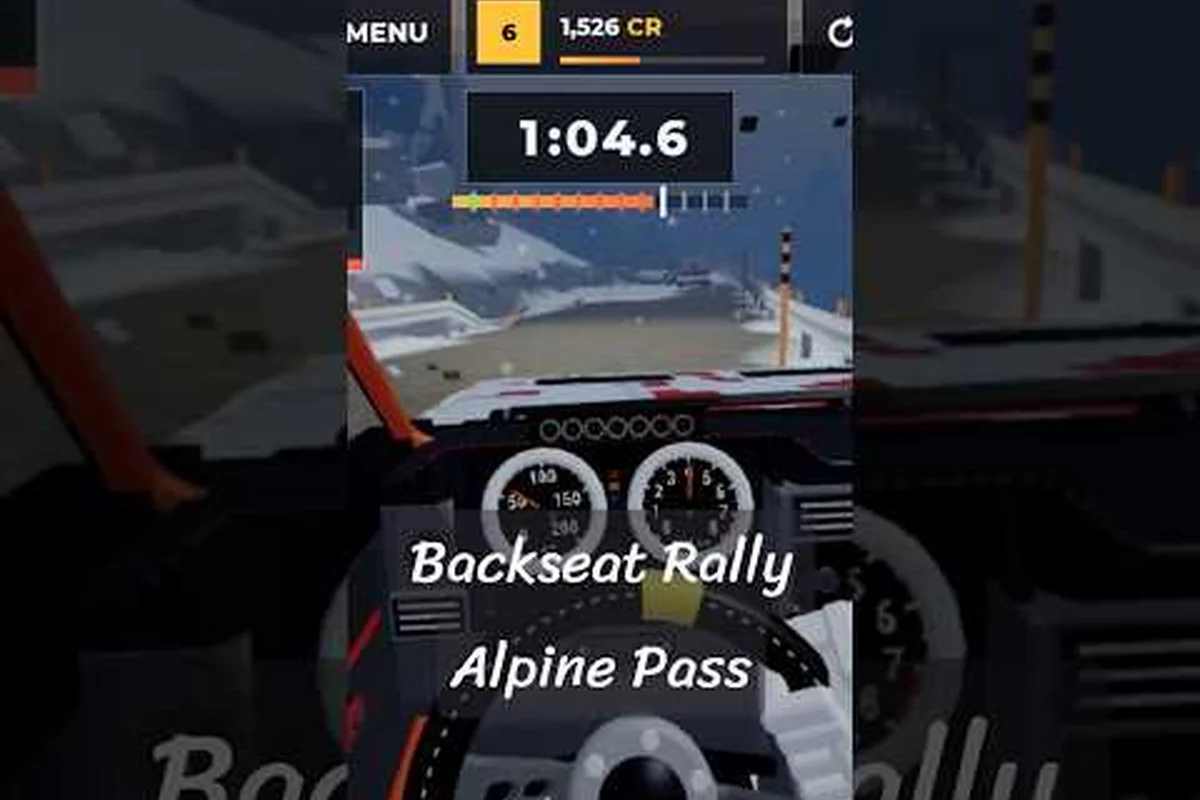
Weather can change a Backseat Rally stage faster than a new route can. This backseat rally weather guide explains how rain, snow, mud, and reduced grip alter braking, steering, and the timing of co-driver calls so you can keep the car on the road and preserve race pace.
Backseat Rally Weather Guide: Grip and Braking Loss
Weather in Backseat Rally matters because grip, visibility, and braking confidence all fall when the surface becomes wet, snowy, or muddy. A car that feels quick on a dry stage may become unpredictable in rain because every input transfers less directly to the road, while snow and mud add longer stopping distances and more sideways movement. The goal is not simply to drive slower; it is to preserve momentum without asking the car to do more than the current surface allows.
The useful mental model is grip budget. Every corner, braking zone, and lane change consumes some of the available traction. On dry pavement, you can use more of that budget before the car begins to slide. On a slippery stage, the same steering input can produce a larger movement, and a late correction can be harder to recover. This is why smooth inputs and earlier braking usually produce better results than aggressive corrections.
| Surface | Main risk | Best first adjustment | Co-driver focus |
|---|---|---|---|
| Dry | Overcommitting through a fast corner | Keep the planned racing line | Distance and corner severity |
| Rain | Reduced braking grip and longer stopping distance | Brake earlier and release sooner | Earlier braking warnings |
| Snow | Low grip plus hidden patches of ice | Reduce speed, steering, and throttle | Distance caution |
| Mud | Unpredictable traction and heavy sliding | Look for a smoother, wider line | Direction and corner exit |
This backseat rally weather guide focuses on practical adjustments rather than pretending that every stage behaves identically. Weather effects may vary by stage, car, and version, so treat the table as a baseline and test the actual surface in short practice runs. If you want a deeper look at condition-specific behavior, the Backseat Rally stage-weather overview provides a useful companion for comparing rain, snow, and mud stages.
The Core Principle: Make Fewer Demands
A reliable low-grip run depends on three linked actions: slow the car before the difficult part, keep the steering smooth, and prevent abrupt throttle changes from upsetting the rear of the car. These actions work in dry conditions too, but bad weather reduces the margin for error. A small input that would normally be harmless can become a large slide on a slick surface.
Think of each corner in three phases: set the entry speed early enough to shed momentum before the traction limit, rotate the car only as much as the front grip allows, then rebuild speed without letting the rear tyres overwhelm the steering. In rain, a late 5% reduction in entry speed can prevent a larger slide; in snow or mud, the same margin may need to be greater because braking, cornering load, and acceleration all compete for limited grip.
-
Entry: The car must slow before traction becomes limited.
-
Rotation: The front tires need a measured steering input rather than a sudden correction.
-
Exit: Throttle should be added gradually, especially when the road is dirty or uneven.
This sequence is more important than memorizing a single “safe speed.” Speeds change with the car, the corner, and the stage, but the need to sequence braking, rotation, and acceleration remains consistent. A useful backseat rally grip guide starts with this process and then adjusts it for each condition.
Rain Driving: Brake Earlier, Steer Softer
Rain is often the first condition new drivers notice because water makes braking distances longer and corners feel more sensitive. In backseat rally rain driving, the main mistake is treating the wet stage like a dry one and braking at the same visual point. The car may still be pointing in the right direction, but it can slide or rotate when the tires finally bite.
Use the co-driver’s distance call as a planning signal, not a prompt to slam the brake pedal. When the call comes early, start reducing speed in a controlled way. This gives the tires more time to find grip and prevents the car from carrying unnecessary speed into a corner. If the call arrives late, brake firmly enough to avoid a larger mistake, but avoid repeatedly locking the wheels or making abrupt steering corrections.
| Rain situation | Driver action | What to avoid |
|---|---|---|
| Straight approach before a bend | Reduce speed early and smoothly | Waiting for the bend to begin braking |
| Sharp corner | Take a slightly wider line | Sharp steering while the car is still fast |
| Crest or painted line | Release throttle and prepare for reduced grip | Sudden input over a change in surface |
| Muddy exit | Ease onto the throttle and let the car settle | Full acceleration that breaks traction |
A second rain mistake is oversteering around a puddle or darker patch. The visual difference may be subtle, and the tires can react differently once the car crosses it. Keep the wheel near the intended direction and make a small correction only if the car actually begins to move. If you are constantly correcting, reduce speed more before the corner instead of fighting the slide afterward.
The same logic applies to overtaking. A wet lane may look open but provide less grip than the main racing line, especially if it is covered with mud. A pass that is clean in dry conditions can create a collision when the rear tires lose grip on exit. Commit to a clear gap, avoid weaving between surfaces, and only use the wet lane when the extra entry speed does not exceed what the next corner can handle.
For a more systematic explanation of wet-surface handling, the low-grip guide expands on how reduced traction changes steering, braking, and throttle timing. The key takeaway from both resources is simple: earlier preparation is faster than dramatic recovery.
Rain Line Choices
On a wet stage, the ideal line is often not the geometrically shortest line. The safest route may run slightly wider where the surface drains better, while a muddy center strip should be avoided if it leads to a tighter exit. Use the wider line to reduce the steering angle and preserve speed, but do not cross visibly soft ground unless the co-driver confirms the direction is correct.
Look for a clear visual rhythm in the rain: puddles, darker surface patches, reflections, and the spray thrown by the car ahead. These cues can reveal standing water, mud, or a drier strip before the corner. On a tight rain stage, for example, crossing a reflective puddle may signal a flooded low point, while the rough, matte edge beside it may provide more grip. Read the surface early, but let the co-driver’s call determine the committed line and speed.
-
Find the cleanest entry.
-
Brake before the turn-in point.
-
Keep the steering input moderate.
-
Unwind the wheel as the car rotates.
-
Apply power only after the car is settled.
This rhythm is especially useful when visibility is reduced. A driver who waits for perfect visual confirmation of the corner may brake too late. Trusting the co-driver’s timing, combined with a conservative plan, lets the driver prepare before the road becomes visually confusing.
Snow Driving: Make the Car Quieter and Smoother
Snow introduces an additional challenge: the surface can change abruptly. A dark road, packed snow, and loose snow may look similar at speed, yet each produces different traction. In backseat rally snow driving, constant small corrections are usually more dangerous than making one carefully timed adjustment.
Snow rewards anticipation. Reduce speed earlier than in rain, keep the steering wheel from moving violently, and avoid abrupt throttle changes. The car may feel slow at first because it is not being pushed hard, but this quietness protects the front grip and makes the next braking point easier. A controlled slide is preferable to a sudden impact with a bank, tree, or another car.
| Snow condition | Best approach | Why it helps |
|---|---|---|
| Packed snow | Smooth, moderate steering | Offers more predictable feedback |
| Loose snow | Lower entry speed and wider line | Reduces the need for sudden changes in direction |
| Icy patch | Avoid abrupt corrections | Small errors can become larger slides |
| Clear road bordered by snow | Use the clear surface when safe | Preserves grip for the next bend |
A common mistake is holding the brake all the way through a snow corner. That can reduce steering response and make the car feel unable to turn. While the exact vehicle behavior can vary, a progressive brake followed by a release generally gives the driver more control than sustained maximum braking. The co-driver’s corner call should determine when to begin slowing, not when to reach full braking pressure.
Throttle is equally sensitive. A snowy exit can pull the car forward with very little throttle, so adding power aggressively can produce oversteer or spin the car. Let the engine and road speed help where possible, then increase input gradually. The car’s response, rather than a fixed RPM target, should determine when more power is safe.
The winter-driving reference adds further stage-specific guidance for practicing snow and wet-weather stages. In general, snow stages reward the calmest version of your driving: less steering, earlier preparation, and more attention to the car’s attitude than a dry run.
Mud Driving: Choose the Line Before the Speed
Mud changes the problem from “how much grip do I have?” to “where can I keep the most grip?” In backseat rally mud driving, the center of a muddy section may be the most obvious route, but it can also be the least predictable. Soft mud can drag the car, interrupt acceleration, and leave the rear tires searching for traction. A slightly firmer shoulder or clearer section may be faster despite looking longer.
The driver should scan ahead for the cleanest continuous line rather than reacting to each puddle. A useful approach is to identify three features—entry surface, middle section, and exit surface—because each demands a different traction choice: set the initial tire placement before the mud, avoid abrupt steering while the car is sliding, and ensure the rear tires regain grip before applying full power. In a long muddy straight, this continuous line preserves momentum better than braking for every rut.
-
Entry surface: Where the tires will begin turning.
-
Middle section: Where the car may slide or bog down.
-
Exit surface: Where traction must return for acceleration.
If the muddy section leads into a tight corner, slow down before the mud. Entering at a manageable speed lets the driver keep the car pointed in the correct direction. If the section is long and straight, a smooth, moderate throttle application may be more effective than repeatedly accelerating and braking.
| Mud feature | Recommended choice | Practical reason |
|---|---|---|
| Soft center with firmer edges | Use the firmer route | More consistent traction and acceleration |
| Deep mud before a bend | Slow before entering | Limits steering demand and spin risk |
| Muddy lane beside a clear lane | Prefer the clear lane when legal | Keeps the car stable at speed |
| Mud followed by a straight | Apply power gradually | Prevents wheelspin and abrupt rear movement |
| Mud through a narrow passage | Choose the cleanest wheel tracks | Reduces the chance of getting stuck |
Do not assume that the co-driver’s call always identifies the surface. The call communicates the route and distance, while the player still needs to interpret the visible road. If a puddle, rut, or muddy strip changes the expected line, choose the surface that offers the most continuous control. The mud-route guide provides additional context for choosing and practicing weather-sensitive routes.
Mud and Overtaking
Avoid an overtake that requires crossing a large muddy patch at speed. The pass may succeed visually, but the exit can be slower than staying behind. The best mud pass is usually one where the new line is clean, the gap is clear, and the target remains visible through the corner. If the muddy section is unavoidable, make the maneuver before the tightest part and leave enough room to recover if the rear slides.
A Step-by-Step Grip Management Routine
A repeatable routine matters more than a collection of isolated tips. Use the same sequence for every weather stage, then adjust the amount of braking and acceleration. This backseat rally weather guide provides a practical routine that works across rain, snow, and mud without pretending that every stage has identical grip.
Pre-Stage Setup and Line Plan
Read the route, identify the tightest sections, and decide where you will brake. Check the camera and control settings before beginning. The ItzVexo Backseat Rally guide is a useful reference for the co-driver system, including how distance warnings and left-right calls are presented. Knowing the call format lets you listen for information instead of watching only the road.
| Pre-stage check | Action | Reason |
|---|---|---|
| Co-driver audio | Confirm calls are clear | Missed warnings force late braking |
| Camera | Use a view that shows the next corner | Weather reduces visual reaction time |
| Steering sensitivity | Set a controllable level | High sensitivity can amplify small corrections |
| Route knowledge | Mark likely braking zones | Saves decision-making on a wet or snowy surface |
In-Run Grip Management
Listen for the corner severity and distance, then plan the braking point. If the warning is early, begin slowing early; if it is late, use a firmer but controlled reduction in speed. Turn smoothly, avoid abrupt steering, and add throttle only after the car has settled onto its exit line.
The following checklist turns weather judgment into a repeatable decision process: in Backseat Rally rain, snow, or mud, low grip makes braking distances longer and weight transfer less predictable, so a corner warning should trigger an early grip assessment before the co-driver’s final call. For example, on a rain-soaked road, begin braking before the visible turn-in point and leave more room for the car to slide; on snow or mud, use an even smoother steering input and rely on gentler throttle to avoid overwhelming the available traction.
- Identify the corner before the co-driver’s final distance call.
- Choose a line that matches the surface.
- Reduce speed before the grip limit.
- Keep steering smooth through the turn.
- Release the brake as the car rotates.
- Apply throttle gradually on exit.
- Reassess when the surface changes.
A separate test run can reveal where you are making mistakes. If the car consistently spins understeer, brake earlier. If the rear steps out on exit, reduce throttle and straighten the wheel. If you are late for every corner, improve route planning rather than relying on emergency braking. These adjustments make the backseat rally grip guide actionable: diagnose the specific failure instead of making every movement slower.
Post-Stage Evaluation
Review the run in a sequence that separates driving errors from route errors. First, identify whether the mistake occurred at braking, turn-in, or exit. Then check the surface and the co-driver call. Finally, consider whether the chosen line created the problem. This avoids changing too many variables after one bad run and helps build a repeatable approach to slippery roads.
| Failure pattern | Likely cause | Next-run adjustment |
|---|---|---|
| Braking late at every bend | Route not previewed | Move the braking point earlier |
| Front pushes wide | Too much entry speed | Brake sooner and reduce steering angle |
| Rear slides on exit | Throttle applied too sharply | Delay and soften power |
| Small corrections cause larger slides | Excess steering input | Make one smoother correction |
| Car cannot accelerate through mud | Poor line or excessive wheelspin | Seek firmer ground |
How Weather Effects Change Co-Driver Decisions
The co-driver is a navigation and timing partner, while the driver remains responsible for traction management. Weather can make the route harder to read, so the calls become more valuable. Listen for the sequence, but interpret the pace change based on what you can see. A muddy patch or a low-visibility bend may justify more caution than the distance call alone suggests.
Community experience and player reports consistently favor early braking in poor conditions, although the exact behavior can differ by car, stage, and version. The important pattern is not a magic speed number; it is that grip loss makes stopping and turning less forgiving. Use the co-driver’s early warning to prepare, not to initiate a sudden reaction.
| Call situation | Driver response | Common error |
|---|---|---|
| Long, clear straight | Maintain momentum and prepare | Continuing to brake unnecessarily |
| Short warning into a bend | Slow decisively before turn-in | Waiting for the apex to appear |
| Repeated tight bends | Reset speed each time | Carrying too much speed into the next corner |
| Muddy route | Choose the clearest line | Following the shortest line into soft ground |
| Limited visibility | Trust timing and use a wider line | Turning toward uncertainty |
The weather-mechanics overview is a strong reference for understanding how conditions affect speed, braking, and cornering. It also highlights why a fixed rule such as “always brake at the same point” is unreliable: a stage’s geometry and surface can change the result. The better rule is to brake early enough for the worst surface you can reasonably expect on that approach.
Practical Settings and Practice Habits
Weather stages reward preparation, but they do not require complicated settings. The goal of the grip guide here is to make the car predictable enough that you can concentrate on route and timing. A small change in steering sensitivity can make wet corrections easier, while clear audio prevents missed co-driver warnings from turning into late braking.
The nocrown PC control guide covers camera behavior, steering and braking sensitivity, and desktop callouts. Use those settings as a starting point, then adjust based on your own consistency. If the car snaps sharply after a small mouse movement, lower sensitivity. If the camera hides the next corner, change the angle so more of the approach is visible. If a call is difficult to understand, increase the audio level before the stage.
Practice in this order, especially when rain, mud, or snow changes grip between corners: establish a baseline on a clean stage, then isolate one variable, such as steering sensitivity or braking input, while keeping the racing line and speed target unchanged. For example, if the car develops sudden oversteer on a wet surface, note whether earlier braking reduces wheelspin before increasing steering correction; a stable approach gives the rear tires time to regain grip and makes the next change easier to judge.
-
Complete one clean stage without trying to set a personal best.
-
Mark the braking point for the first major corner.
-
Repeat the stage using earlier braking and smooth steering.
-
Note whether the car rotates more freely or remains stable.
-
Adjust one input at a time before changing speed targets.
This method is particularly effective for slippery roads because small improvements can hide inside a messy result. If you change steering, brakes, camera, and racing line at once, you cannot tell which adjustment helped. A consistent practice run makes the next change more useful.
| Practice goal | Measurement | Success signal |
|---|---|---|
| Earlier braking | Time or position at turn-in | The car is slower before the bend |
| Smoother steering | Fewer sudden corrections | The car follows the intended line |
| Better exits | Less wheelspin | The car accelerates without sliding |
| Cleaner route | Fewer surface changes | Fewer abrupt grip transitions |
| Stronger call reading | Earlier response to warnings | Braking begins before the danger point |
Frequently Asked Questions
Should I use the same racing line in rain, snow, and mud?
No. Rain calls for earlier braking and careful avoidance of slick patches, snow needs smoother steering and gentler throttle, while mud calls for choosing firmer ground before committing to speed. A line that works on a dry stage may become too narrow, too slippery, or too slow when the surface changes.
How much slower should I drive in Backseat Rally rain stages?
There is no reliable universal speed reduction because grip depends on the car, stage, weather effect, and version. Brake earlier, reduce corner-entry speed, and allow the car to settle before accelerating; if the rear slides, lower the speed further rather than correcting with abrupt throttle.
What is the best technique for snow driving in Backseat Rally?
Use early braking, moderate steering, and gradual throttle. Avoid locked steering corrections and full power on a slippery exit. If the car rotates more freely than expected, reduce speed and let the co-driver’s distance call determine when to begin slowing.
Is mud faster than a clear route in Backseat Rally?
Not necessarily. Mud can slow acceleration and make the rear unstable, while a slightly wider firm shoulder may allow a cleaner entry and stronger exit. Choose the route that preserves continuous traction, not the one that merely looks shortest or has the largest gap.
Can I recover after spinning on a slippery stage?
Yes, but control recovery rather than adding sudden power. Keep the wheels pointed in the desired direction, allow the car to slow, and resume only when the tires have regained usable grip. If you are still spinning, reduce speed further and reset your line instead of forcing a fast recovery.
Rain, snow, and mud reward the same core discipline used in a fast dry run: preview the road, preserve the racing line, and commit decisively. In this Backseat Rally weather guide, the key takeaway is to adjust timing before you reach the limit—brake earlier, steer more smoothly, choose cleaner surfaces, and let the car accelerate only after it is stable.